
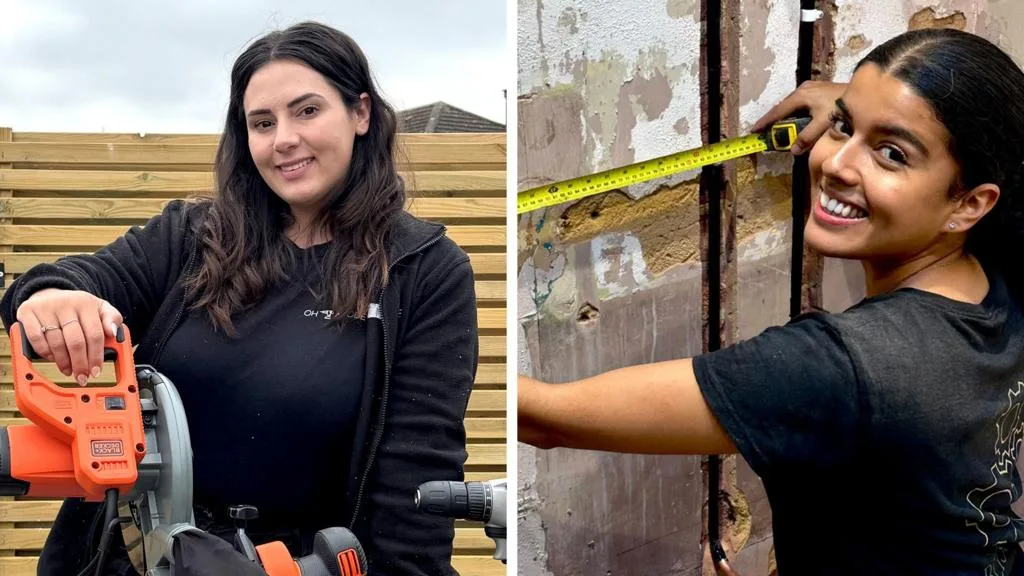
Women are gaining ground in the home improvement market
The rapid spread of DIY content on social media in recent years has created a new trend in UK home improvement spending and service demand. Jobs once more closely associated with men are now reaching a wider audience thanks to female creators and women tradespeople.
In examples reported by BBC Business, Bedfordshire-based Jasmine Gurney built a digital following by doing everything herself, from knocking down walls and replacing floors to installing fencing and insulating a loft. Gurney says her page’s growth, especially during the Covid period, was directly linked to the growing difficulty of finding professional tradespeople.
What economic factors are driving the rise?
- A shortage of tradespeople is pushing households to handle small and medium-sized jobs themselves.
- Cost-of-living pressure is making cheaper solutions more attractive than hiring professionals.
This picture is affecting not only homeowners’ behaviour, but also the wider services market. As demand for women professionals rises, some white-collar workers are also moving into jobs they see as more flexible and less exposed to artificial intelligence.
Figures show stronger interest among younger women
According to a 2024 study published by B&Q, around three-quarters of Gen Z women who took part in the survey said they enjoy DIY tasks. Among all female respondents, the figure was 60%.
The same research found that 82% of Gen Z women said seeing women on social media tackling more complex renovation projects encouraged them to try more themselves. Among all women, that figure was again 60%. The data suggests that digital visibility has a direct impact on consumer behaviour and skill-building.
Women still make up a small share of construction
Despite the positive signals, women’s share of the sector remains low. Data from the Federation of Master Builders shows that women account for only about 4% of the UK construction workforce.
Even so, the apprenticeship side is showing clear growth. In 2024-25, one in every 10 people starting a construction apprenticeship was a woman; five years ago, the figure was about one in 14.
Platforms and career changes are reshaping the market
Bliss Cunneen, from south London, left her anthropology studies in 2020 and trained as a plumber. Cunneen says she is happy with the flexibility of running her own business, and adds that customers’ initial bias tends to fade once the work gets underway.
Anna Moynihan, founder of TaskHer, a platform that connects customers with women tradespeople, says the rise in demand is now tangible. According to Moynihan, customer requests on the site have more than doubled this year compared with 2025, while the number of women tradespeople signing up to the platform has nearly quadrupled.
Moynihan also says three women tradespeople who graduated from Oxford University joined the platform in the past month. The trend points to a broader shift in the labour market, as technical jobs are seen as offering more flexible work opportunities and greater resilience in the face of AI-driven change.






Comments (0)
No comments yet. Be the first to comment.
Write a Comment
Yorum yazmak için giriş yapın. Üyelik ücretsiz; yorumunuz editör onayından sonra yayımlanır.