
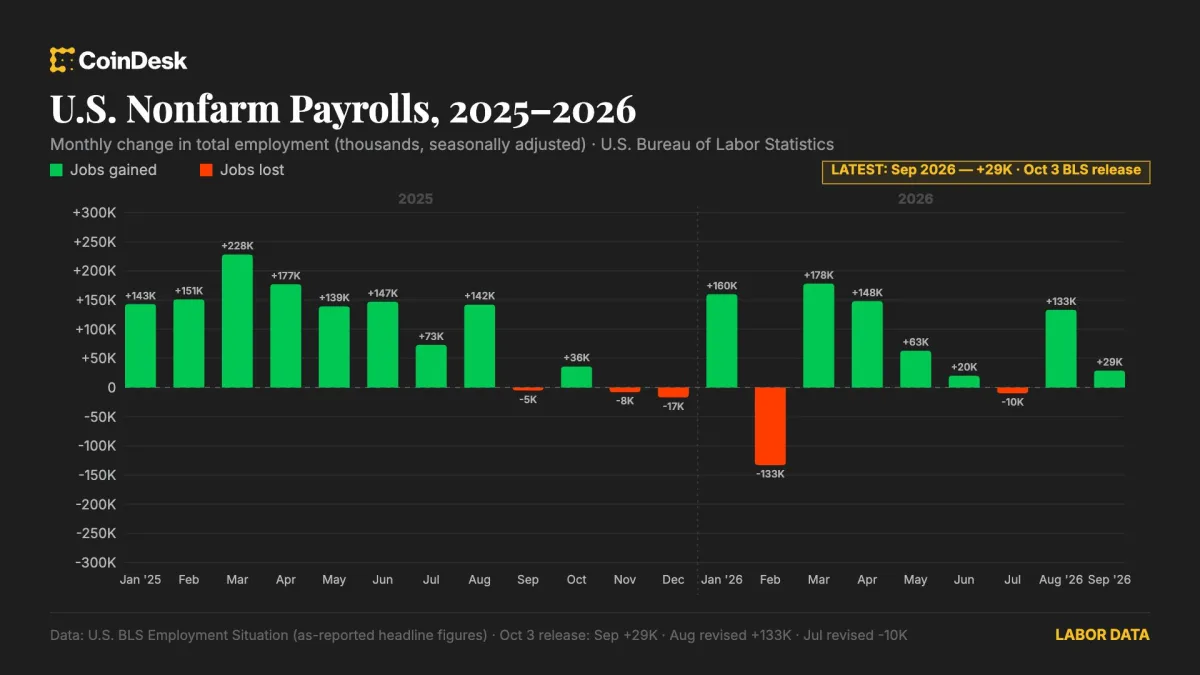
September jobs report fell short of expectations
The US nonfarm payrolls report showed hiring slowed sharply in September. The US economy added just 29,000 jobs during the month, well below the market forecast of 90,000 and down from the 133,000 increase reported in August.
The unemployment rate also rose to 4.2% in September from 4.1% in August. Economists had expected it to hold at 4.1%. Together, the weaker payroll gain and higher unemployment pointed to a cooling US labor market.
Revisions made the picture even weaker
Updates to previous months also worsened the outlook. August job growth was revised down from 162,000 to 133,000, while July was revised from a 21,000 gain to a loss of 10,000 jobs.
- August job growth: revised down from 162,000 to 133,000.
- July data: revised from a 21,000 gain to a loss of 10,000.
- Average hourly earnings: up 0.1% month on month and 3% year on year.
Wage growth also slowed. Average hourly earnings rose just 0.1% in September from the previous month, compared with forecasts and August's 0.3% increase. Yearly growth came in at 3%, below expectations of 3.2% and the previous month's 3.1%.
How markets reacted to the data
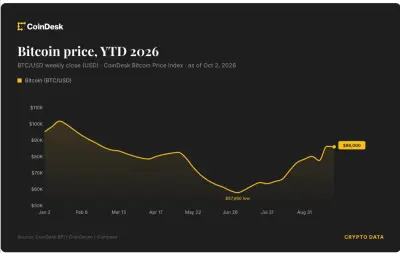
After the weak labor report, Bitcoin held onto its intraday strength and continued trading just below $87,000. US stock index futures extended gains, with Nasdaq futures up 1.2%.
In the bond market, yields fell. The 10-year US Treasury yield dropped 7 basis points to 5.17%, while the 2-year yield fell by a similar amount to 4.71%. Gold rose more than 1%, and the dollar weakened against major currencies.
Fed expectations come back into focus
The data reinforced expectations that the Federal Reserve (Fed) may still have room to keep interest rates unchanged, even as inflation remains elevated. The weaker pace of hiring, the rise in unemployment and the slowdown in wages all led markets to reprice the path of monetary policy.





Comments (0)
No comments yet. Be the first to comment.
Write a Comment
Yorum yazmak için giriş yapın. Üyelik ücretsiz; yorumunuz editör onayından sonra yayımlanır.