
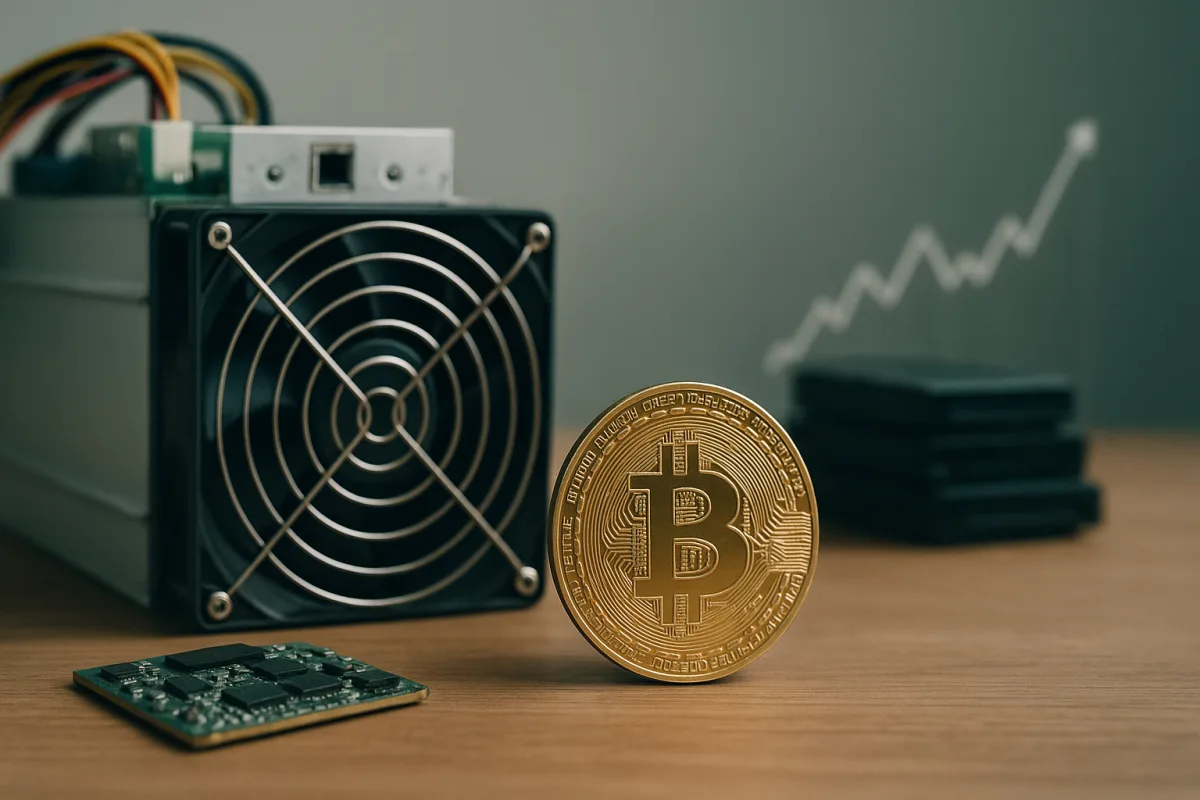
What is Bitcoin mining and why does it use so much energy?
The short answer to what Bitcoin mining is is that it uses computing power to add transactions on the network into blocks. Bitcoin runs on a proof of work mechanism, which determines the right to add a new block through an intensive computing process.
The reason mining consumes energy is that, rather than calculating a single correct answer directly, it involves making countless attempts. Machines run continuously, test millions of different possibilities and the first one to arrive at the right result creates the new block.
How do proof-of-work and the SHA-256 puzzle work?
The Bitcoin network is based on the SHA-256 cryptographic hash function. Miners change the nonce value in the block header to try to find a hash below the target set by the network; once an acceptable hash is found, the block is considered valid and added to the chain.
The aim in this process is not to generate a different result from the same data each time, but to find a hash below the acceptable threshold. For that reason, mining is often described as a kind of “computing race through trial and error.”
What do ASIC miners, hash rate and mining difficulty mean?
The answer to what hash rate is is the number of hash attempts a device or the entire network can make per second. The higher the hash rate, the greater the chance of finding a valid hash; that is why device performance is one of the key indicators in mining.
Why does mining difficulty change?
Mining difficulty is adjusted to keep Bitcoin’s average block time at around 10 minutes. Difficulty is recalculated every 2,016 blocks, or roughly every two weeks; if the network’s total hash power rises, it increases, and if it falls, it decreases.
Why did ASIC replace CPU and GPU mining?
In Bitcoin’s early years, mining could be done with CPUs and GPUs. Over time, however, ASIC miner devices designed specifically for this task took the lead, because they can do the same job far more efficiently. For that reason, mining Bitcoin on personal computers is no longer considered competitive in practice.
By contrast, Ethereum, which is often mentioned when proof of work comes up, no longer uses this model as of September 15, 2022, so Ethereum mining is no longer possible. That distinction makes it clearer why Bitcoin mining requires specialized hardware and a specific cost calculation.
Which factors matter most in profitability calculations?
A miner that finds a block receives the 3.125 BTC block reward after the 2024 halving, plus the transaction fees included in the block. However, small-scale miners whose odds of finding a block alone are low often join mining pools to share revenue.
- Electricity consumption and unit energy cost
- The device’s hash rate capacity and energy efficiency
- Cooling, ventilation and maintenance expenses
- Pool commissions and possible infrastructure costs
- The purchase price of the hardware and its payback period
- Volatility in Bitcoin’s price and transaction fee income
What should be monitored when mining in Turkey?
Anyone considering Bitcoin mining in Turkey should also factor in electricity tariffs, cooling needs, device noise, import procedures and service arrangements. In addition, it is important to follow official statements and expert opinions regarding tax obligations, the commercial nature of the activity and current regulations.
"""




Comments (0)
No comments yet. Be the first to comment.
Write a Comment
Yorum yazmak için giriş yapın. Üyelik ücretsiz; yorumunuz editör onayından sonra yayımlanır.