

September jobs report came in well below expectations
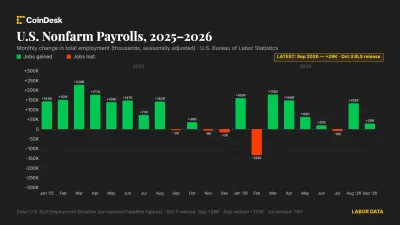
US employment data pointed to a loss of momentum in the economy in September. According to the US Bureau of Labor Statistics (BLS), nonfarm payrolls rose by a seasonally adjusted 29,000, far short of the market forecast for an increase of 84,000. The unemployment rate also climbed to 4.2%, above expectations.
The weakness was not limited to September alone. August job growth was revised down to 133,000, while July was revised from an increase to a decline, with a loss of 10,000 jobs for the month. Taken together, the revisions cut previously reported payrolls by 60,000.
Markets read the data as a pause signal on rate hikes
The weak labor figures led investors to see a more likely wait-and-see stance for the Federal Reserve (Fed) at its October meeting. After the release, stock futures surged sharply, while recent highs in US Treasury yields pulled back. According to CME Group FedWatch, the probability that the Fed will leave rates unchanged at its October 27-28 meeting rose to 82.8%.
That pricing became more pronounced after the Fed raised its policy rate by 0.25 percentage points in September. Combined with recent comments from central bank officials, expectations have strengthened that the next possible rate hike could be pushed from October to December.
What do the labor market details show?
Fed officials pay close attention to the unemployment rate rather than just the headline payroll gain. In the household survey used to calculate unemployment, employment increased by 406,000, the labor force expanded by 485,000, and the labor force participation rate rose to 61.8%, its highest level since May. The broader unemployment rate fell to 7.6%, the lowest since January 2025.
Wage growth continued to cool. Average hourly earnings rose just 0.1% in September, while the annual increase slowed to 3%, the weakest since May 2021. The average workweek was unchanged at 34.6 hours.
- Employment in the health care sector rose by 17,000.
- Construction added 11,000 jobs and manufacturing added 9,000.
- Public sector employment fell by 17,000.
- Temporary help services lost 11,000 jobs, information services fell by 10,000, and financial activities declined by 7,000.
Inflation and growth outlook will shape the Fed's decision
Despite the softening in employment, inflation remains the Fed's main risk. The central bank's closely watched core inflation gauge held at 3% year over year in the latest reading, still above the Fed's 2% target.
On the growth side, the picture is stronger. The US Department of Commerce revised first-quarter growth up to 2.5% and second-quarter growth to 2.2%. The Atlanta Fed is currently tracking third-quarter growth at 3.7%. The data suggest a more complicated picture for the US economy, with growth holding up even as hiring slows.




Comments (0)
No comments yet. Be the first to comment.
Write a Comment
Yorum yazmak için giriş yapın. Üyelik ücretsiz; yorumunuz editör onayından sonra yayımlanır.