
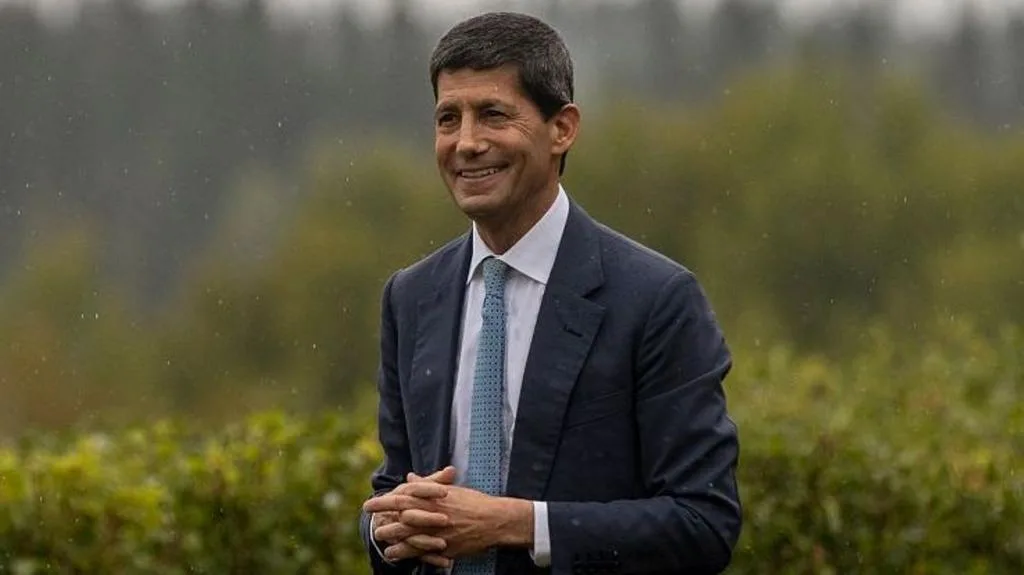
Federal Reserve official Kevin Warsh said the central bank could move again if it does not gain enough confidence that price pressures in the U.S. are easing in a lasting way. In his first speech at the Jackson Hole Economic Policy Symposium in Wyoming, Warsh said that although summer inflation readings have come in better than expected, there has been no meaningful improvement in the overall outlook.
Latest data show that U.S. prices rose 3.4% year on year in July, remaining above the Fed's 2% target. Another inflation measure closely watched by the Fed stands at 3.7%. Against that backdrop, Warsh stressed that price stability should be the top priority of monetary policy.
Although Warsh said his remarks should not be read as guidance for future rate decisions, markets interpreted the speech as more hawkish. CME data showed that after the comments, expectations for a rate hike in September strengthened. At its July meeting, the Fed kept its policy rate unchanged for a fifth straight time at 3.5%-3.75%, citing inflation concerns.
The central bank's next interest-rate decision will be announced on Sept. 15-16. Analysts at Capital Economics said Warsh's message was clearer and more hawkish than expected, keeping alive the possibility of an earlier-than-previously-forecast rate increase. In the same assessment, they said another hike would be on the table if economic growth stays strong and core personal consumption expenditures prices remain elevated.
Inflation worries are also being fueled by the impact of ongoing tensions between the U.S. and Iran on global oil prices. Higher oil prices are pushing investors in the bond market to demand higher yields, raising borrowing costs for the U.S. Treasury and major companies. Those higher costs are also being passed on to households through mortgage, auto-loan and credit-card rates.
As interest payments have risen, U.S. national debt has climbed above $40 trillion. According to data from the Joint Economic Committee of Congress, the debt stock is increasing by about $90,000 per second, or $7.8 billion a day. Treasury Secretary Scott Bessent's remarks that more debt buybacks would be carried out to help lower borrowing costs did not provide lasting relief to markets.
"""


Comments (0)
No comments yet. Be the first to comment.
Write a Comment
Yorum yazmak için giriş yapın. Üyelik ücretsiz; yorumunuz editör onayından sonra yayımlanır.