
Why is the trade deficit widening?
Chinese imports have become even more critical for India’s economy, especially for industrial production, while the trade deficit between the two countries rose from $44 billion in 2020 to $112 billion this year. According to experts, economic dependence has not eased despite political and security tensions, anti-dumping measures and bans on some Chinese products.
Based on source assessments, India’s exports to China remain below pre-pandemic levels, while imports from China have almost doubled over the same period. China now supplies more than 30% of India’s industrial imports, and the country depends on China for more than 100 critical products.
Concentration in industrial inputs
According to Observer Research Foundation (ORF) data, electrical machinery and electronic products top the import basket with a 36% share. They are followed by machinery and mechanical appliances at 21.7%, while organic chemicals and plastics also account for significant shares.
- Parts used in smartphones and solar equipment production
- Battery inputs, chemicals and manufacturing machinery
- Basic electronic and mechanical equipment for industrial plants
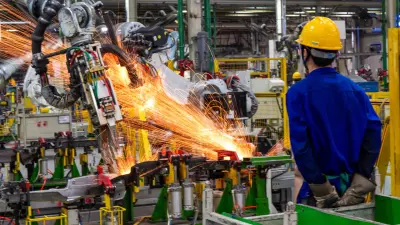
This picture shows that imports are affecting not only final consumption but also the production chain itself. Although India accounts for more than a quarter of global iPhone production, much of that output still amounts to assembly and continues to rely heavily on components from China.
A notable exception in toys
India achieved a different outcome in toys after 2018 by raising import duties on imported toys first from 20% to 60%, then to 70%, and by tightening quality checks. Toy imports, which were about $300 million in 2020, fell to $100 million this year, while exports rose from roughly $129 million to $200 million over the same period.
As a result, China’s roughly 70% dominance in India’s domestic toy market has weakened significantly. Even so, the toy sector is seen as one of the few examples standing out in India’s effort to rebalance trade with China.
Market impact and Delhi’s options
According to Global Trade and Research Initiative (GTRI) assessments, if the current import pace continues, the bilateral trade deficit could rise to $134 billion. That would increase Beijing’s leverage over Indian industry.
The analysis says China’s excess capacity across sectors ranging from steel to solar panels and electric vehicles is being pushed into foreign markets because domestic demand is slowing. With China’s trade surplus expected to exceed $1 trillion for a second straight year, tariffs and restrictions in Western markets are also accelerating the redirection of cheaper Chinese goods toward India.
Experts say the solution requires sector-specific industrial policy, cheaper energy and credit, stronger logistics infrastructure and more predictable regulation. India’s eased rules on foreign direct investment should prioritize projects that deliver technology transfer, local value addition and export capacity, rather than only expanding distribution networks or increasing assembly using Chinese parts.
"""




Comments (0)
No comments yet. Be the first to comment.
Write a Comment
Yorum yazmak için giriş yapın. Üyelik ücretsiz; yorumunuz editör onayından sonra yayımlanır.