
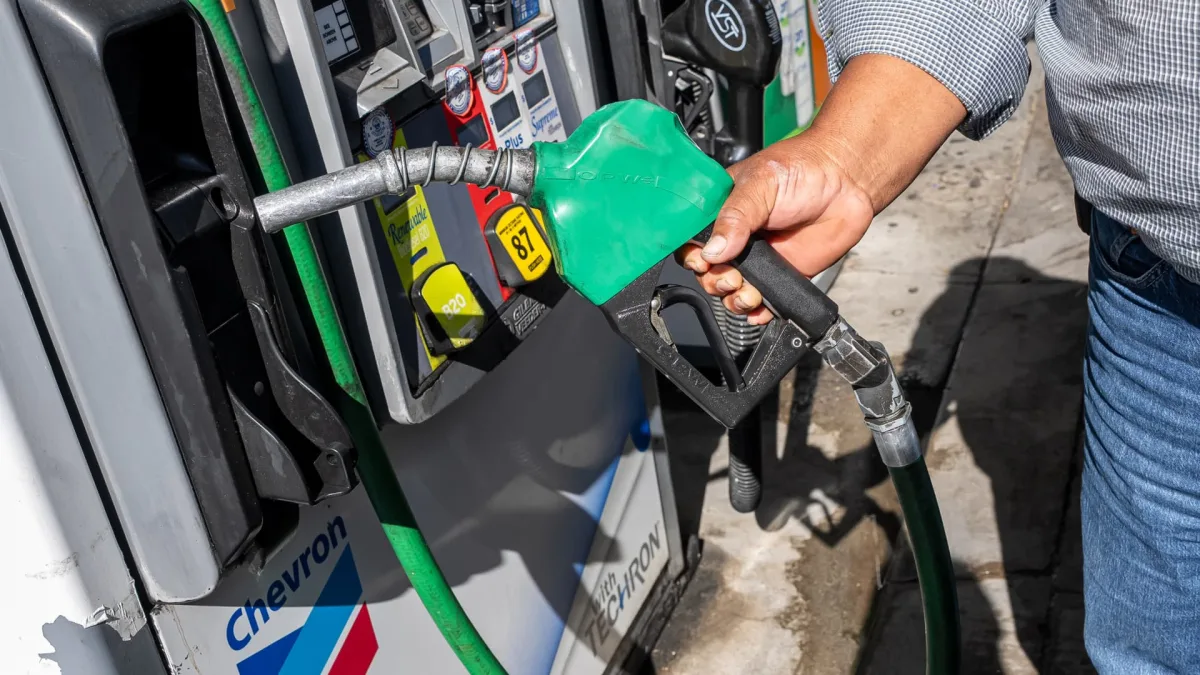
G7 will deploy reserves immediately
Under a new decision on the diesel reserve, the G7 countries are preparing to release a total of 100 million barrels to ease tight global supply. According to the joint statement, the release will begin immediately, run for four months, and deliver higher volumes in the first 20 days. The process will be coordinated by the International Energy Agency (IEA).
The move comes against the backdrop of shrinking supply in Europe after Ukraine’s attacks on Russian refineries and deeper disruptions in the Middle East because of the war in Iran. In the U.S., diesel prices remained at an average of $6.37 per gallon on Friday after hitting a record in September. G7 leaders said additional releases could also be considered in the coming days under the IEA umbrella if needed.
Why pressure over a U.S. export ban became critical
The Trump administration pushed Europe to tap its diesel stocks, presenting that as an alternative to a possible export ban by the U.S. President Donald Trump said last week that he was considering such a step, but later adopted a more cautious stance because of its impact on gasoline prices. Political pressure on the White House is said to be rising further as fuel prices climb ahead of the November midterm elections.
Europe’s reliance on U.S. supply came into focus
Markets’ biggest concern was the possibility that the U.S., one of the world’s largest diesel exporters, could restrict shipments. IEA data shows that in August the U.S. supplied about half of the European Union’s diesel imports, highlighting how exposed the EU economy would be to any curbs. EU trade chief Maros Sefcovic also said he discussed supply and prices with U.S. Trade Representative Jamieson Greer, adding that export restrictions could hurt Europe’s outlook.
G7 leaders also agreed among themselves to avoid export restrictions on energy and energy products. The statement urged other producing countries to stay away from bans that could deepen market तनाव.
Previous commitments and the numbers behind the new release
The G7 consists of France, Canada, Germany, Italy, Japan, the United Kingdom and the United States, while France holds the rotating presidency and the European Union also takes part in meetings. The new step stands out as a measure that builds on the broader 400 million-barrel framework announced by IEA members in March in response to disruptions caused by the Iran war.
Breakdown announced in March
- Europe pledged about 107 million barrels, 68% of it made up of refined fuel products.
- Asia and Oceania set aside 108 million barrels, with 40% planned as fuel and 60% as crude oil.
- The U.S. took on the full 172 million barrels as crude oil, while another 23 million barrels came from the rest of the Americas.
U.S. Energy Secretary Chris Wright said on Tuesday that the U.S. and Japan had met their obligations, while some European countries had released only a limited portion of the crude oil and petroleum products they had pledged. Shortly after that statement, the U.S. Energy Department announced that up to 40 million barrels of crude oil would be released under March commitments.




Comments (0)
No comments yet. Be the first to comment.
Write a Comment
Yorum yazmak için giriş yapın. Üyelik ücretsiz; yorumunuz editör onayından sonra yayımlanır.