
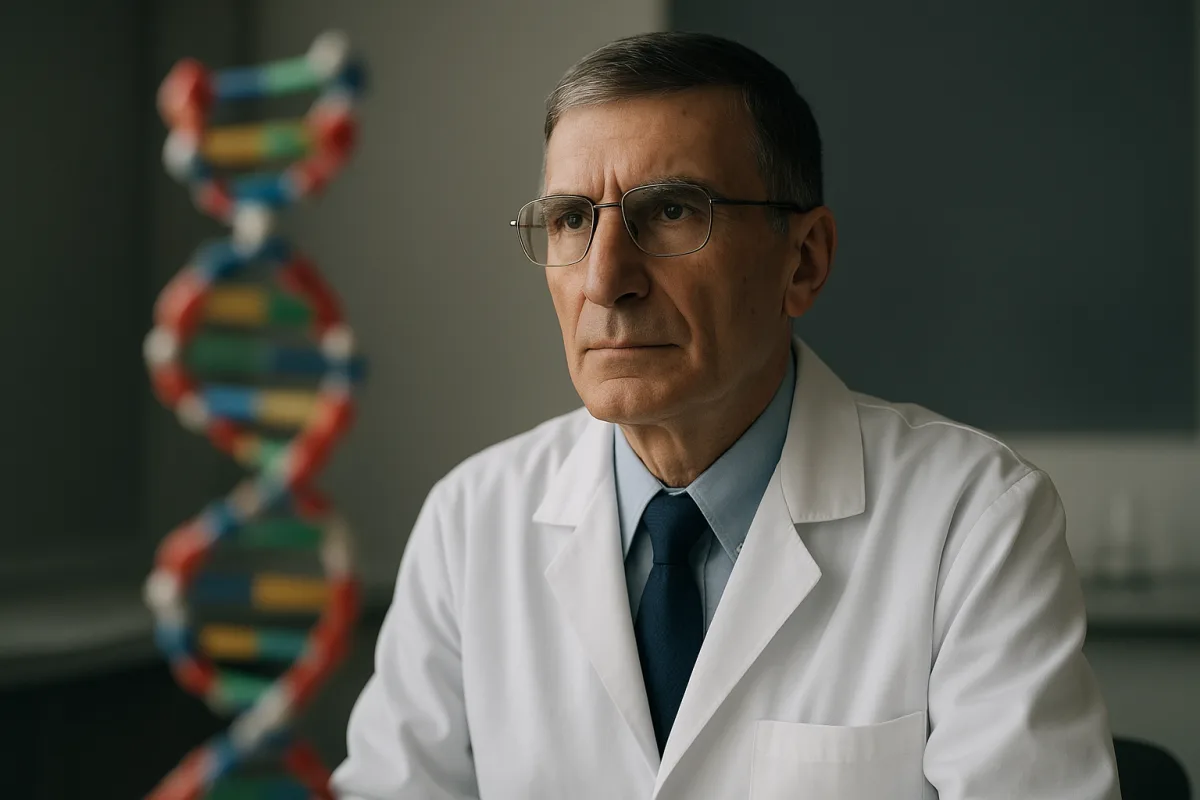
Who is Aziz Sancar, and how did his scientific journey begin?
The question Who is Aziz Sancar leads to the story of a researcher from Turkey who helped shape global science. Born on September 8, 1946 in Savur, in Turkey’s Mardin province, Sancar turned to research after medical school and left a lasting legacy in the field of DNA repair.
Sancar entered Istanbul Faculty of Medicine in 1963, graduated in 1969 and then worked as a physician in Savur for about two years. He later deepened his scientific work in the United States, building his career around laboratory-based biochemistry and molecular biology.
He completed his doctorate in the United States at the University of Texas at Dallas, working with his advisor Claud Stanley Rupert. After finishing his dissertation in 1977, Sancar studied the photolyase enzyme, which helps repair light-induced damage in DNA; that period laid the groundwork for his later major discoveries.
Why was the DNA repair discovery seen as Nobel-level?
DNA repair is the umbrella term for the cell’s core mechanisms for protecting genetic material from environmental influences and damage caused by everyday biological processes. Sancar’s scientific contribution stood out for explaining in detail how damage caused by ultraviolet light is repaired in DNA.
How does nucleotide excision repair work?
Nucleotide excision repair works by recognizing a damaged section of DNA, removing the faulty piece and filling the gap with the correct sequence. Sancar’s research mapped the steps of this mechanism inside the cell, making it a turning point in basic science.
The discovery did more than expand laboratory knowledge; it also provided an important medical foundation. That is because the ability to repair DNA damage is closely linked to tumor development, response to treatment and chemotherapy resistance.
The framework of the 2015 Nobel Prize in Chemistry
The 2015 Nobel Prize in Chemistry was shared by Aziz Sancar, Tomas Lindahl and Paul Modrich for their work revealing how cells repair damaged DNA. Sancar’s contribution was based on his detailed explanation of the repair mechanism that plays a critical role in fixing ultraviolet damage.
Why do Yale, UNC and his ties to Turkey matter?
At Yale University, Sancar worked on DNA repair and later became a faculty member in the Department of Biochemistry and Biophysics at the University of North Carolina at Chapel Hill. These years marked the period in which he expanded his research on an institutional scale and strengthened his influence in the international scientific community.
Sancar’s story is not seen only as an award-winning achievement; it is also regarded as an example of the importance of training scientists. His continued ties to Turkey and his interest in young researchers are among the main reasons he is often described as a Turkish scientist.
- He built a strong education and research path from Savur in Mardin to international laboratories.
- He connected a basic science discovery to cancer biology and treatment research.
- With the 2015 Nobel Prize in Chemistry, he became the second Turkish Nobel laureate after Orhan Pamuk.




Comments (0)
No comments yet. Be the first to comment.
Write a Comment
Yorum yazmak için giriş yapın. Üyelik ücretsiz; yorumunuz editör onayından sonra yayımlanır.