
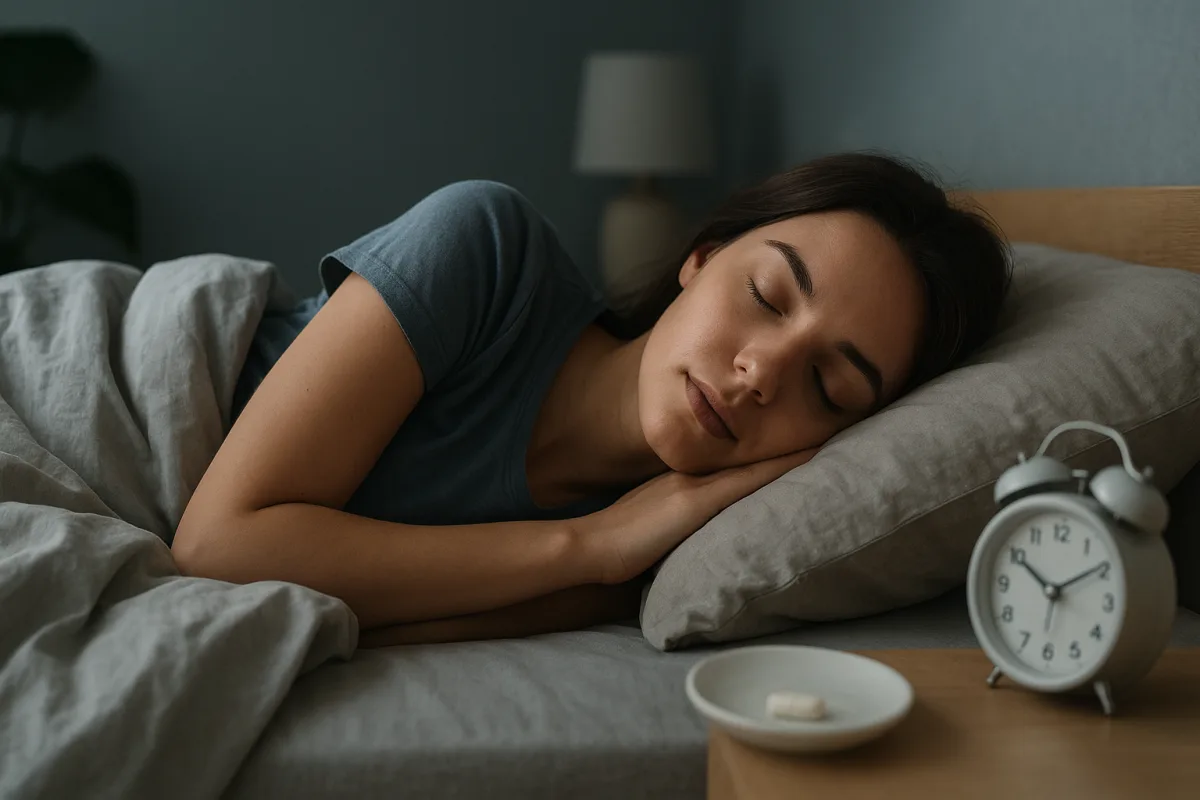
How do sleep stages work?
Sleep stages describe the biological system in which the brain and body take on different tasks throughout the night. Within a 90-110 minute cycle, N1, N2, N3 and REM stages follow one another; this cycle typically repeats 4-6 times in a normal night.
According to the AASM classification, the former Stage 3 and Stage 4 are combined under the N3 label because they cannot be reliably separated. N1 marks the transition into light sleep, N2 accounts for about half of the night in adults, and N3 is the deepest sleep stage. REM sleep is the period when dreams become more frequent and the brain appears highly active; it makes up about 20-25% of total sleep.
How is it distributed through the night?
Deep sleep, known as N3, is mostly concentrated in the first third of the night. REM sleep generally becomes more prominent in the last third of the night, which is why waking closer to morning can make dreams easier to remember.
Why are circadian rhythm and melatonin important?
Circadian rhythm is the internal biological clock that controls sleep timing and is regulated in the brain by the suprachiasmatic nucleus in the hypothalamus. The rise in melatonin in the evening helps the body shift into night mode, while morning light acts as a powerful cue that resets this clock.
Studies explaining the molecular basis of this field marked a major turning point for Jeffrey C. Hall, Michael Rosbash and Michael W. Young. The researchers received the 2017 Nobel Prize in Physiology or Medicine for these discoveries. The AASM and the Sleep Research Society also recommend 7 hours or more of sleep for adults on a regular basis.
10 science-based ways to sleep better
- Go to bed and wake up at similar times every day. Regular timing helps the circadian rhythm work more steadily.
- Get daylight after waking up. Morning light is one of the strongest environmental signals telling the body clock that the day has started.
- Reduce exposure to bright light and screens in the evening. This may ease the pressure that affects melatonin signaling and mental alertness.
- Try not to leave caffeine for late in the day. Because caffeine affects the adenosine system that builds sleep pressure, it can delay sleep at night.
- Keep the bedroom dark, quiet and on the cool side. The body’s natural tendency to lower its temperature at night makes it easier to fall asleep.
- Do not turn the bed into a place for working, scrolling on your phone or thinking for long periods. It is important for the brain to associate the bed with sleep.
- If you stay awake in bed for too long, get up and do a calm activity, then return when you feel sleepy. This weakens the association between the bed and wakefulness.
- Avoid heavy meals close to bedtime. Digestive load and physical discomfort can disrupt sleep continuity.
- Stay physically active during the day. Exercise can support both sleep pressure and overall circadian regulation.
- Create a short, repeatable relaxation routine before bed. Following the same sequence teaches the body and mind that it is time to rest.
These recommendations should be considered within the broader framework of sleep hygiene and are not a substitute for medical treatment. If insomnia persists, daytime sleepiness is significant, or sleep-disordered breathing is suspected, the right step is to see a doctor.






Comments (0)
No comments yet. Be the first to comment.
Write a Comment
Yorum yazmak için giriş yapın. Üyelik ücretsiz; yorumunuz editör onayından sonra yayımlanır.