
Trump’s growth forecast and his call for lower rates
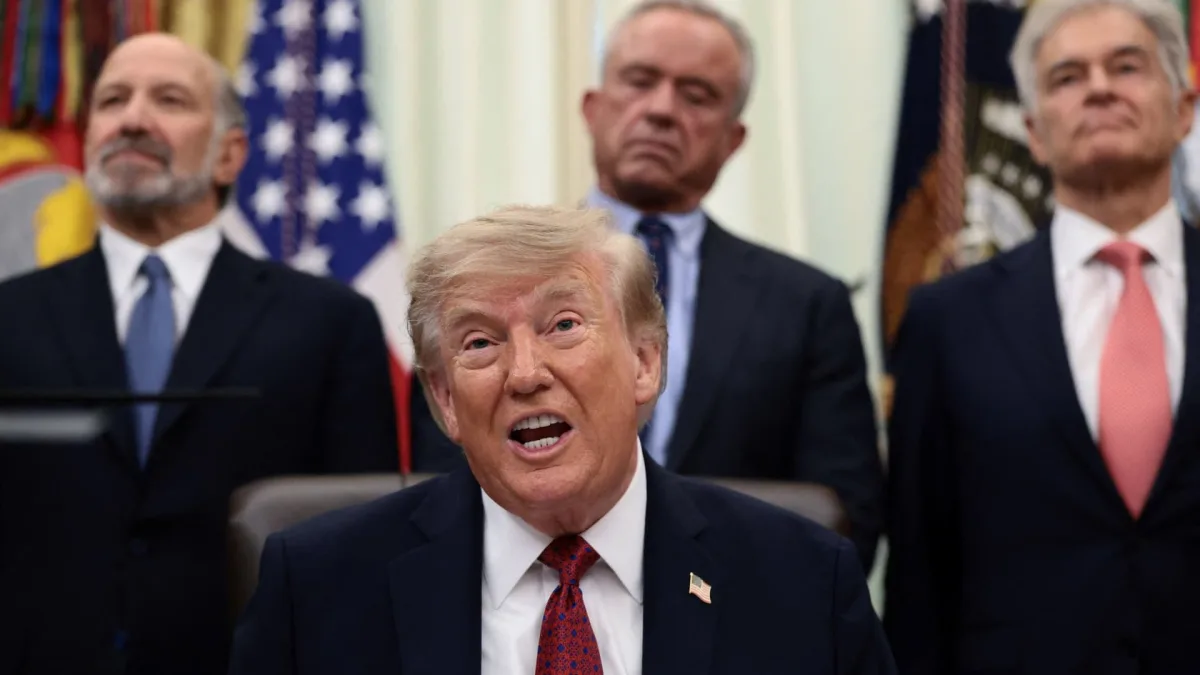
Donald Trump said growth rates between 14% and 20% could be possible for the U.S. economy, and argued that even expansion on that scale should not require higher interest rates. He made the remarks at an Oval Office event where deals aimed at lowering prescription drug prices were announced.
Trump’s message came at a time when inflation is still running above the Federal Reserve’s 2% target. The Fed held interest rates steady in July, although three officials voted for a quarter-point increase, and markets are now focused on the September meeting.
What do historical GDP data say about those rates?
The figures Trump cited are almost never seen in modern U.S. data. Annualized real GDP growth of 20% or more was recorded only in the third quarter of 2020 in data from the U.S. Bureau of Economic Analysis (BEA).
During that period, the economy expanded at an annualized rate of 34.9% as businesses reopened after Covid-19 lockdowns. That surge followed an annualized 28% contraction in the previous quarter.
The next strongest performance in the series came in the first quarter of 1950, when postwar recovery drove growth of 16.7%. No other quarter in the roughly 80-year data set reached the 20% level.
- Real GDP growth in Q1 2026: 2.1%
- Real GDP growth in Q2 2026: 1.5%
- Fed policy rate range in July: 3.5%-3.75%
The current growth outlook and market impact
Today’s picture remains well below historical peaks
According to the BEA’s latest estimate, the U.S. economy grew at an annualized rate of 1.5% in the second quarter of 2026. That marked a slowdown from 2.1% in the first quarter and highlights the gap between Trump’s figures and the current pace of growth.
It is also worth noting that quarterly GDP figures are reported on an annualized basis, so a 20% reading does not mean the economy actually grew 20% in a single quarter. That distinction is considered crucial in how markets interpret the data.
Inflation will determine the rate path
The Fed kept its benchmark rate in the 3.5%-3.75% range at its July meeting. Even so, many market watchers expect the Federal Open Market Committee could move toward another increase at its September meeting because inflation pressures remain persistent.
Faster economic growth alone does not necessarily create inflation, but price pressures can build when demand runs ahead of productive capacity. For that reason, Trump’s call for lower rates is being read in the market less as a growth story and more through the lens of inflation and the Fed’s next move.
"""




Comments (0)
No comments yet. Be the first to comment.
Write a Comment
Yorum yazmak için giriş yapın. Üyelik ücretsiz; yorumunuz editör onayından sonra yayımlanır.