
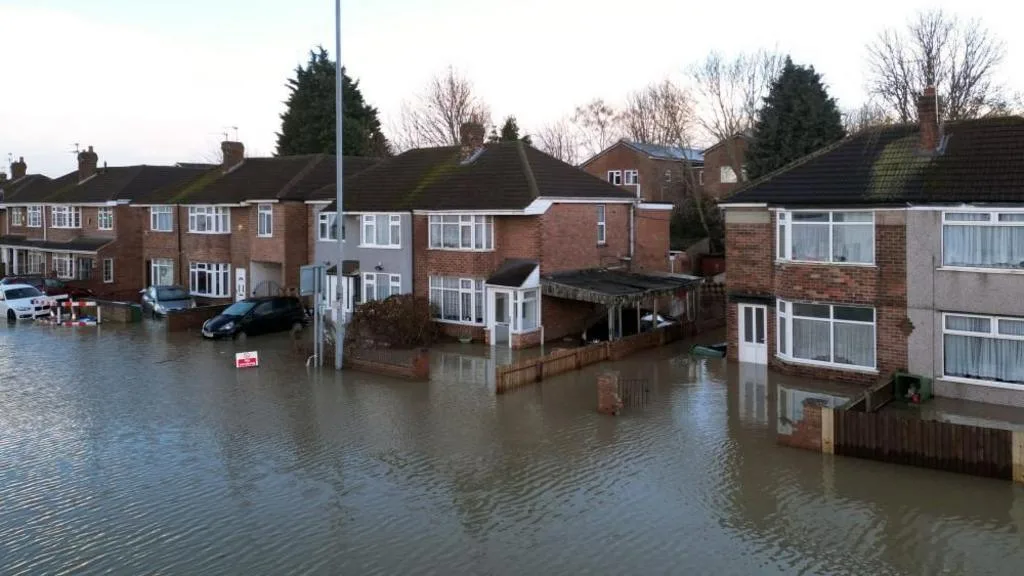
Why are new homes at risk?
Warnings that some newly built homes in England could eventually fall outside insurance cover because of flood risk have drawn attention from the housing market and the financial sector. Aviva chief executive Amanda Blanc said that if the current pace of construction continues, a significant number of new homes will be built in flood-prone areas.
According to Blanc, if today’s building pattern does not change, 115,000 new homes will be built in areas at risk of flooding over the next 10 years. Data from the Environment Agency, the UK’s environmental regulator, also show that about 6.3 million homes and businesses in the country are exposed to flood danger. Aviva’s research found that one in every nine homes built between 2022 and 2024 faces a medium or high flood risk.
The company says different construction methods are needed not only in direct flood zones, but also in projects bordering these areas. It argues that design and protection measures that reduce a building’s vulnerability to flooding are becoming more important for insurability.
What do the numbers mean for housing and insurance?
According to Aviva’s assessment, around one-third of new homes built in 2024 will face some level of flood risk by 2050. The same study predicts that one in seven new homes will fall into the medium or high-risk category. More frequent extreme weather events are making this issue more significant for insurance pricing and credit risk.
Based on earlier calculations by the UK Met Office, winters as wet as those seen in the 2023-2024 period could occur not once every 80 years at current global warming levels, but roughly once every 20 years. That shift is emerging as a factor that could put pressure on home valuations, insurance premiums and long-term investment decisions.
- 6.3 million homes and businesses in England are at risk of flooding.
- One in nine homes built in 2022-2024 carries a medium or high flood risk.
- 115,000 new homes are expected to be built in flood-risk areas over the next 10 years.
Pre-budget uncertainty also hit the pensions market
Blanc also said the government should be more careful with its policy signals ahead of the first budget expected on 28 October. According to Aviva, expectations of pension-system changes in the last two budget cycles have had a noticeable effect on savers’ behaviour.
The company said withdrawals from pension savings last year surged to 30 times the usual level. Blanc noted that customers who use their tax-free lump-sum withdrawal rights are often unable to put that money back later. Aviva also said it has more than £100 billion invested in the UK, of which £35 billion is allocated to infrastructure such as hospitals, schools and wind farms, and called for clearer policy guidance for new investment.
BBC also contacted the government for comment on the issue.
"""





Comments (0)
No comments yet. Be the first to comment.
Write a Comment
Yorum yazmak için giriş yapın. Üyelik ücretsiz; yorumunuz editör onayından sonra yayımlanır.