
U.S. sodium-ion battery investment gains momentum
U.S. startups moving into sodium-ion battery technology are aiming to build domestic production capacity against a battery supply chain dominated by China. Companies are trying to capture cost advantages especially in grid storage, residential energy systems and auxiliary vehicle batteries.
San Diego-based Unigrid said demand for its home batteries rose during heat waves in Europe. The company’s 9 kilowatt-hour home battery lets users store electricity at off-peak rates and use it during higher-consumption hours later in the day. Unigrid said it has shipped the first 100 units and expects to reach 1,000 by the end of the year.
Orders from Spain, France, Germany and the Netherlands suggest the technology is not staying at the lab scale. But that growth does not change the fact that U.S. manufacturers still rely heavily on cells sourced from China.
Price and supply chains are at the center of competition
Sodium-ion batteries are drawing attention because they have the potential to be cheaper to produce and operate than lithium-ion alternatives. Their ability to work across a wider temperature range, along with lower cooling needs, also stands out as a factor that could reduce operating costs, especially in large energy storage projects.
Even so, price competition is not yet settled. Last December, LFP batteries, a low-cost type of lithium-ion battery, were trading at around $81 per kWh, while Unigrid’s sodium-ion battery was said to cost about $100 per kWh. Some companies argue the technology could eventually fall to $30 per kWh, but analysts say it may take years to reach that level.
Seattle-based Emerald Battery Labs is still working with China-sourced sodium-ion cells to supply 12-volt auxiliary vehicle batteries to commercial fleets in the U.S. The company’s next goal is to develop new anodes for sodium-ion cells to be produced in the United States.
GM partnership and data center demand could expand the market
Peak Energy announced a partnership with General Motors (GM) in June. The two companies aim to build a U.S. sodium-ion battery supply chain that can support large-scale energy storage for electric grids. Peak Energy says it aims to help bring a U.S.-based manufacturing facility in Michigan online by the end of 2028.
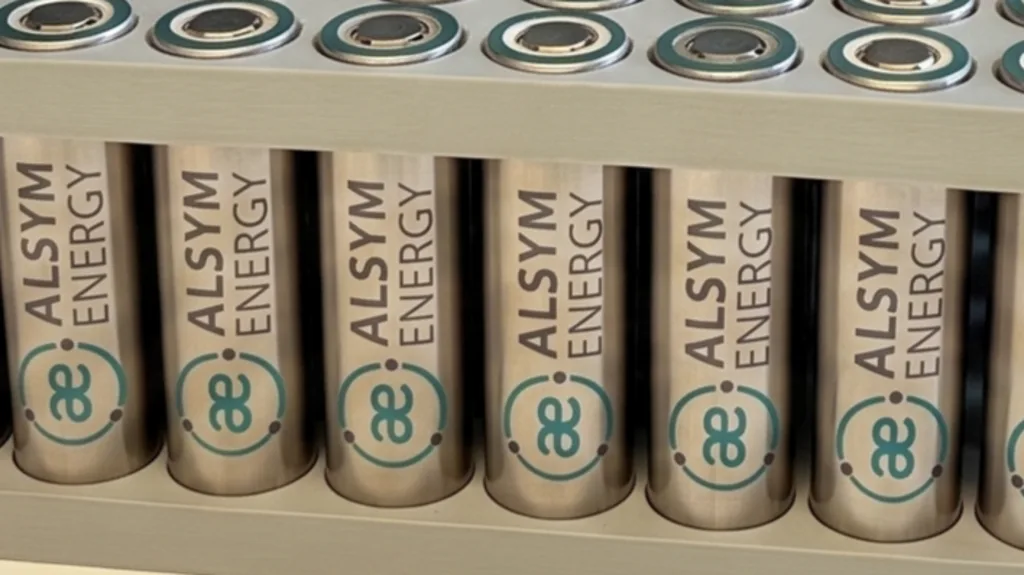
Growing electricity demand from data centers is also helping drive the market. ESS Tech says sodium-ion batteries could help distribute renewable energy to data centers more efficiently and offer operational advantages thanks to lower cooling requirements than lithium-ion alternatives. The company is working with Alsym, which plans to manufacture in the U.S. and is targeting shipments of hundreds of megawatt-hours starting in 2027.
Safety and scale-up questions remain
One of the technology’s biggest challenges remains safety and mass production capacity. Academic warnings have noted that the chromium-3 material used in Unigrid’s battery cathode could, under certain conditions, turn into toxic chromium-6. The company says it has passed certification and safety tests for sales in Europe and argues that third-party testing did not produce such a conversion.
- Sodium-ion batteries promise lower costs and domestic supply.
- U.S. companies still remain dependent on Chinese cells for now.
- Grid storage and data centers are seen as the main growth areas.
Experts say mass production will not be easy. Still, if the technology succeeds, it could open a new industrial and investment area for the U.S. by reducing renewable energy waste and lowering energy costs.
"""





Comments (0)
No comments yet. Be the first to comment.
Write a Comment
Yorum yazmak için giriş yapın. Üyelik ücretsiz; yorumunuz editör onayından sonra yayımlanır.