
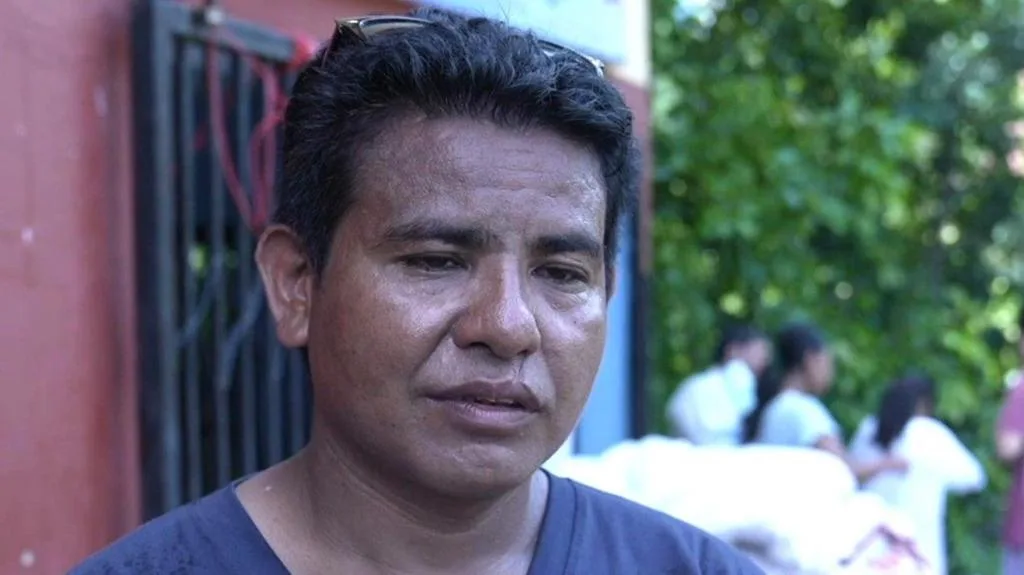
Flooding on the Trishuli River hit hydroelectric tunnels
Nepal’s flood disaster also affected workers at hydroelectric sites on the Trishuli River. According to officials, the death toll has surpassed 1,000, while around 4,000 people are still missing; among those being searched for are many workers in tunnels along the river route.
Workers who spoke to the BBC said they felt a powerful air pressure just before water entered the tunnel. After the plywood sheets were blown through the air and heavy machinery was knocked out of place, the workers tried to escape as the water rose.
How witnesses described their escape
Pemba Dundu Tamang said an abrupt air blast hit while he and his team were working on the tunnel’s concrete lining. Tamang said he ran toward the tunnel entrance, with water coming up behind him, and managed to escape by running uphill for about 20 minutes.
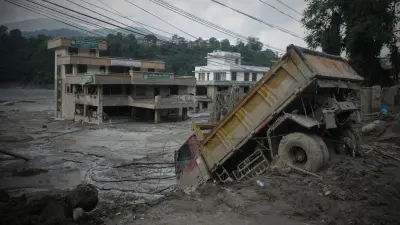
Tamang said that when he got outside, he saw houses along the riverbank being swept away and soon realized there was nothing left where his own home had stood. The worker lost six relatives in the flood, including his mother, older brother, sister-in-law and three nephews; his wife, son and one nephew survived.
Itha Ghale, who was also working at the site, said the strong air current nearly threw them off their feet before they ran to safety. Ghale was also reported to have lost eight family members, including his mother and eldest daughter.
Search and rescue focused on the tunnels
Efforts continue to reach trapped workers
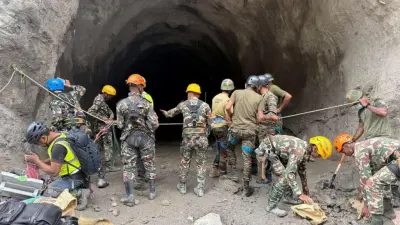
The Nepal Army said search and rescue operations in the tunnels were continuing and that air was being pumped inside to reach the workers. The army also said on Tuesday that 119 people had been rescued.
Tamang estimated that about 50 to 60 workers, including himself, were able to get out of the tunnel. He said he took shelter with a few others in Shanti Bazar village for two days after the flood before being rescued by the army.
- Search operations are continuing at multiple hydroelectric sites along the Trishuli corridor.
- Specialist teams from China, India and Nepal are using excavators and heavy equipment to clear debris.
- More than 99% of the electricity generated in the country comes from hydropower.
The site where the workers were based was part of the Upper Trishuli 3B Hydroelectric Project, scheduled to come online next year. The facility was intended to generate additional power for the national grid by reusing water from another plant upstream.
Expert report points to a lack of early warning
What did satellite data show?
According to a new expert report, there were signs of increasing instability around the glacier before the disaster. Experts from the Asian Mountain Academic Alliance, the Stimson Center and the Institute of Mountain Hazards and Environment in China said satellite images showed the glacier surface speeding up, meltwater turning brown and cracks forming in nearby rocks.
Scientists believe the avalanche moved too quickly for conventional warning systems to help at the source. But in lower areas where floodwaters took 10 minutes or more to arrive, a comprehensive early warning system could have saved many lives, they said.
"""
Comments (0)
No comments yet. Be the first to comment.
Write a Comment
Yorum yazmak için giriş yapın. Üyelik ücretsiz; yorumunuz editör onayından sonra yayımlanır.