
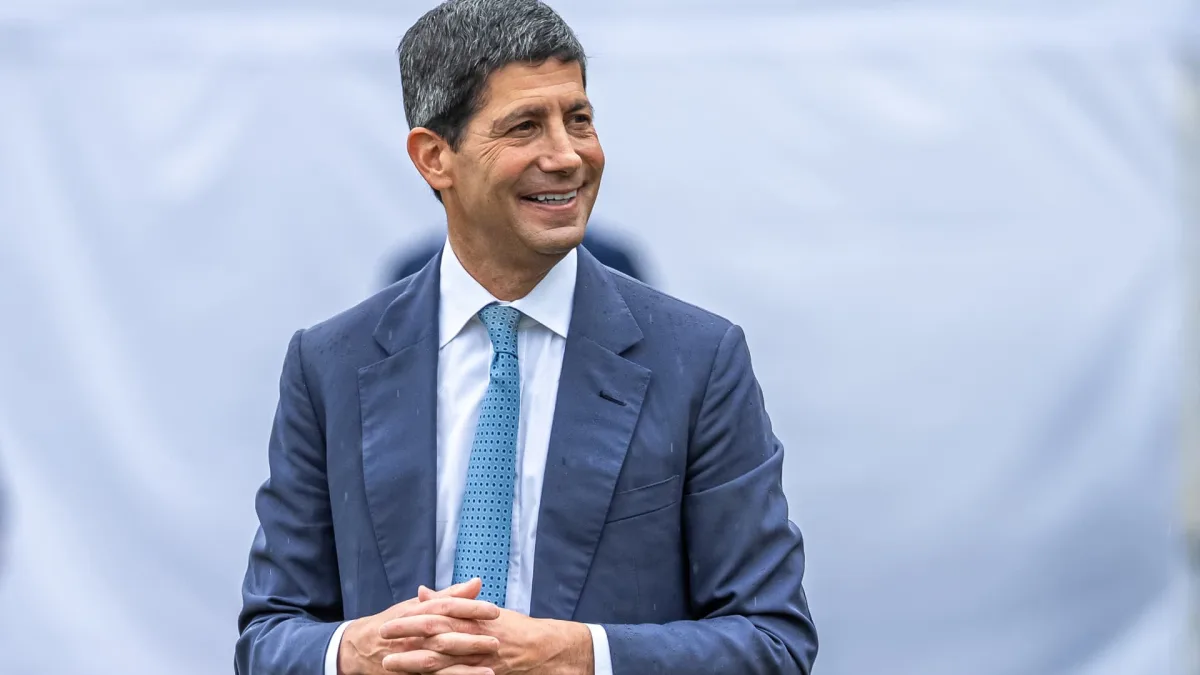
September pricing takes center stage after Warsh's remarks
Expectations for a Fed rate hike shifted sharply after Kevin Warsh's speech at the Jackson Hole symposium. While markets had previously pointed to December at the earliest, they now see a much higher chance of an increase at the Federal Open Market Committee meeting on Sept. 15-16.
According to CME Group FedWatch data, the probability of a rate hike at the September meeting rose to 66.1% on Monday. That marked nearly a doubling from expectations before Warsh's speech and triggered a fresh repricing in the bond market as well.
Warsh acknowledged that recent inflation readings have softened, but said that does not show a meaningful improvement in underlying trends. His emphasis on making sure inflation is moving toward the Fed's target fast enough strengthened the market view that tighter policy may still be on the table.
Economists and the Treasury do not agree
Not everyone in Washington and on Wall Street sees it the same way. U.S. Treasury Secretary Scott Bessent said the situation could amount to a supply shock, and that in such periods it is not typical to raise rates before second- and third-round effects emerge. He also said core inflation remains relatively muted.
Citigroup economist Andrew Hollenhorst said Warsh's latest comments were only marginally more hawkish than his earlier remarks. According to Hollenhorst, there was no consensus for a rate hike at the July FOMC meeting, and the data since then have pointed to cooler inflation and a weaker labor market.
JPMorgan Asset Management Chief Global Strategist David Kelly said the labor market would be the key factor. Kelly argued that recent data suggest the economy may not have the momentum implied by Warsh's Jackson Hole speech, and that markets may have priced in a greater-than-60% chance for September too early.
Why Bank of America still sees more hikes ahead
Bank of America remains in a different camp and continues to expect a total of three rate hikes ahead. The firm says Warsh raised the bar for keeping rates unchanged by stressing trends rather than individual data points, delivering a more credible Fed message to the market.
Which data will shape the decision?
The data calendar before the Fed's September meeting will be heavy. New jobs reports, following three weak nonfarm payrolls readings, are seen as critical for the policy outlook.
- Next week's CPI and producer price index data will feed into the personal consumption expenditures price index, the inflation gauge the Fed watches closely.
- Housing data and retail sales will also be monitored; the retail sales report will be released on the same day the Fed announces its rate decision.
July PCE inflation came in at 3.7% on the headline measure and 3.3% on the core measure. Dallas Fed's trim-mean indicator, which strips out extremes, remained at 2.3% — a sign for some officials and investors that inflation is moving closer to target.
Meanwhile, the fact that three of the 12 voting members at the July FOMC meeting backed a rate increase has kept alive the view that Warsh's Fed could move earlier if needed. But the direction of the final decision will depend on the signals the market gets from jobs and inflation data over the next two weeks.
"""


Comments (0)
No comments yet. Be the first to comment.
Write a Comment
Yorum yazmak için giriş yapın. Üyelik ücretsiz; yorumunuz editör onayından sonra yayımlanır.