
How did the deployment news affect oil markets?
Oil prices jumped sharply on Thursday after reports that the US would send a third aircraft carrier strike group to the Middle East. The international benchmark Brent crude rose 4.4% to close at $102.31 a barrel, while US West Texas Intermediate (WTI) futures gained 2.7% to settle at $92.87.
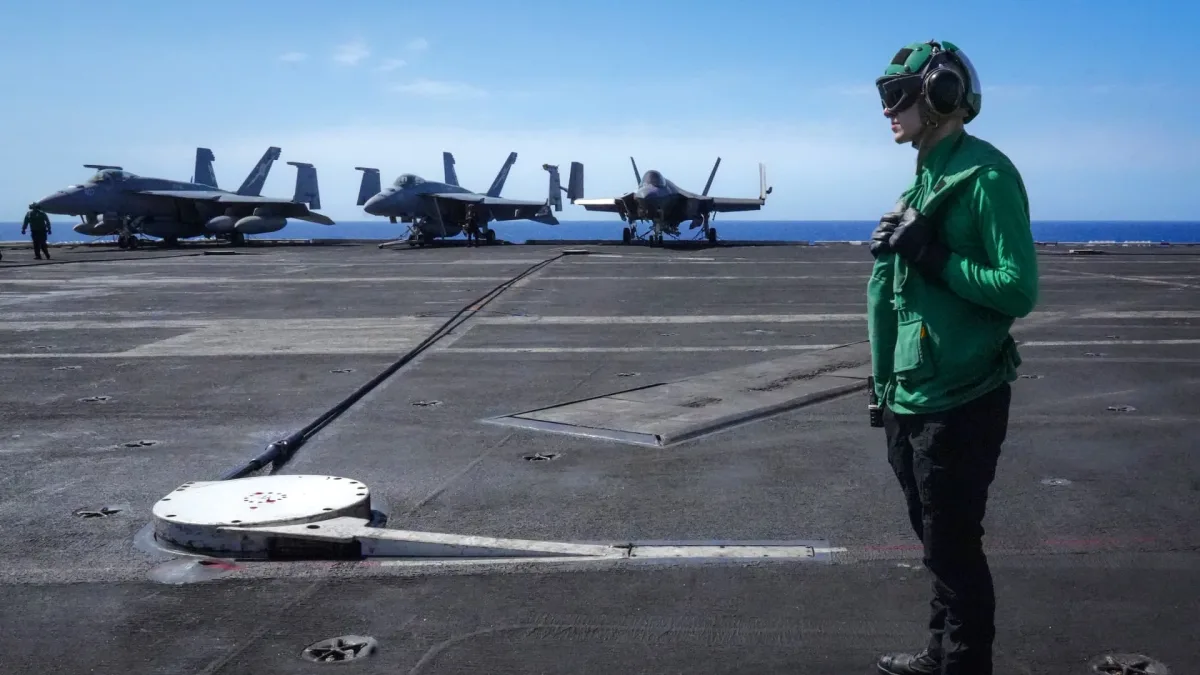
The rally accelerated after the Wall Street Journal reported that the US was sending fresh military assets to the region. US officials told the paper that up to 10,000 additional troops, along with Marine Corps vessels, were being sent and were expected to arrive by the end of November.
Why did military movements put supply security back in focus?
According to the report, the USS Theodore Roosevelt left San Diego on Sunday as part of a scheduled deployment. The USS George H.W. Bush and the USS George Washington are still operating in the Middle East.
The developments strengthened concerns in the energy market that tensions around Iran could escalate further. In a report last week, the Wall Street Journal said President Donald Trump told aides he expected to restart bombing Iran after the November midterm elections.
Fragile recovery in the Strait of Hormuz
Although crude flows have largely returned to prewar levels, the recovery is said to be fragile. Maritime security organizations said at least three tankers attempting to pass through the Strait of Hormuz were attacked this week.
What risks are being watched on diesel and refining?
Pressure on fuel markets also played a role in pricing. Ukraine's attacks on Russian refineries pushed Moscow to ban diesel exports, while strikes on refineries in the Middle East by Iran and the Houthis continue to limit fuel shipments from the region.
- Diesel prices in the US hit a record last month and remained at an average of $6.40 per gallon on Thursday.
- Trump had said he was considering a diesel export ban, but later public remarks suggested he had stepped back from that move.
- According to sources cited by Reuters, Chinese refiners canceled some gasoline and jet fuel exports scheduled for October in order to protect domestic supply.
All of these developments show that markets are closely tracking not only crude supply, but also the flow of refined products. Alongside military risks, any disruption to diesel and jet fuel supplies is likely to remain a key price driver.
"""





Comments (0)
No comments yet. Be the first to comment.
Write a Comment
Yorum yazmak için giriş yapın. Üyelik ücretsiz; yorumunuz editör onayından sonra yayımlanır.