
New wave of attacks in the Strait of Hormuz
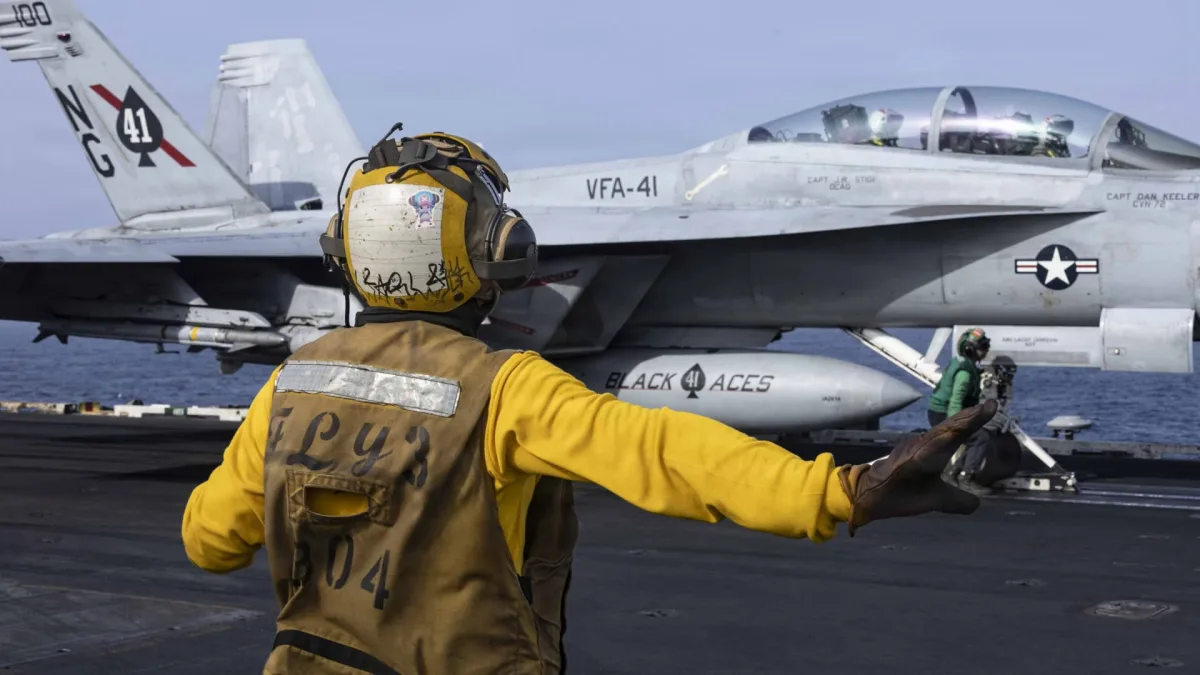
Tensions around the Strait of Hormuz escalated again on Tuesday after the United States and Iran carried out reciprocal attacks. The U.S. Central Command (CENTCOM) said it launched strikes on targets belonging to Iran’s Islamic Revolutionary Guard Corps at midday, following recent attempts against commercial ships and American personnel in the region.
Donald Trump described the operation as a response to Iran’s attempt to plant naval mines in the strait and a missile attack on a U.S. base in Jordan. CENTCOM did not immediately provide details on the number or location of the targets hit, or the military assets used in the operation.
Iran, meanwhile, said through the state-run Tasnim news agency that U.S. bases and interests in the region would be targeted with missiles and drones in response to the American strikes. According to Associated Press, explosions were seen in the skies over Aqaba in southern Jordan; it was not quickly clear what caused them or whether Iranian missiles or drones reached their targets.
Why are energy markets watching this region?
The financial importance of the conflict stems from the Strait of Hormuz's central role in global energy transport. According to the U.S. Energy Information Administration, roughly one-fifth of the world’s oil supply passed through this waterway before the war.
For that reason, the military escalation around the strait is being closely monitored for its impact on the security of energy shipments. Recent attempts to attack commercial vessels and claims of naval mines have brought shipping risks linked to oil flows back into focus.
- Threats to commercial shipping are increasing uncertainty over the continuity of energy deliveries.
- The security risk in the region is raising expectations around maritime transport and insurance costs.
What steps have been taken since the weekend?
Reciprocal operations spread across the region
On Sunday, the U.S. military struck rocket launchers on Iran’s Larak Island after CENTCOM said Iranian forces were preparing to fire rockets carrying naval mines toward the strait. Tehran responded by launching missiles at U.S. positions in Jordan; those missiles were said to have been intercepted.
The United Arab Emirates also said it intercepted an Iranian drone over its territorial waters. On Tuesday, the U.S. Embassy in Qatar issued a security alert warning Americans in the region to be more cautious amid the possibility of an unpredictable escalation, and pointed to possible flight cancellations, airspace closures and travel disruptions.
Recent tensions between Washington and Tehran turned back into direct exchanges of fire over the weekend after about one month. The conflict’s next phase is being closely watched in markets, especially for its impact on the continuity of energy flows and the safety of commercial shipping along the Hormuz route.




Comments (0)
No comments yet. Be the first to comment.
Write a Comment
Yorum yazmak için giriş yapın. Üyelik ücretsiz; yorumunuz editör onayından sonra yayımlanır.