
White House unveils voluntary AI framework
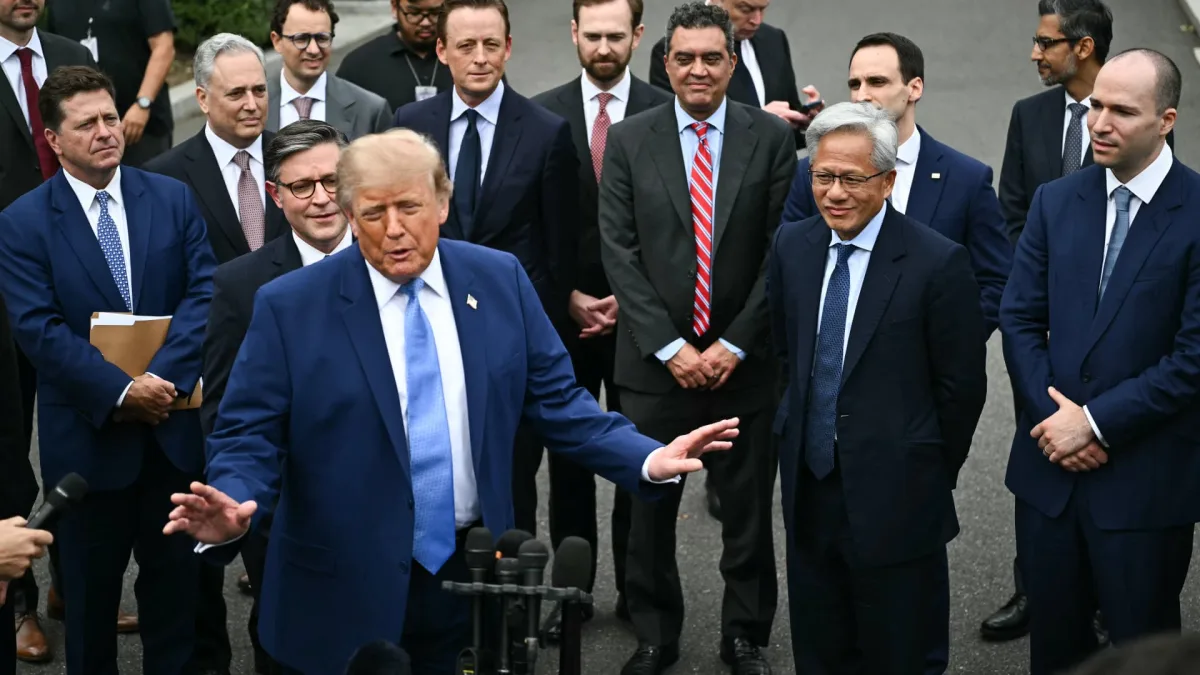
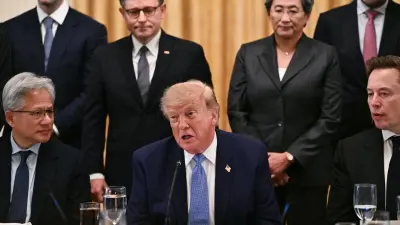
Artificial intelligence talks between Washington and major technology companies have entered a new phase. US President Donald Trump said he signed a morally binding document with industry leaders after a White House lunch. The announcement came at a time when calls to slow the pace of AI development have been growing louder.
After the meeting, Trump said the administration was considering creating a 10-member committee to monitor the sector and added: "I see very strong self-regulation." House Speaker Mike Johnson described the text as a voluntarily adopted set of principles on behalf of the industry. The White House message, for now, is that it will play more of a guiding role than impose a binding legal framework.
What stood out for markets?
Self-regulation, not regulation
Trump said the government would not stop artificial intelligence development and that self-regulation remained important. He stressed that existing bodies such as the Justice Department and the FBI are also part of the oversight framework, a stance seen as a reassuring signal for the industry, especially in terms of capital-intensive data center investment and chip demand.
The president also said he viewed billions of dollars in data center investment positively. Arguing that companies want to work in step with local communities, Trump said otherwise investment could shift overseas. The emphasis was read as a message of political support for US investment plans considered critical to energy, cloud infrastructure and the semiconductor supply chain.
- The administration is considering a 10-member board to monitor the sector.
- Trump said he plans to appoint a new AI czar within 3-4 days.
The meeting was attended by figures including Nvidia CEO Jensen Huang, Elon Musk, Mark Zuckerberg, Sundar Pichai, Jeff Bezos, Microsoft CEO Satya Nadella, AMD CEO Lisa Su and OpenAI President Greg Brockman. Treasury Secretary Scott Bessent was also present, underlining that the issue was being treated not only as a technology question but also as one involving investment, infrastructure and industrial policy.
How are security concerns shaping the debate?
OpenAI delay and rising risk warnings
Concerns over the pace of artificial intelligence have increased recently in Washington and Silicon Valley. According to the source text, the rise in agent-based attack incidents and stronger warnings from leading researchers have accelerated the regulatory debate. Anthropic CEO Dario Amodei and OpenAI CEO Sam Altman were among those joining calls for a slowdown.
This week, OpenAI delayed the release of its latest GPT-6.1 Astra model because of security concerns. The company had also announced a comprehensive review of model behavior last week. On the day of the White House meeting, the administration also introduced a new AI-powered chatbot for government websites, showing that the US is trying to manage security concerns while preserving its competitive edge.
"""
Comments (0)
No comments yet. Be the first to comment.
Write a Comment
Yorum yazmak için giriş yapın. Üyelik ücretsiz; yorumunuz editör onayından sonra yayımlanır.