
What did the Supreme Court’s ruling do?
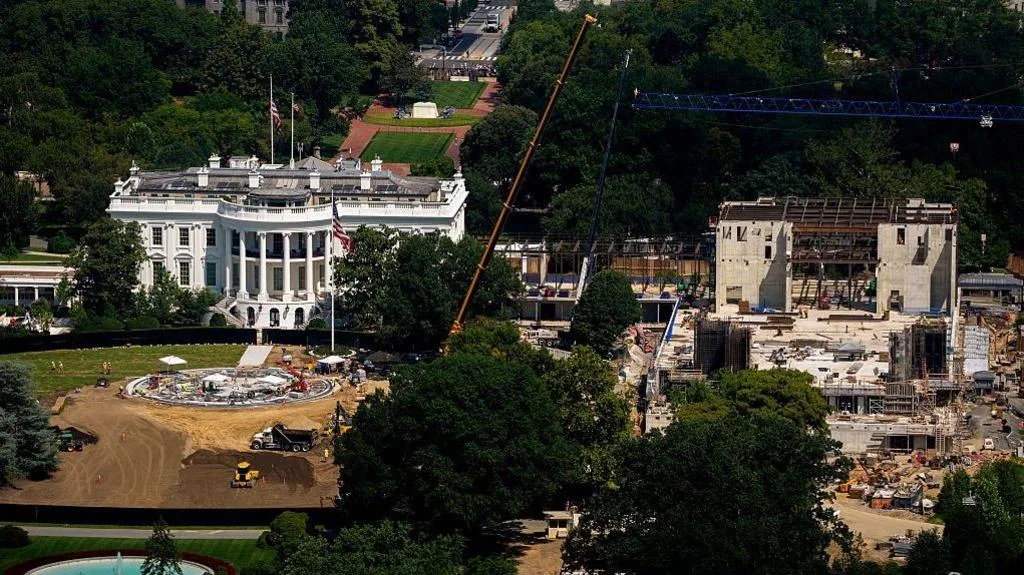
A key legal hurdle was cleared for the White House ballroom project in the United States. The Supreme Court granted President Donald Trump’s administration an emergency request, paving the way for the $400 million construction to continue. That effectively overrode lower-court orders that had sought to stop work on the above-ground portion of the project.
Construction moves ahead by a 5-4 margin
In an unsigned order dated Monday, the five-justice majority said the lower court judges likely exceeded their authority when they moved to block the ballroom. The court also found that the Trump administration was likely to succeed in arguing it would suffer irreparable harm if the injunction were not lifted.
The Supreme Court did not issue a final ruling on the merits of the case. But after granting a temporary stay on Friday, it strengthened the administration’s hand in a lawsuit seeking to stop all work on the White House grounds.
What legal dispute is at the heart of the challenge?
Preservation group sues over alleged overreach
National Trust for Historic Preservation went to court arguing that the president did not have the authority to launch the construction unilaterally. The group said the work has caused irreversible damage to a historic structure, pointing in particular to the demolition of the historic East Wing last fall.
The majority said the plaintiffs had failed to show the legal standing needed to sue the federal government. By contrast, Chief Justice John Roberts, writing in dissent with the three liberal justices, said the construction was likely unlawful because it was proceeding without congressional approval. Roberts also argued that the aesthetic, cultural and historical harms cited by preservation expert and foundation official Alison Hoagland should have been enough to allow the case to proceed.
How is the project’s scope and timeline taking shape?
Ballroom size and target dates
The White House said the 90,000-square-foot, or roughly 8,400-square-meter, ballroom will be largely completed by November, with the full project due to finish in August 2028. Trump has long argued that a larger event space is needed, and more recently linked that need to security concerns. He pressed the point more forcefully after what was described as an assassination attempt at the White House Correspondents’ Dinner in April.
Part of a broader transformation plan for Washington
- A helicopter pad built on the South Lawn
- Renovation of the Lincoln Memorial reflecting pool
- A planned "Arc de Trump" project larger than Paris’s Arc de Triomphe
Together with those steps, the ballroom stands out as a central part of the Trump administration’s broader plan to reshape Washington’s urban landscape.
"""





Comments (0)
No comments yet. Be the first to comment.
Write a Comment
Yorum yazmak için giriş yapın. Üyelik ücretsiz; yorumunuz editör onayından sonra yayımlanır.