
Supreme Court gives temporary green light to $400 million project
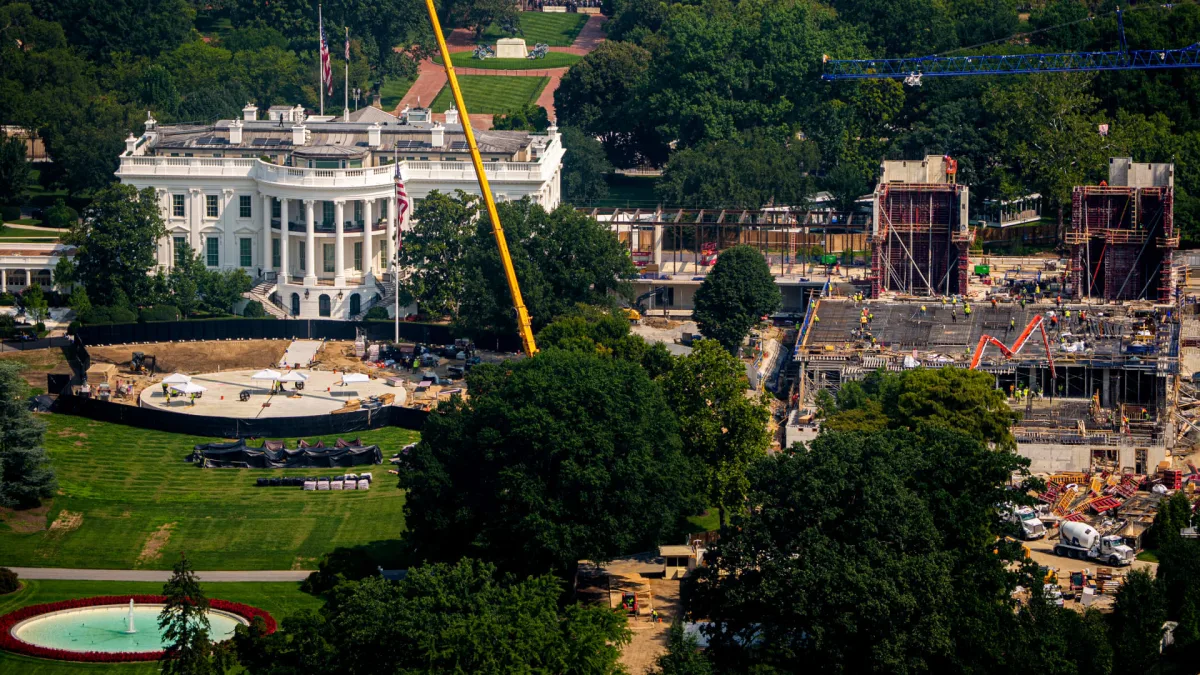
The U.S. Supreme Court has allowed construction to continue on President Donald Trump’s White House ballroom project. In a split ruling announced on Monday, the court’s five-justice majority said the National Trust for Historic Preservation in the United States was unlikely to show the legal standing needed to stop the project.
The decision prevents the estimated $400 million project from being put on hold while the case is pending. But the unsigned majority opinion did not decide whether Trump has the authority to build the structure without congressional approval, leaving that issue unresolved in the litigation.
What financial and legal questions are at the center of the case?
The court focused on standing to sue
The majority said the foundation member Alison Hoagland may not have been enough to establish standing based on her claim that seeing the completed ballroom during occasional visits to the neighborhood would harm her. The ruling suggested that mere annoyance, disagreement or aesthetic displeasure may not meet the U.S. constitutional standard for concrete, personal injury.
The question of congressional approval remains unanswered
Chief Justice John Roberts and the court’s three liberal justices dissented. Roberts argued that Congress bars construction on federal property without clear authority and that the new ballroom would be a structure rising on President’s Park in Washington, D.C.
- The majority accepted the view that the plaintiffs’ legal standing may be weak.
- The dissenting justices argued that the executive branch cannot move ahead with the project without explicit approval from Congress.
The current state of construction and what happens next
The temporary halt has effectively been lifted
Last week, Roberts temporarily paused an order from a U.S. District Court judge that had halted construction for the duration of the case. That move gave the full Supreme Court time to consider whether a longer-term stay was needed; with the latest ruling, construction work can now continue.
Key features of the project
The dissent said the East Wing was being demolished to make room for the new privately funded state ballroom, and that construction has been moving quickly for about a year. As a result, the case is keeping in the spotlight not only the preservation dispute, but also the limits of federal property authority and how a privately funded public building model should be applied.
"""





Comments (0)
No comments yet. Be the first to comment.
Write a Comment
Yorum yazmak için giriş yapın. Üyelik ücretsiz; yorumunuz editör onayından sonra yayımlanır.