
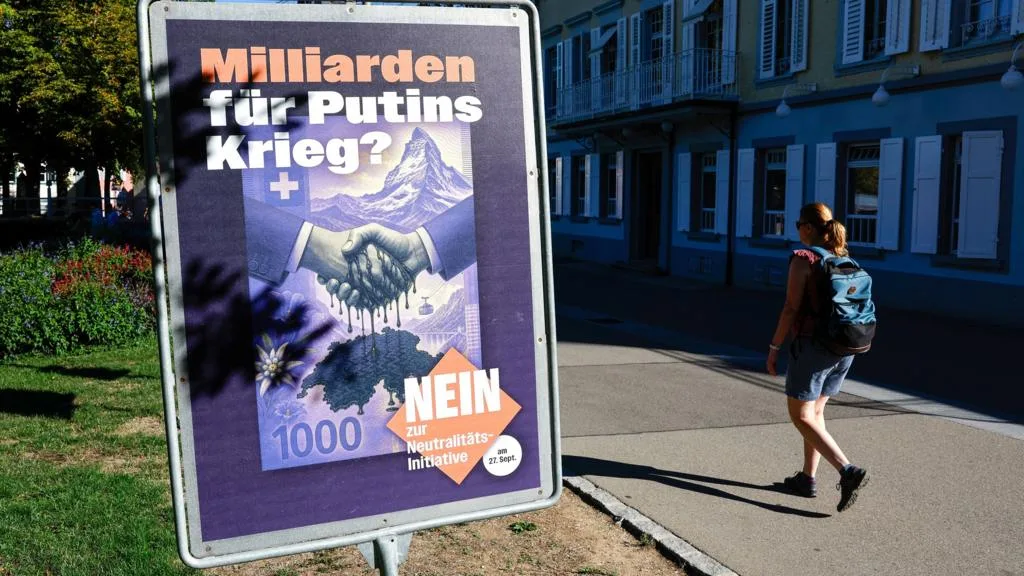
What came out of the referendum?
In the referendum on Swiss neutrality, voters did not endorse a narrower application of the centuries-old principle. According to official results, the proposal was rejected by more than 70% of the vote, preserving the government’s current flexible approach.
The initiative sought to place stricter rules on how the country responds in international crises. It was backed by the right-wing Swiss People's Party (SVP), while the federal government and other major parties opposed it.
What would have changed if the proposal had passed?
Had the initiative been approved, Switzerland would have been blocked from imposing sanctions without United Nations approval. It would also have created a new political limit on closer ties with NATO.
- Sanctions could not have been adopted without UN approval.
- Steps toward closer ties with NATO would have become even more difficult.
Why did the war in Ukraine bring the debate back?
Russia's full-scale invasion of Ukraine has revived questions about how Switzerland’s neutrality should be applied under current conditions. Moscow openly backed the initiative.
According to Lukas Golder, co-director of the Gfs.bern research institute, in comments to Swiss public broadcaster SRF, the result showed that voters do not want to abandon neutrality, but also are not closing the door to sanctions against Russia.
What was the government's line?
Foreign Minister Ignazio Cassis argued in television debates that neutrality has historically been applied with a degree of flexibility. The government said it did not plan to lift its ban on selling weapons to countries at war, including Ukraine, while stressing that neutrality does not mean ignoring violations of international law.
Switzerland had earlier also rejected Germany’s request for ammunition for tanks to be sent to Kyiv. That decision showed that the country’s current legal limits on arms supplies remain in place.
What is the historical basis of neutrality?
Switzerland's neutrality was recognized internationally at the 1815 Congress of Vienna. The status later received a legal framework with the 1907 Hague Convention, which made clear the principle of not supplying arms to belligerents.
The country also remained neutral throughout World War II. However, Switzerland apologized in the 1990s for wartime policies, including holding gold looted by the Nazis in its banks and turning away thousands of Jewish refugees.
Because of Switzerland's system of direct democracy, major political decisions are frequently put before voters in referendums. This latest vote showed that neutrality remains not only a historical principle, but also a central issue in current foreign policy choices.
"""





Comments (0)
No comments yet. Be the first to comment.
Write a Comment
Yorum yazmak için giriş yapın. Üyelik ücretsiz; yorumunuz editör onayından sonra yayımlanır.