
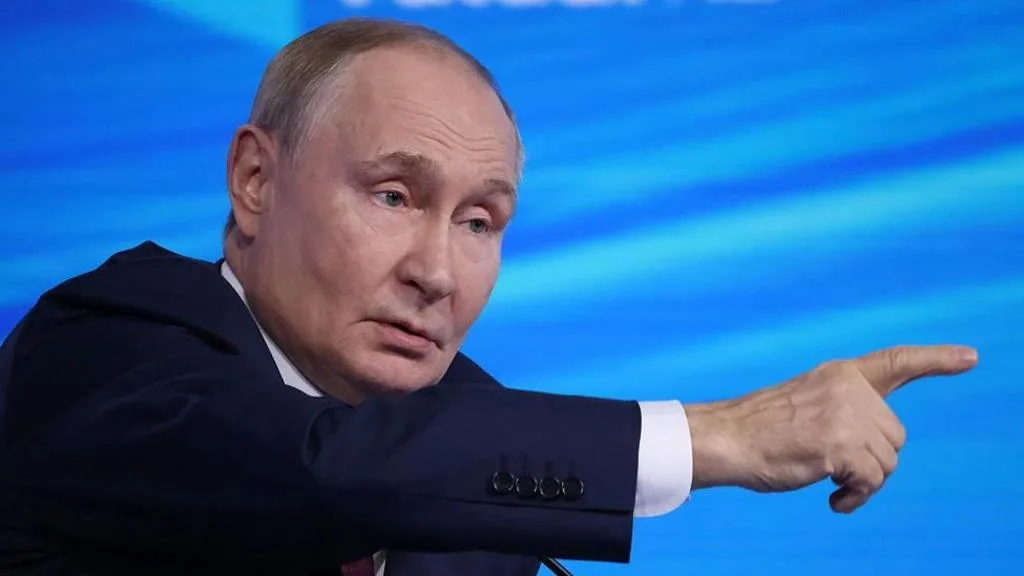
What do the messages from the Kremlin point to?
Recent political and diplomatic signals from Moscow have strengthened the view that the Kremlin is not ready to back down in the Russia-Ukraine war. Vladimir Putin’s speech to parliament, statements from figures close to power and repeated references to the battlefield all suggest that an end to the conflict is unlikely in the near term.
The State Duma, formed after last month’s legislative elections, has been described in the Russian press as more pro-Putin than ever before. The ruling United Russia party’s gains in seats have given the Kremlin room to argue that it has received a strong mandate from the public.
Putin’s speech on Thursday at the Valdai Discussion Club in Moscow is also expected to offer clues about the Kremlin’s next steps. The Russian leader’s previous speeches and statements have shown that, despite heavy battlefield losses and economic pressure, Moscow still believes it can achieve military results.
Why are the Ukraine front and European support seen as critical?
Assessments in the Russian media suggest Moscow is encouraged by Ukraine’s shortage of air-defense missiles. The same commentary argues that continued Russian attacks through the winter could increase pressure on Ukraine, while Kyiv says it is struggling to shoot down ballistic missiles and new jet-powered drones.
The Kremlin sees the cutoff of military and financial support from European countries to Ukraine as one of its clear objectives. Moscow says this support is prolonging the war; Western capitals, by contrast, say Russia is raising the pressure precisely to weaken that backing.
West raises hybrid war accusations
Western officials accuse Russia of carrying out an increasingly aggressive hybrid war against European countries. These allegations are based on activities that fall into the gray zone between peace and open warfare.
- Cyberattacks and sabotage attempts
- Russian drones violating European airspace
The discovery in Germany of a drone carrying explosives near Leipzig Airport, close to an area where cargo planes bound for Ukraine were stationed, was one of the examples that has stood out in this debate.
Russian Foreign Minister Sergey Lavrov used the phrase “Call it what you want” when speaking about strikes on weapons Europe sends to Ukraine.
Lavrov repeated a line Moscow has long defended, arguing that the war in Ukraine is in fact a conflict Europe is waging against Russia. But the fact remains that the war escalated with the large-scale invasion launched by the Kremlin in 2022.
Why does the war look unlikely to end soon?
According to the analysis in the source text, a direct military confrontation between Russia and a NATO country is not seen as a near-term possibility. Even so, Moscow is believed to be calculating that it can frighten Europe into reducing support for Kyiv.
Russian foreign policy strategist Sergei Karaganov argued that if European support continues, escalation could become inevitable; he said conventional attacks would come first and, if those failed to produce results, the nuclear option could enter the discussion. Karaganov also acknowledged that Russia has suffered heavy losses, while saying Moscow has become more aggressive toward Ukraine.
Lavrov’s recent speech at the United Nations General Assembly, in which he accused the West of using “raw force” around the world, and his open defense of Russia’s use of force in Ukraine, show that the Kremlin’s line has not changed. The picture is being read as a new signal that the war is more likely to drag on than come to an end.
"""
Comments (0)
No comments yet. Be the first to comment.
Write a Comment
Yorum yazmak için giriş yapın. Üyelik ücretsiz; yorumunuz editör onayından sonra yayımlanır.