
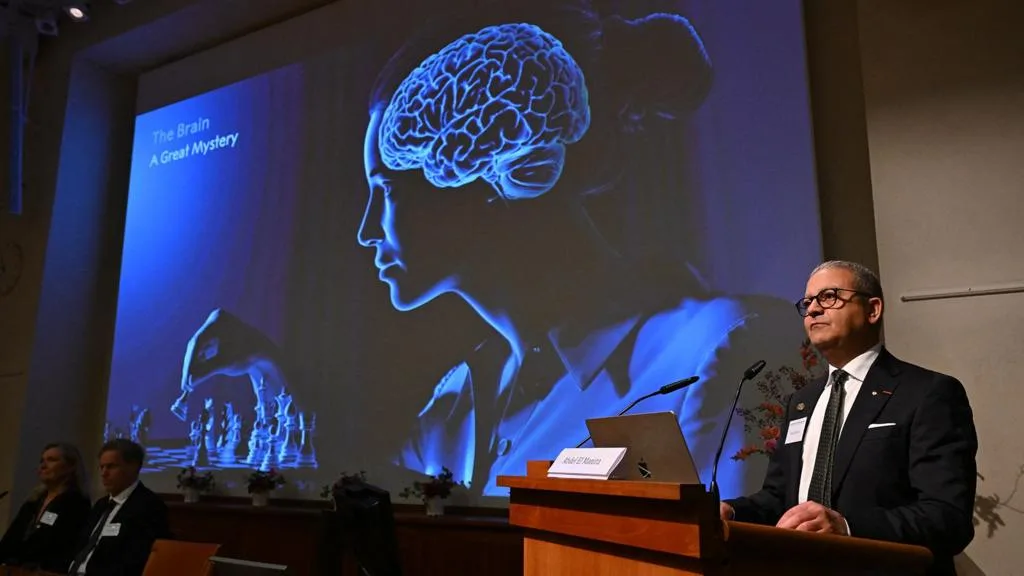
The prize recognizes pioneering work in optogenetics
This year’s Nobel Prize in Physiology or Medicine was awarded to U.S. psychiatrist and neurologist Karl Deisseroth and German scientists Peter Hegemann and Georg Nagel for optogenetics research described as having opened a new era in understanding how the brain works. The Nobel Committee said the three researchers laid an important foundation in neuroscience by showing how neural circuits can be switched on and off.
According to the committee, the method has made it possible to study neural networks linked to specific memories, emotions and behaviors. It also said the work has helped explain the mechanisms behind neurological and psychiatric diseases.
The prize money will also be shared
In addition to the Nobel Prize, the three scientists will share the total prize money of 900,000 pounds, or 12 million Swedish kronor. The winners said receiving the award was a great honor for them.
What does optogenetics offer in the study of how the brain works?
Optogenetics is described as a method that allows researchers to control the electrical activity of cells with light. The technique uses a special protein derived from algae, enabling scientists to activate or stop nerve cells with light.
In the early 2000s, Hegemann and Nagel discovered this algae protein, known as channelrhodopsin. Deisseroth then showed how the protein could be used to switch nerve cells in the mouse brain on and off. After that breakthrough, researchers gained the ability to examine nerve cells and circuits in animals in much greater detail.
- Individual nerve circuits can be activated or suppressed using light.
- The method makes it easier to study neurons linked to behavior, emotions and memory.
- It also provides new data on how the nervous system interacts with other parts of the body, such as the heart and intestines.
Clinical research aims to restore vision
The Nobel Committee said optogenetics shows promise not only for basic science but also for medical applications. Ongoing clinical studies are aiming to partially restore vision in people who have lost sight because of retinitis pigmentosa.
In this approach, a special protein is introduced into the damaged part of the eye. Special light-emitting glasses then activate the therapeutic protein, allowing some patients to regain at least limited vision. The committee noted that these steps represent the early stages of using the method as a treatment.
"""





Comments (0)
No comments yet. Be the first to comment.
Write a Comment
Yorum yazmak için giriş yapın. Üyelik ücretsiz; yorumunuz editör onayından sonra yayımlanır.