
Microsoft is looking for ways to generate more revenue from AI
Although Microsoft AI moved early in the race, the company is now under pressure to turn that investment into a stronger financial payoff. Despite a market value of nearly $4 trillion, Microsoft remains somewhat overshadowed in perceptions of AI leadership by rivals such as Nvidia, OpenAI, Anthropic, Meta and Google, while Wall Street has also taken a cautious stance.
According to CNBC, Microsoft shares had risen just 7% for the year as of Friday’s close. That performance suggests the stock has lagged other major technology names and the Nasdaq index. Microsoft has also failed to outperform the S&P 500 in a calendar year since 2023.
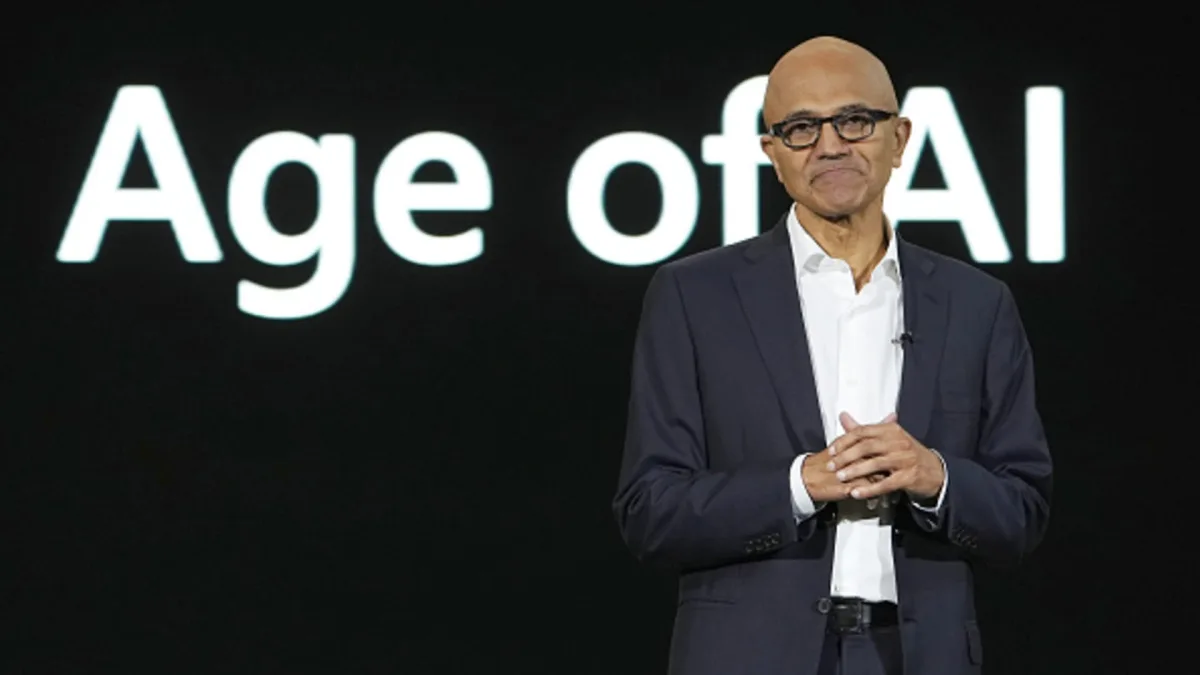
CEO Satya Nadella has become more visible in recent AI discussions. At the Windows and Surface event the company will hold on Wednesday in San Francisco, Microsoft is expected to highlight how local AI will shape the next era of personal computers.
The shift from subscriptions to usage-based billing is accelerating
A new revenue formula for Copilot and GitHub Copilot
A large part of Microsoft’s existing enterprise software business is built on long-term subscriptions. Copilot in the Microsoft 365 suite is sold for an extra $30 per user per month, and the company currently has 30 million Copilot seats. By comparison, the commercial Office 365 base stands at more than 450 million, showing that the growth opportunity is still far from fully tapped.
Nadella has told investors in recent months that the business model needs to change again. Under the new approach, the company aims to generate revenue from token consumption, the core unit of measurement in the AI economy. Microsoft’s usage-based billing model is already being used in Copilot Cowork, a product designed for large workloads; in July, the company said thousands of customers were paying for and actively using the service.
- GitHub Copilot users rose from 26 million last October to 50 million in July.
- Microsoft said GitHub Copilot sales growth accelerated by 60% quarter over quarter after the new pricing model was introduced.
The picture shows Microsoft moving away from fixed license revenue and toward a model more closely tied to usage intensity on the AI side. Still, some investors and IT managers believe questions remain about product maturity and where pricing will ultimately settle.
Competition is intensifying as the OpenAI relationship changes
The main risks investors are watching
Microsoft’s once-close partnership with OpenAI has also lost some of its former special status. The company lost its exclusive position as OpenAI’s cloud provider last year, and this year its license to OpenAI’s intellectual property also ceased to be exclusive. Microsoft said in April that it remained OpenAI’s primary cloud partner, but the alliance is now operating on a different footing.
A team led by Mustafa Suleyman, who was appointed in 2024 to oversee Microsoft’s AI ventures, has developed models in coding, image generation, reasoning and speech-to-text. Even so, in independent rankings, the company’s models still have not matched the raw performance of Anthropic and OpenAI.
Even so, Nadella’s track record continues to draw investor attention. Since becoming CEO in 2014 and steering Microsoft toward cloud and subscription-based software, the company’s shares have risen about 14-fold. The market is now watching to see whether that same transformation can be repeated in the AI era, this time with a consumption-based revenue model.
"""





Comments (0)
No comments yet. Be the first to comment.
Write a Comment
Yorum yazmak için giriş yapın. Üyelik ücretsiz; yorumunuz editör onayından sonra yayımlanır.