
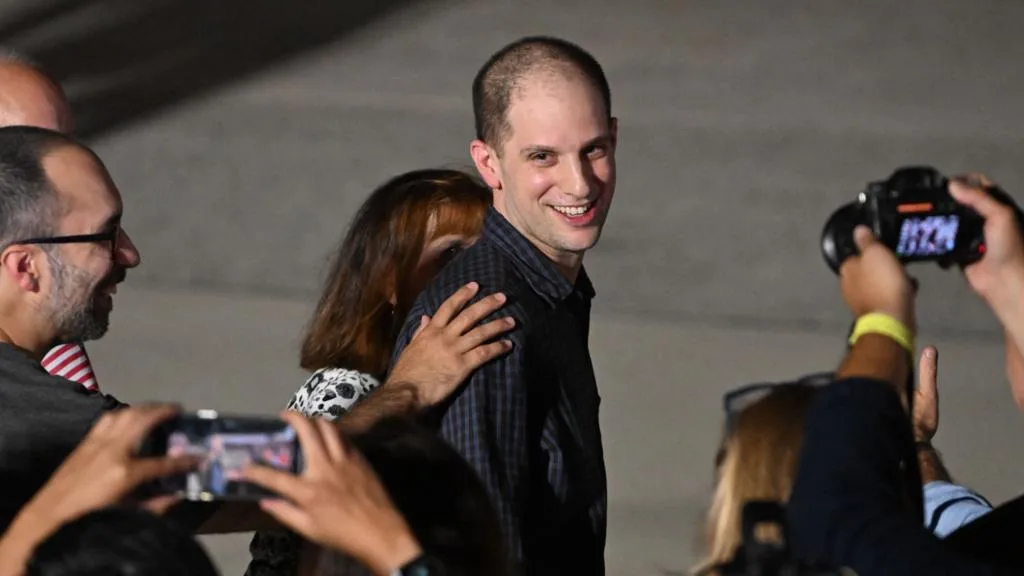
Detention seemed like a planned operation from the start
Evan Gershkovich described in detail the moment he was detained in Russia in 2023 in an interview with BBC Radio 4's Today programme. The American journalist said that while meeting someone he believed was a source at a restaurant in Yekaterinburg, masked men entered, surrounded him, and he was soon taken into custody by the FSB, Russia's Federal Security Service.
Gershkovich said he immediately felt this was not a routine procedure. The journalist, who had lived in Russia since 2017, was working as the Wall Street Journal's Moscow correspondent at the time of his arrest; he now lives in Berlin, Germany.
Yekaterinburg is about 1,600 kilometres east of Moscow. Gershkovich said the person he had met disappeared into the crowd, which further convinced him that he had been set up.
A prisoner swap came into view after the espionage charges
How did he interpret why he was targeted?
The journalist said he was struck by the fact that he was not interrogated after his detention and was not tortured, which gave him the impression that he was being treated not like a real spy but like someone with bargaining value. He and his newspaper have maintained from the start that the espionage allegations against him were false.
Gershkovich was sentenced to 16 years in prison in Russia, but was released after 16 months as part of a high-profile prisoner swap on 1 August 2024. The journalist said he believed Moscow was using the case as leverage for one of its own citizens, and that one possible name was assassin Vadim Krasikov, who is serving a life sentence in Germany.
- Place of detention: Yekaterinburg
- Prison where he was held: Lefortovo in Moscow
- Release date: 1 August 2024
Days in Lefortovo and the difficult adjustment after release
Gershkovich described his time in Lefortovo Prison in Moscow as deeply isolating. He said he was kept in a very small space, which was psychologically exhausting, while stressing that his own conditions did not reflect the reality for everyone in Russian prisons.
He pointed to the case of Ukrainian journalist Viktoriia Roshchyna, who died in Russian captivity in 2024. Reports that her body was returned months later with signs of torture strengthened Gershkovich's view that he had been treated differently.
Describing the day of his release as one of great joy, the journalist said returning to normal life afterwards was harder than he expected. He said he suffered from insomnia, panic attacks in crowds and difficulty controlling his anger; he has been receiving support from therapists who work on post-traumatic stress disorder, and said writing about what he went through also helped. Gershkovich, who grew up in a Russian-speaking home, said he hopes to return to Russia one day if political conditions change.
"""
Comments (0)
No comments yet. Be the first to comment.
Write a Comment
Yorum yazmak için giriş yapın. Üyelik ücretsiz; yorumunuz editör onayından sonra yayımlanır.