
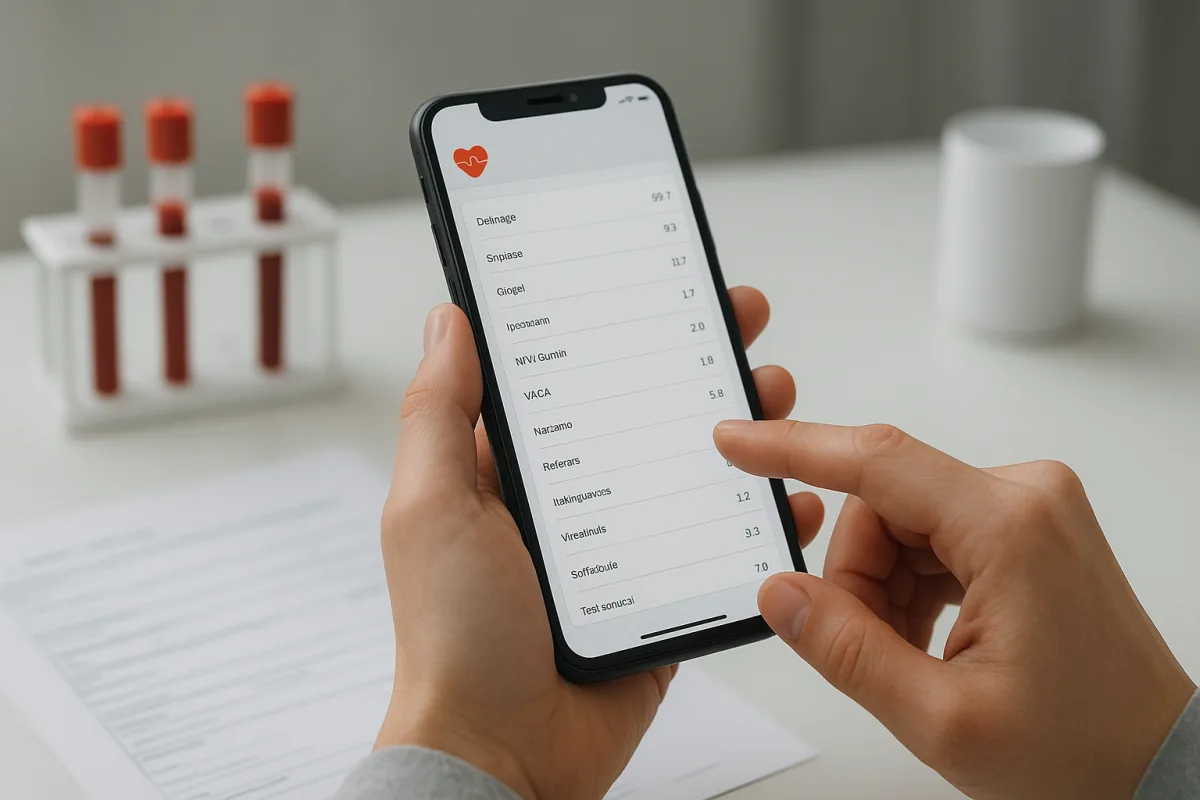
What should you look at first on the e-Nabız screen?
When reviewing e-Nabız test results, focusing on just one value can be misleading. On the results screen, the test name, measurement unit, reference range, sample type and any laboratory note should all be read together. Because the same test may be performed with different methods in different laboratories, the context shown on the screen matters.
A laboratory result may appear normal, borderline or outside the reference range. However, this does not always mean disease; age, sex, medications, fasting status, time-of-day changes and accompanying symptoms can all affect the result. For that reason, it is better to look at the overall picture rather than draw a definitive conclusion from the warning on the screen alone.
What does the reference range mean?
The reference range shows the lower and upper limits the laboratory uses as the expected range for that test. A result outside this range does not necessarily mean there is a serious problem, and a result within the range does not always mean everything is fine. Clinical assessment is made together with the physical examination findings and other tests.
How should high and low labels be read?
The high or low warning shown next to a result indicates that the value is above or below the limits set by the laboratory. This warning alone may not be enough, especially when the change is small and near the cutoff. Comparing the result with previous tests and looking at how the same test has changed over time provides a more reliable approach.
Which details matter when interpreting blood test results?
The reason the test was ordered is very important in the interpretation of blood test results. A routine checkup is not evaluated in the same way as a test ordered for a specific complaint. The tests included in the panel requested by the doctor often complement one another, and one result should not be considered separately from the others.
- Check what the test name is measuring.
- See whether the measurement unit matches previous results.
- Assess where the result falls in relation to the reference range.
- Compare it with values from earlier dates to identify the trend.
- Read any additional notes from the laboratory, if available.
For tests that require fasting, the conditions under which the sample was taken can also affect the result. Likewise, supplements, regular medications, infections or intense exercise can cause temporary changes in some values. That is why the conditions before the test are just as important as the results screen itself.
When should you consult a doctor?
Marked abnormalities seen together with symptoms, repeated out-of-range values, or changes in tests ordered for follow-up all require medical evaluation. Especially when a laboratory result comes alongside physical complaints, the safest approach is to seek expert advice rather than self-diagnose. e-Nabız provides quick access to results, but it does not replace a definitive interpretation.






Comments (0)
No comments yet. Be the first to comment.
Write a Comment
Yorum yazmak için giriş yapın. Üyelik ücretsiz; yorumunuz editör onayından sonra yayımlanır.