

Which financial layer stands out for AI agents?
Crypto infrastructure is emerging as one of the main themes investors are watching if AI-powered autonomous software becomes more prominent in the economy. In a weekly analysis published by CoinDesk, it was noted that these agents could run into the limits of traditional payment systems when buying data, renting compute power, executing transactions and carrying out financial decisions.
According to Utkarsh Ahuja, founder of Moon Pursuit Capital, the classic financial infrastructure built around people and institutions was not designed for a scenario in which millions of software agents continuously carry out cross-border, low-value transactions. In that framework, wallets, smart contracts and especially stablecoins were highlighted as key tools because they can enable programmable money flows.
What are investors focusing on?
The analysis said the opportunity at the intersection of AI and crypto is not limited to companies building models or applications. According to the author, demand may concentrate instead on the financial layer that allows machines to transact securely with one another.
- Stablecoins and payment infrastructure
- Identity verification and authorization systems
- Custody, settlement and cybersecurity solutions
- Rails linking traditional markets with digital assets
The piece also said issues such as data sourcing and proof of ownership are becoming more important. Blockchain was said not to solve all of these problems on its own, but it could still be a natural part of the infrastructure stack because of its ability to create verifiable, shared records.
The link to tokenization and capital markets
The author argued that tokenization is beginning to move traditional assets onto blockchain, while stablecoins are showing that meaningful financial activity can take place on-chain. At the same time, as financial decision-making becomes more automated with AI, the overlap between programmable assets and programmable intelligence is becoming more important for markets.
What are the market signals?
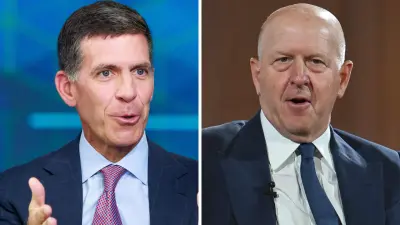
The bulletin pointed to a two-way strengthening link between traditional finance and crypto infrastructure. According to the report, Goldman Sachs redirected roughly $100 billion in Treasury funds from tokenization to digital asset trading firms; meanwhile, Cboe Global Markets and S&P Dow Jones Indices extended their licensing agreement, leaving room to explore tokenized options.
On the tokenized stock side, decentralized exchange flows were said to have concentrated in bStocks and Robinhood, while Backpack's share fell to about 2%. By contrast, BP's price rose to around $1.35. The analysis argued that this suggests investors are pricing not only the narrative, but also licensed, tradable structures.
"""

Comments (0)
No comments yet. Be the first to comment.
Write a Comment
Yorum yazmak için giriş yapın. Üyelik ücretsiz; yorumunuz editör onayından sonra yayımlanır.