
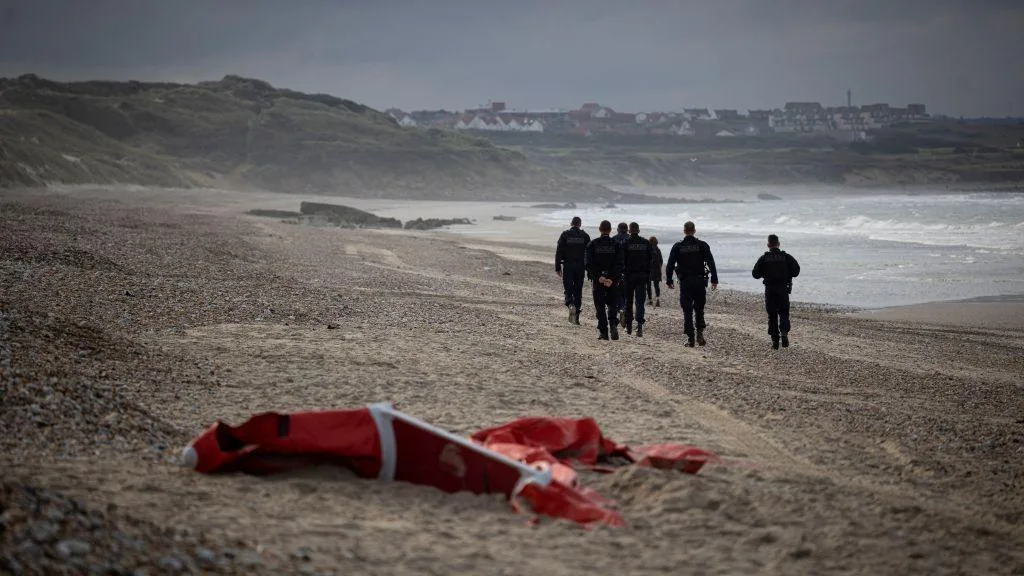
Verdict in the Paris trial
In a case heard in Paris, the French capital, six people accused of migrant smuggling were convicted in connection with the Channel disaster. At the end of the four-week trial, the defendants were sentenced to prison terms ranging from 6 to 10 years. Seven others received up to four years for lesser offenses, while one defendant was acquitted.
According to the court file, the boat sent out distress calls to French and British coastguard units after departing the French coast on the morning of November 24, 2021, but it sank shortly afterward. Thirty-one migrants, including a seven-year-old child, died in the disaster. Most of the victims were Iraqi Kurds, while Afghan, Egyptian and Iranian Kurds were also among those killed; only two men survived.
What did the court find?
During the trial, findings that the boat was unfit for the sea came to the fore. The indictment said the vessel was poorly built, uncertified, unsafe for navigation and overloaded, and that passengers were not given proper life jackets.
The court concluded that two separate networks worked together to organize the crossing. One was made up of Iraqi Kurds and the other of Afghans; they acted jointly to bring migrants to the meeting point and organize the sea crossing.
- The boat was found to be unsuitable for safe navigation.
- The failure to provide proper life jackets was one of the key elements in the case.
Families and survivor statements
At the start of the trial, some family members who came from the Kurdistan Region of Iraq also attended the hearings. They said their relatives had traveled via Turkey, Italy and then France, and that they had paid an advance to a bank in the Kurdistan Region of Iraq during the process.
The statement of Issa Omar, one of the two survivors, was read to the court by his lawyer. Omar was said to have been unable to appear before the judge because of the trauma he suffered after the disaster, and to have survived by clinging to a life jacket and to bodies floating on the water.
Investigations and other developments
Police tracked members of the two networks through phone records. Bashdar, described as the head of the Iraqi Kurdish network, was not on trial and was reported to be in custody in Iraq. His close aide, Harem Ahmed Abawaker, received an 8-year prison sentence.
The heaviest sentence, 10 years, was handed to Obaidullah Maroofkhel, who was said to have led the Afghan network. Maroofkhel and another defendant were tried in absentia. Because most of the defendants were not in custody during the trial, the court issued six arrest warrants after the verdict.
Meanwhile, a separate investigation is ongoing into seven members of the French armed forces accused of failing to respond to distress calls on the night of the disaster. A decision on whether to bring charges against them, including personnel stationed at a regional maritime rescue center or on a naval vessel, is expected in the coming months.




Comments (0)
No comments yet. Be the first to comment.
Write a Comment
Yorum yazmak için giriş yapın. Üyelik ücretsiz; yorumunuz editör onayından sonra yayımlanır.