
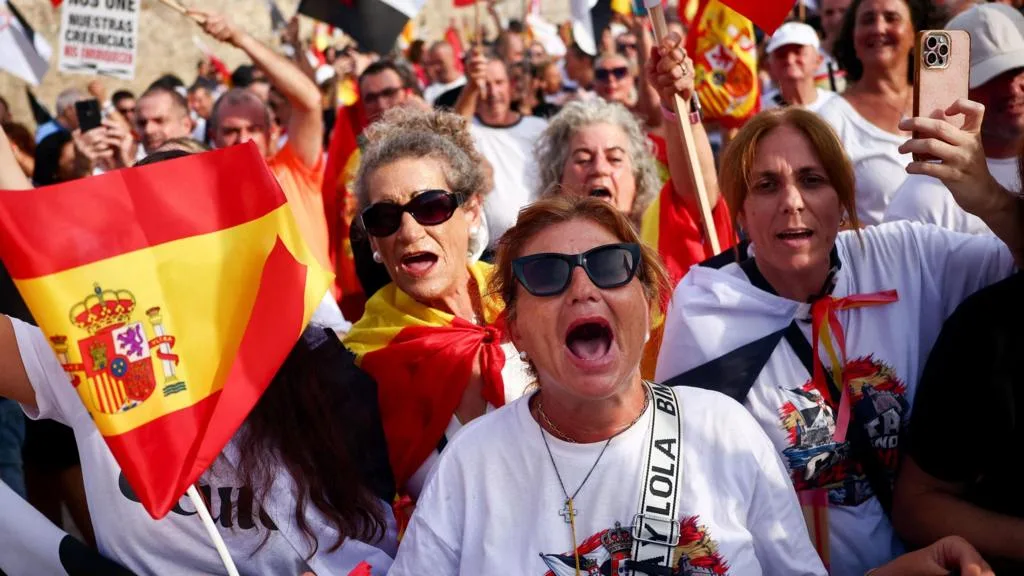
Ceuta migration crisis sparks protests across Spain
After a mass crossing into Ceuta, Spain’s autonomous city on the North African coast, the Ceuta migration crisis has fuelled political tension nationwide. Demonstrations in several cities targeted the government’s border management and its response to the crisis. Opposition parties said Prime Minister Pedro Sánchez had abandoned Ceuta residents, while the government accused right-wing parties of trying to turn the crisis into political gain.
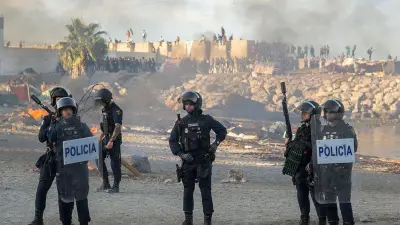
On July 30 and 31, at least 72,000 migrants crossed from Morocco into Ceuta. Although most of them have returned, sources say around 5,000 people are still in makeshift camps, on the beach or elsewhere in the city. The situation has heightened unrest in Ceuta and increased pressure on the government in Madrid.
Local residents have reportedly taken to the streets almost daily in recent days. Protesters are demanding that migrants be sent back to their countries of origin or relocated to other parts of Spain.
Opposition targets the government as tens of thousands rally in Madrid
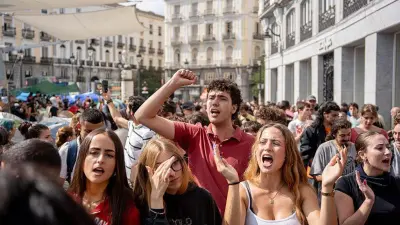
Wednesday’s protests were called by municipalities run by, or strongly influenced by, the opposition conservative People’s Party (PP) and the far-right Vox. According to government figures, more than 50,000 people attended the rally in Madrid. Protesters called for Sánchez to resign.
PP leader Alberto Núñez Feijóo joined the Madrid demonstration, while Vox leader Santiago Abascal also levelled sharp criticism at the government. At the large rally in Ceuta, demonstrators chanted slogans insisting the city must be defended.
Key demands raised during the protests
- Faster and more effective action against irregular migration pressure in Ceuta
- Return of migrants remaining in the city, or their distribution across Spain
- More security and administrative support from the central government for Ceuta
David Hernandez, a 45-year-old teacher, told Reuters he found the government’s response inadequate and delayed. The local backlash shows that the border issue in Ceuta has become not only a migration debate, but also a wider question of public order and state capacity.
Police report and Morocco debate deepen the pressure
One factor adding to the pressure was a report said to have been prepared by the National Police Center for Migration and Borders (CENIF) and submitted to Spain’s National Court. The report said Moroccan security forces showed “complete tolerance” during the crossings and that police presence around the border was lower than normal. Even so, the report did not state definitively that the influx was directly organized by Morocco.
Sánchez had earlier argued that Morocco was not responsible, blaming the mass crossing on smuggling networks and misinformation spreading online. Morocco has also denied claims that it planned or took part in the crossings.
Impact of social media and the diplomatic backdrop
Spanish fact-checking platform Maldita said messages encouraging people to cross the border circulated on Moroccan social media before the crossings began. In August, numerous posts also portrayed the Ceuta border fence as safe and easy to cross. But according to figures given by the mayor, at least 100 people have died while trying to go around the border fence by sea.
Morocco’s long-standing claim over Ceuta and Melilla already makes the two border cities a sensitive diplomatic issue between the two countries. The latest developments show that the migration crisis has become not only a humanitarian challenge, but also a political test with implications for Spain-Morocco relations.



Comments (0)
No comments yet. Be the first to comment.
Write a Comment
Yorum yazmak için giriş yapın. Üyelik ücretsiz; yorumunuz editör onayından sonra yayımlanır.