
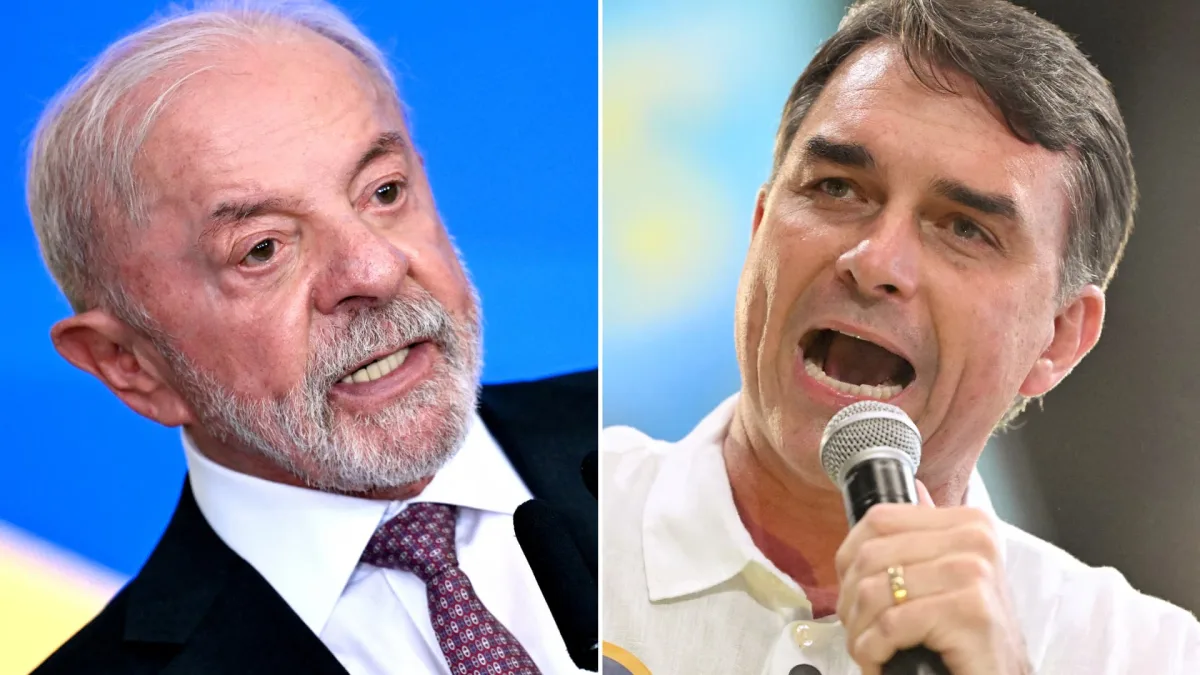
Markets are pricing in two very different outcomes before Brazil’s election
Before the Brazil election, Wall Street is calculating two sharply different market paths depending on what emerges from Sunday’s first round. Market expectations suggest a Flavio Bolsonaro victory would support gains in bonds, stocks and the Brazilian real, while a lead for Luiz Inacio Lula da Silva could bring weaker pricing.
According to Fernando Marengo, chief economist at Black Toro Global Investments, investors’ central question is whether the race will tilt toward Lula or Bolsonaro. If neither candidate clears the 50% threshold, the vote will go to a second round on Oct. 25, the source said.
What do polls and recent pricing say?
JPMorgan said that on days when Flavio Bolsonaro has gained ground in the polls, the MSCI Brazil index has risen by an average of 0.25% a day. On Kalshi, the prediction market, Bolsonaro is seen as having a 60% chance of winning and Lula 39%, although the fact that these markets are banned in Brazil means they may not fully reflect local sentiment.
Why is fiscal discipline at the center of investors’ attention?
The main reason markets are pricing Bolsonaro more positively is his pledge of tighter fiscal policy. Brazil’s public debt stands at 81.9% of GDP, up 10 points since Lula took office.
Leonardo Porto, chief economist for Brazil at Citi, argues that a lasting fiscal adjustment of 3%-3.5% is needed to stabilize the debt dynamic. According to Porto, one-off steps such as privatizations would not be enough; spending cuts or tax increases also look difficult because about 90% of the budget is mandatory.
- Brazil’s tax burden, at 32%, is the highest in Latin America, according to OECD data.
- A weak growth outlook is raising the economic and political cost of any new fiscal tightening.
What banks are projecting for bonds, the currency and stocks
JPMorgan says that if Bolsonaro pursues a strong reform agenda, markets could see a rerating similar to the one during the earlier reform period. The bank noted that Jair Bolsonaro’s pension reform saved hundreds of billions of dollars, and recalled that during that period Brazil’s two-year bond yield fell to about 4.7% and the stock market rose 130%.
In a new reform cycle, nominal rates could fall toward a neutral level of 10% and real rates toward 6%; for the MSCI Brazil, upside potential could range from 21%-41%. JPMorgan also expects the dollar-real exchange rate to reach 5.50 in a Lula scenario and 4.90 in a Bolsonaro scenario.
All members of the lower house and one-third of the Senate will also be renewed in the election, so the legislative balance is being closely watched for the feasibility of reforms. Among the external risks facing investors are rising global interest rates and the impact of El Niño, which could hurt agricultural exporters.
"""





Comments (0)
No comments yet. Be the first to comment.
Write a Comment
Yorum yazmak için giriş yapın. Üyelik ücretsiz; yorumunuz editör onayından sonra yayımlanır.