

What drove the pullback in Bitcoin?
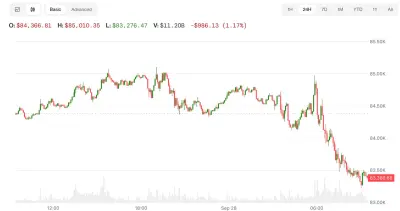
Cryptocurrency market bellwether Bitcoin failed to hold on to its latest rally as U.S. trading got underway on Tuesday. According to TradingView data, BTC climbed to as high as $84,540 during the day before reversing course and slipping below $83,600, close to its opening level.
The most notable factor in pricing was U.S. Treasury yields. The 30-year Treasury yield rose above 5.60%, setting a new 24-year high, while the 10-year yield reached 5.26%. Higher rates make investors more cautious about risk assets and reinforced the defensive tone across the cryptocurrency market.
Caution in the market was not driven by yields alone. According to the source text, geopolitical uncertainty around a U.S.-Iran war, higher oil prices and a persistent inflation backdrop were also among the factors weighing on investor risk appetite.
How did the rate shock spill over into other assets?
The sharp move in the U.S. Treasury market also triggered selling pressure in precious metals. Gold fell 3.6% on Monday to $4,115 per ounce before recovering to $4,166 at the time of writing.
By contrast, U.S. stock markets did not see a significant jump in volatility. Analysis from Mosaic Asset Company noted that equities were approaching oversold territory across several indicators, while bearish expectations have increased sharply over the past two weeks.
- August U.S. employment data came in above expectations, adding support to the economic outlook.
- Markets expect the Federal Reserve (Fed) to raise interest rates by 0.25% at its October meeting.
The picture points to continued economic resilience, while also suggesting that the high-rate environment could limit upside in risk assets, including crypto.
Why is the $85,000 level critical for Bitcoin?
In short-term trading, CoinGlass data showed rising selling pressure and liquidity concentration above the $85,000 level. Similar to the price action seen earlier in the week, upside momentum weakened as the market moved closer to that zone.
How is long-term investor supply affecting the rally?
According to Glassnode data, a significant share of Bitcoin held for at least six months and not sold has clustered in the $84,000-$85,000 range. That structure raises the likelihood of profit-taking as prices approach that band.
According to the analysis, a new wave of momentum in Bitcoin may require more than simply breaking above $85,000. Sustained trading above that level is seen as critical to overcoming the current supply pressure.





Comments (0)
No comments yet. Be the first to comment.
Write a Comment
Yorum yazmak için giriş yapın. Üyelik ücretsiz; yorumunuz editör onayından sonra yayımlanır.