
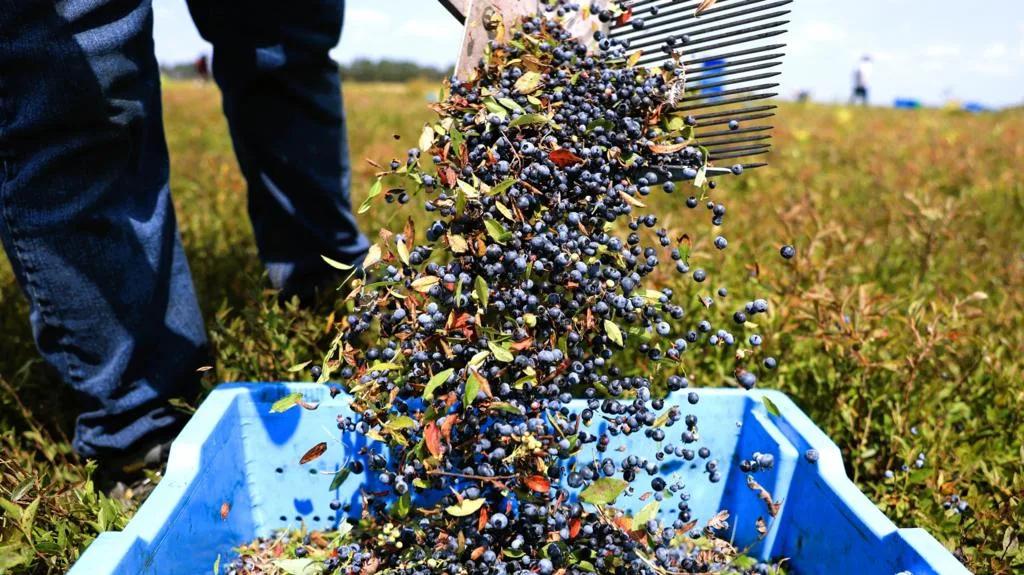
Harvest forecasts are now aiming at profit, not just yield
AI-powered harvest forecasting is starting to help fruit growers plan not only when crops will ripen, but also when to schedule workers and time sales more accurately. In high-value fruit, where prices can change quickly, even a few days of error can raise labor costs and mean missing the best chance to lock in top revenue.
Okanagan Specialty Fruits, which operates in Washington state in the U.S., had to stop work at 10 a.m. on the first day of last year’s apple harvest because temperatures rose to 38C. The company says models that account for weather conditions like these are valuable because they show not only the ripening date, but also the window when harvest is actually possible.
The company has more than 1,250 acres of apple orchards in Washington. Its production is geared toward sliced apple portions sold to buyers such as hotels and schools, and it also uses genetically modified apples that brown more slowly after being cut.
Cameras, drones and phone images are moving into the orchard
Okanagan Specialty Fruits is testing cameras from Canadian company Vivid Machines. Mounted on tractors, the systems collect images from trees, and AI analyzes them to distinguish buds, flowers and fruit, helping estimate crop size and harvest timing.
But the success of these systems depends on the quality of the historical data fed into the model. General online yield data is not enough for growers; forecasts need to be customized to each farm’s own growing conditions.
In apples, some margin of error can be tolerated; the harvest window for Granny Smith apples is said to be about three weeks. For strawberries and similar fruit, that window can shrink to just a few days. That means timing mistakes can quickly turn into lost revenue and disease risk.
Drought and heat are putting pressure on the U.K. market
U.K.-based FruitCast provides harvest forecasts for strawberries, raspberries, blackberries, blueberries and tomatoes, and plans to expand to grapes next year. The company says hot weather and severe drought can trigger thermal dormancy in many fruit crops, slowing production.
According to FruitCast, its forecasts are within a 10% margin of error one week before harvest, which translates into roughly 90% accuracy. Three weeks out, the margin of error rises to 17%, with accuracy at 83%. The company says it guarantees total error below 20%.
- Angus Soft Fruits says the technology is improving, but the system is still not a finished solution.
- California-based Driscoll’s also confirms that some of its independent growers in the U.K. are using FruitCast.
Investor interest is rising, but growers still have the final say
Researchers are also working on new ways to measure ripeness more precisely. Yasaman Ghasempour and her team at Princeton University have developed a detector that measures ripeness using millimeter waves, which can penetrate deeper into fruit; the approach could one day also support harvest forecasting.
Lower-cost solutions are also emerging. Kevin Wang at the University of Florida has developed a crop-counting tool that can collect images from drones costing around $100. Even so, growers remain cautious about sharing commercially sensitive information such as fertilization and irrigation plans with third parties.
Industry representatives say these tools open up major room for optimization, but human judgment will remain part of critical harvest decisions. Even when growers get data from AI, they still prefer to make the final call based on experience in the field.





Comments (0)
No comments yet. Be the first to comment.
Write a Comment
Yorum yazmak için giriş yapın. Üyelik ücretsiz; yorumunuz editör onayından sonra yayımlanır.