
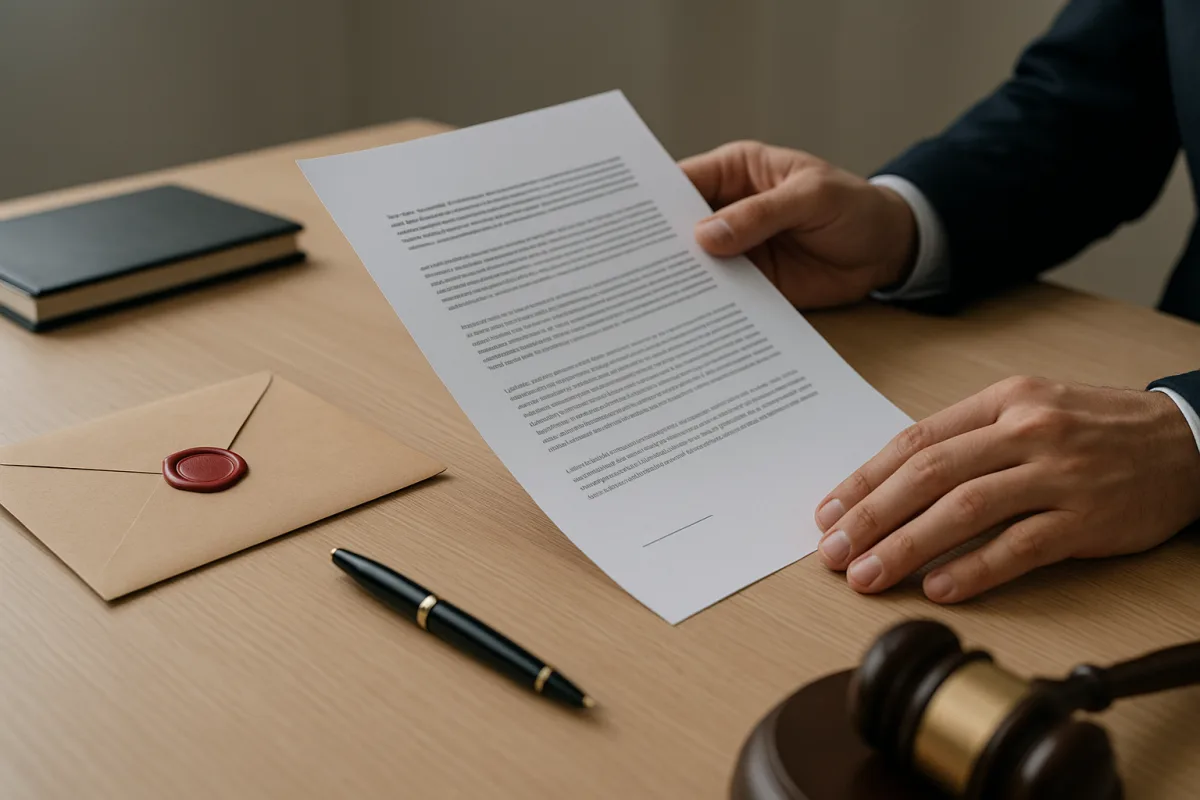
What is a formal notice and what is it used for?
The question what is a formal notice comes up often in everyday language and refers to notifying the other party in writing of a right, demand or warning. This document is especially important for showing that a notification was made if a dispute arises later. It can be used to remind someone of a debt, request performance of a contractual obligation or demand that a violation be corrected.
Most common situations
- Disputes involving rent, debts, deliveries or services
- Claims of breach of contract and requests to carry out a specific obligation
- The need to send a final notice in employment, commercial or consumer matters
How do you send and prepare a formal notice?
The answer to how to send a formal notice starts with drafting the text clearly, concretely and without contradictions. It should state who is sending it to whom, what event or contractual relationship it is based on, what the demand is and what action is expected from the other side. In practice, a notarized notice is often preferred because it can make it easier to prove the date of dispatch, the recipient information and the delivery process.
Useful elements to include in the text
- The parties’ identity and contact details
- A brief summary of the event or document underlying the dispute
- A clear explanation of the demand, warning or notice
- Any attached documents and records, if applicable
It is important to use clear language rather than overly general expressions in the notice. Insults, threats or vague demands can undermine the purpose of the document. Depending on the nature of the case, seeking help from a lawyer can help make the text more solid in both procedure and content.
What happens after it is sent?
After the formal notice is sent, the process may change depending on the other party’s response and the nature of the relationship. The recipient may comply with the demand, reply in writing or remain silent. The legal process that follows is assessed based on the contract between the parties, the available documents and the type of dispute.
What should you keep in mind?
- Keep the dispatch receipt, delivery information and any attachments
- Make sure the demands in the text are compatible with any future proceedings
- Remember that not every formal notice will produce the same result
A formal notice may not solve every problem on its own, but in many cases it gives the parties one last opportunity to reach an agreement and creates a written record. In commercial relations, rental disputes and debt claims in particular, a written notification can help define the framework for any later disagreement. For that reason, it is important to proceed carefully on the content, method and timing.
"""




Comments (0)
No comments yet. Be the first to comment.
Write a Comment