
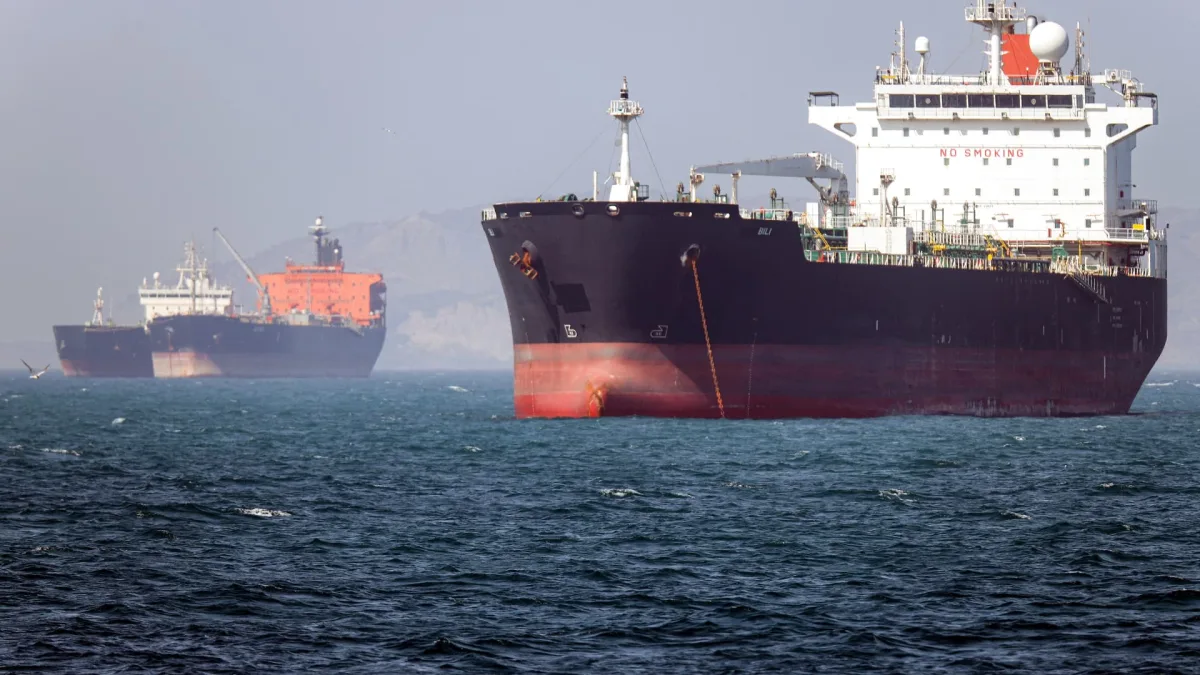
Rising attacks have made oil flows through the Strait of Hormuz more fragile
The Strait of Hormuz, one of the most critical chokepoints linking the Persian Gulf to global markets, has again become a major risk factor for energy markets after a recent rise in tanker attacks. According to the Joint Maritime Information Center, a security information hub run by U.S.-allied military forces, around 20 commercial ships — mostly tankers — were attacked in the Strait of Hormuz, the Persian Gulf and off the coast of Oman over the past month.
Windward, a maritime tracking company, calculated that roughly two ships out of every 100 passing through the strait were attacked in the third quarter. Analysts say the recent rebound in crude exports has largely depended on the U.S. military maintaining and protecting the southern route along Oman’s coast. But it remains unclear how long that increase can last without an improvement in the security picture.
Shipments continue, but remain below pre-war levels
Market participants are turning to a more complex transport model to reduce risk. Tankers move crude through Hormuz and transfer it to other vessels inside the Gulf of Oman; shipments to Asia are then completed on those second vessels. While this approach partly reduces the risk of attack, it also means more ships are needed for the same amount of oil, along with higher freight and additional insurance costs.
According to Kpler, crude shipments passing through Hormuz averaged 10.3 million barrels per day in the week ended Saturday. That is about 23% below the pre-war baseline of 13.5 million barrels per day. Windward said traffic has recently averaged 9-10 million barrels per day, compared with a pre-war benchmark of 14.5 million barrels per day.
- Daily flows have in some cases come close to, or even exceeded, pre-war levels.
- Even so, the overall average remains well below the level seen before the conflict.
Higher costs are supporting Brent prices
Even as shipment volumes recover, the price of moving oil has risen sharply. According to the International Maritime Organization, at least nine seafarers have died, 18 have been injured and three have gone missing since July. Over the same period, the cost of shipping crude from the Persian Gulf to China rose to as much as $1 million per tanker per day.
As a result, even if more oil reaches the market, the risk premium has not disappeared. The international benchmark Brent crude is trading at around $100 a barrel, and experts say one reason is that delivery, insurance and security costs remain elevated. Another recent sign that freedom of navigation has not been fully restored came on Monday, when Iran’s Revolutionary Guard Corps instructed a tanker passing through the strait to turn back, and the vessel complied.




Comments (0)
No comments yet. Be the first to comment.
Write a Comment
Yorum yazmak için giriş yapın. Üyelik ücretsiz; yorumunuz editör onayından sonra yayımlanır.