
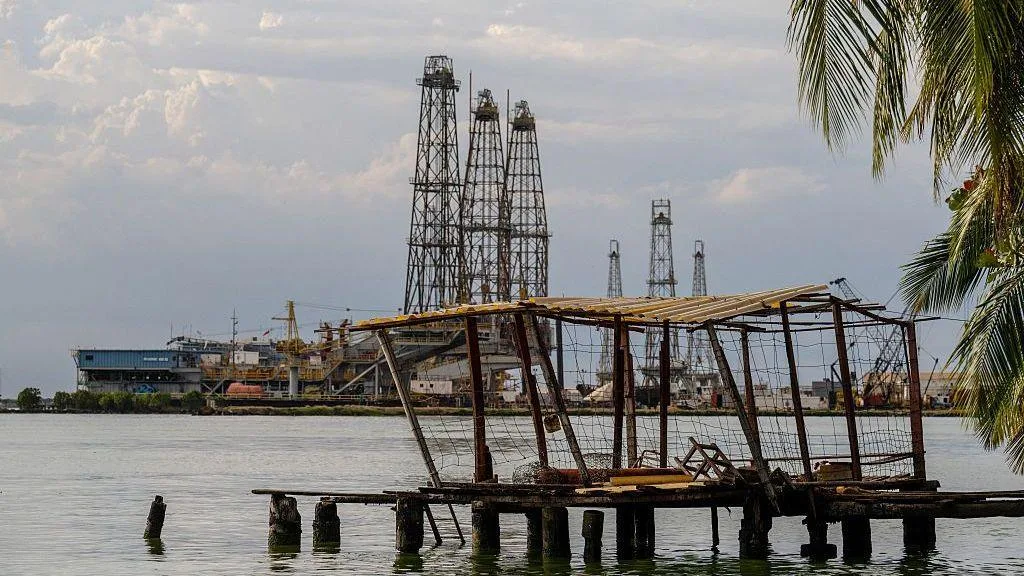
First figures revealed in the U.S.-Venezuela oil deal
The U.S.-Venezuela oil deal, according to U.S. President Donald Trump, would secure control over Venezuela’s proven oil reserves of more than 65 billion barrels. Trump argued the move would more than double U.S. oil reserves, expand supply and lower gasoline prices.
No details were shared publicly about the scope of the agreement. Trump said the compromise would not cost U.S. taxpayers extra money and added that the process would be carried out through a private-sector partnership.
The parties to the deal and the announced investment target
Marco Rubio and Defense Secretary Pete Hegseth reportedly reached an understanding with Delcy Rodriguez, referred to as Venezuela’s interim head of state. Rubio described the deal as a major win for both the U.S. and Venezuela.
According to Rubio, the agreement could unlock around $100 billion in private-sector investment on the Venezuelan side. The expected result is high-paying jobs and support for rebuilding the country’s economy.
What the market impact and Venezuela’s reserve size suggest
Trump had previously said Venezuela’s oil resources would be tapped and has recently faced domestic pressure to bring down fuel prices in the U.S. The president also claimed Venezuela would transfer up to 50 million barrels of oil to the United States.
Venezuela is considered to hold the world’s largest proven oil reserves, at about 303 billion barrels. Even so, the country’s oil output has fallen sharply from its peak in the late 1990s.
Expected steps to restart production
Trump said U.S. oil companies should invest at least $100 billion to help revive Venezuela’s energy sector. However, the timeline for any production increase, how sales rights would be structured and the legal framework for the private-sector partnership have not yet been clarified.
- The full text of the deal and its commercial terms have not been released.
- It remains unclear when, and by how much, the agreement will affect oil supply.
Political backdrop and uncertainty remain
According to the source text, the U.S. detained then-Venezuelan President Nicolás Maduro earlier this year. After the military operation on January 3, the Trump administration said it would govern the country until a safe transition was secured in Venezuela and would control oil sales indefinitely.
As a result, the announced oil deal is being watched closely not only for its impact on energy supply and prices, but also for investment risk and implementation capacity. For now, markets will focus on the official terms that are announced and how quickly production can really be increased.
"""



Comments (0)
No comments yet. Be the first to comment.
Write a Comment
Yorum yazmak için giriş yapın. Üyelik ücretsiz; yorumunuz editör onayından sonra yayımlanır.