
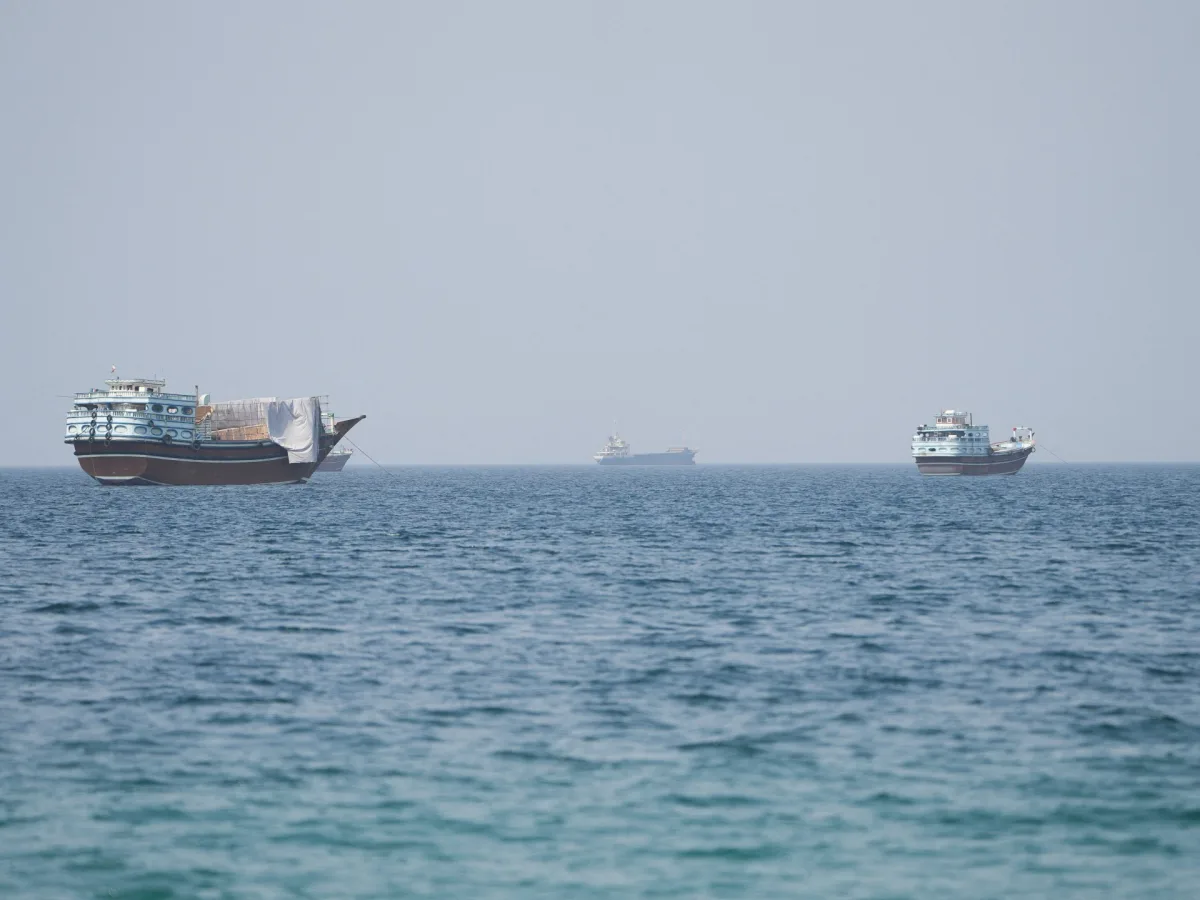
What was targeted in the strike on Larak Island?
The U.S. strike on Larak Island marked the first direct American military operation against Iran since late July. A U.S. official told Al Jazeera that the attack targeted launchers said to be preparing to fire rockets carrying mines into the Strait of Hormuz. Iran, meanwhile, said some of its soldiers were killed and injured in the strike.
Fars News Agency reported hearing explosions near the island. Later, the Islamic Revolutionary Guard Corps (IRGC) confirmed the attack, saying it was carried out by the “American-Zionist enemy” and that there were casualties.
Tehran’s response and rising tensions in the Strait of Hormuz
The Islamic Revolutionary Guard Corps (IRGC) said Sunday’s attack would not go unanswered. IRGC spokesman Sardar Mohebi also claimed Washington had made a strategic mistake, arguing the move would have both economic and military consequences.
The strike came amid ongoing tensions around the Strait of Hormuz. In recent weeks, Washington has said millions of barrels of oil have been moved through the strait under military protection and that control has been established over the strategic waterway, while Iran has maintained its position that the strait is closed.
- Attacks on ships around the strait are reported to have continued almost daily.
- Iran has previously responded to similar U.S. strikes by targeting bases in neighboring countries where U.S. troops are stationed, using missiles and drones.
Washington’s pressure campaign and the impact on energy markets
The Donald Trump administration launched a new effort last week to further isolate Iran financially by threatening secondary sanctions against countries and companies doing business with Tehran. Pentagon chief Pete Hegseth, meanwhile, signaled that the U.S. is also prepared to use military force if necessary.
Why do oil and gasoline prices matter?
Iranian Foreign Minister Abbas Araghchi said in a post on X on Saturday that reports claiming the U.S. was moving large volumes of oil through the Strait of Hormuz were false. Araghchi said the aim was to shake energy markets.
Despite claims that control over the strait has loosened or ended, oil prices remain elevated because of supply uncertainty. The average price of gasoline in the U.S. remains above $4 a gallon, compared with less than $3 when the U.S. and Israel started the war in late February.
With rising energy costs seen as keeping inflation pressure alive in the U.S., analysts say the trend could also make it harder for Republicans to defend their majority in Congress ahead of the November midterm elections.
"""



Comments (0)
No comments yet. Be the first to comment.
Write a Comment
Yorum yazmak için giriş yapın. Üyelik ücretsiz; yorumunuz editör onayından sonra yayımlanır.