

How is the link between salt and blood pressure established?
The relationship between salt and blood pressure is tied to the body’s natural mechanisms for regulating fluid balance. Sodium, the main component of table salt, is essential for nerves, muscles and cells; however, too much of it can increase the body’s tendency to retain water.
When the amount of water in the body rises, the volume of blood circulating in the vessels also increases. This can contribute to higher pressure on artery walls, especially in people who are already predisposed. In short, the issue is not just the taste of salt, but sodium’s effect on the kidneys and the vascular system.
Why do the kidneys and blood vessels matter?
The kidneys are the main organs that regulate how much water and sodium remain in the blood. When the body takes in more sodium than it needs, the kidneys try to balance it; however, that balance is not equally easy to achieve for everyone.
Some people are more sensitive to sodium. As people age, if kidney function changes or if there have been previous blood pressure problems, the impact of salt on blood pressure can become more pronounced. For that reason, the same diet does not produce the same result for everyone; a doctor should make the individual assessment.
Salt is not only in the salt shaker: why processed foods stand out
Many people associate excess salt only with the crystals added to food. In everyday life, however, a significant share of sodium can come from processed foods, packaged products and meals eaten out.
Different types of bread, cheese, processed meats, packaged soups, sauces, snacks and pickled foods are examples. These products may not always taste very salty, yet they can still contain sodium. For this reason, the saltiness you taste is not enough to understand your actual intake.
What should you look for when reading labels?
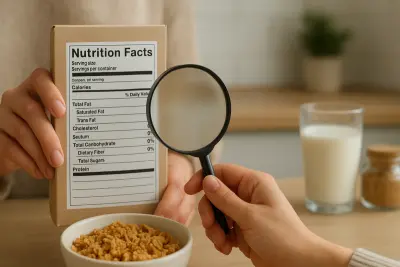
The habit of reading labels is one of the most practical ways to monitor salt intake. On the ingredient list and nutrition facts panel, you may see references to salt or sodium; comparing products with similar items makes more informed choices easier.
- Check whether salt appears near the top of the ingredient list.
- Among similar products, choose those with simpler ingredients.
- Think about your total intake over the course of the day, not just one product.
- Make it a habit to check the label even on products that seem “low in salt.”
It can be harder to notice sodium levels in meals eaten outside the home. Because sauces, marinades and pre-made mixes can raise total intake, simpler cooking methods often offer an advantage.
Cutting salt does not mean tasteless food
For many people, reducing salt initially feels like losing flavor. But taste buds can adapt over time, and the natural aromas of food may begin to stand out more clearly.
The term low-salt eating does not mean every meal has to be completely bland. The aim is to reduce habits that add sodium without noticing and to enhance taste in other ways.
Practical ways to add flavor to food
- Use fresh or dried herbs, spices, garlic and onion.
- Add depth with lemon juice, vinegar and yogurt-based mixtures.
- Take advantage of natural flavors such as roasted vegetables, tomatoes, peppers and lemon zest.
- Instead of adding salt automatically while cooking, make a habit of tasting at the end.
Preparing meals at home makes it easier to control the ingredients used. Choosing homemade alternatives instead of ready-made sauces, eating packaged snacks less often and rethinking the salt shaker on the table can all make a difference in daily life.
Which symptoms matter, and when should you seek help?
High blood pressure does not always cause symptoms. That means feeling fine does not necessarily mean blood pressure is unaffected. Some people may experience headaches, dizziness, palpitations or fatigue, but these complaints alone are not enough for a diagnosis.
Blood pressure measurement is the key step in evaluation. If needed, a doctor may order blood and urine tests to assess kidney function; additional checks may be planned depending on the person’s medical history. If your readings are often high or your symptoms persist or worsen, it is important to seek medical care.
Common myths and the facts
Some ideas repeated about salt do not fully reflect the truth. Correcting these misconceptions helps people make more informed choices in daily life.
- The idea that “there is no problem as long as I do not add salt after cooking” is false; a significant amount of sodium can come from packaged and processed foods.
- The belief that “some types of salt do not affect blood pressure” is also incorrect; sodium is present in different varieties as well.
- The approach that “only people with high blood pressure need to watch salt” is incomplete; food awareness is valuable for everyone.
- The claim that “if salt is reduced, food stops being enjoyable” is not necessarily true; spices and cooking techniques offer strong alternatives.
In the end, salt intake is an important dietary factor that can affect blood pressure, especially through sodium. Along with table salt, processed food choices are also decisive. Reading labels, cooking more at home and building flavor with spices are among the most practical steps that can be taken in daily life.
"""



Comments (0)
No comments yet. Be the first to comment.
Write a Comment