
Robotaxi growth is now a financial test for Tesla
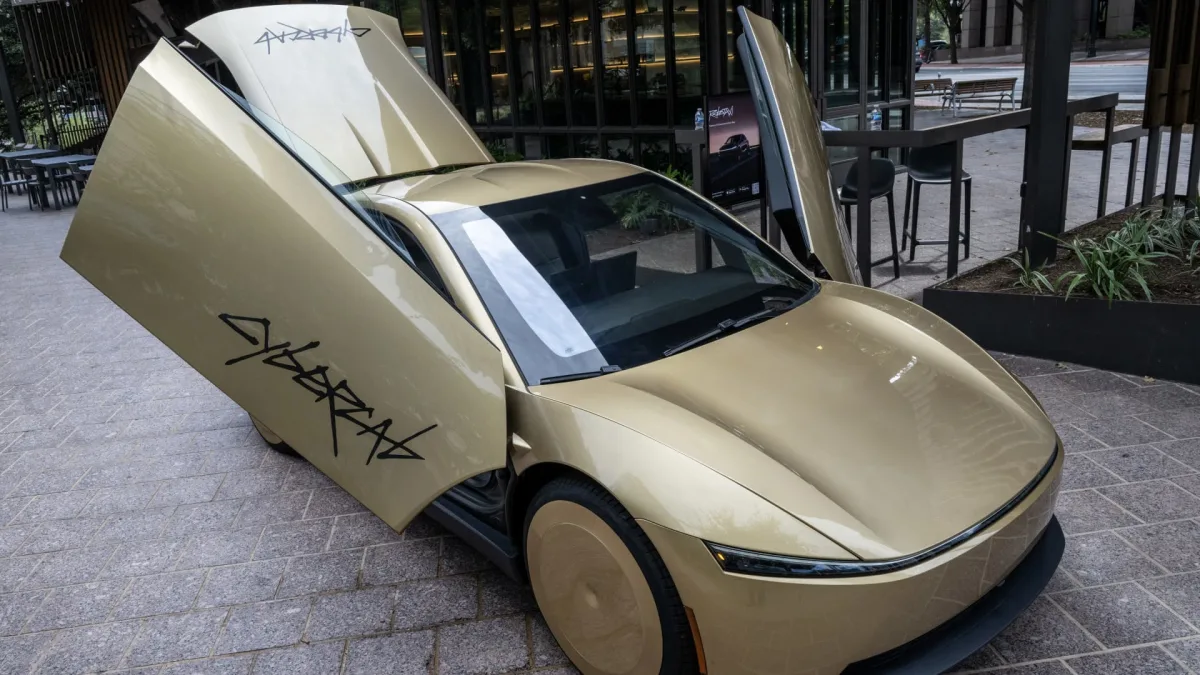
As the Tesla Cybercab service wraps up its first month in Austin, the company’s number of driverless vehicles approved for commercial use in Texas has climbed to 169. Even so, slowing auto sales, weaker share performance and intensifying competition are increasing the pressure on Tesla to turn its robotaxi business into a new engine for growth.
Third-quarter vehicle deliveries announced on Friday came in above expectations, sending the stock up by about 5%. Even so, deliveries were down 2% year over year, and the company’s core auto business remains under pressure from cheaper models from Chinese makers BYD and Xiaomi.
Tesla shares have lost roughly 18% on Wall Street this year. That has sharpened expectations that the company will need to expand driverless transport more quickly to revive investor interest.
Austin’s first month sent mixed signals
The Cybercab launched commercially in Texas with 45 vehicles. By Friday, that figure had risen to 169. Tesla’s Texas robotaxi fleet also includes 420 Model Y vehicles with autonomous driving systems that have not yet been made available to individual customers.
Still, the first user experience in Austin was not entirely smooth. Online posts showed longer wait times early in the rollout, along with some incorrect pickup and drop-off locations.
The main issues flagged in the first month
- Long wait times and incorrect pickup and drop-off points
- Technical glitches involving butterfly doors and trunk closures
For Tesla, the main benchmark is Alphabet’s Waymo unit. Waymo operates in 15 U.S. markets and is preparing to enter 15 more cities, according to company data. In Texas, the company had 1,154 commercially approved autonomous vehicles as of Friday, and says it is handling more than 500,000 paid rides a week and has completed 270 million fully autonomous commercial miles in the U.S.
Regulation and safety are looming over expansion plans
The National Highway Traffic Safety Administration (NHTSA) opened an investigation after the launch to determine whether Cybercab complies with federal safety standards. The deadline for Tesla’s initial safety response was later extended.
No serious safety incident or crash linked to Cybercab has been reported since the commercial launch in Austin. Even so, first responders say more regulation is needed to clarify how emergency control will work in vehicles without a steering wheel or pedals.
Public opinion surveys also point to caution. A September 2026 study by Slingshot Strategies found that 50% of respondents in the U.S. said they would not feel comfortable riding in a robotaxi without a steering wheel and pedals. Among those who heard about the NHTSA investigation, 70% said Tesla should suspend the rides.
Tesla’s next major step will be expanding beyond Austin. Markets such as San Antonio, Dallas, Nevada and Florida are on the agenda, but a broad rollout by the end of 2026 will require technical maturity, regulatory approval and consumer trust to come together.
"""
Comments (0)
No comments yet. Be the first to comment.
Write a Comment
Yorum yazmak için giriş yapın. Üyelik ücretsiz; yorumunuz editör onayından sonra yayımlanır.