
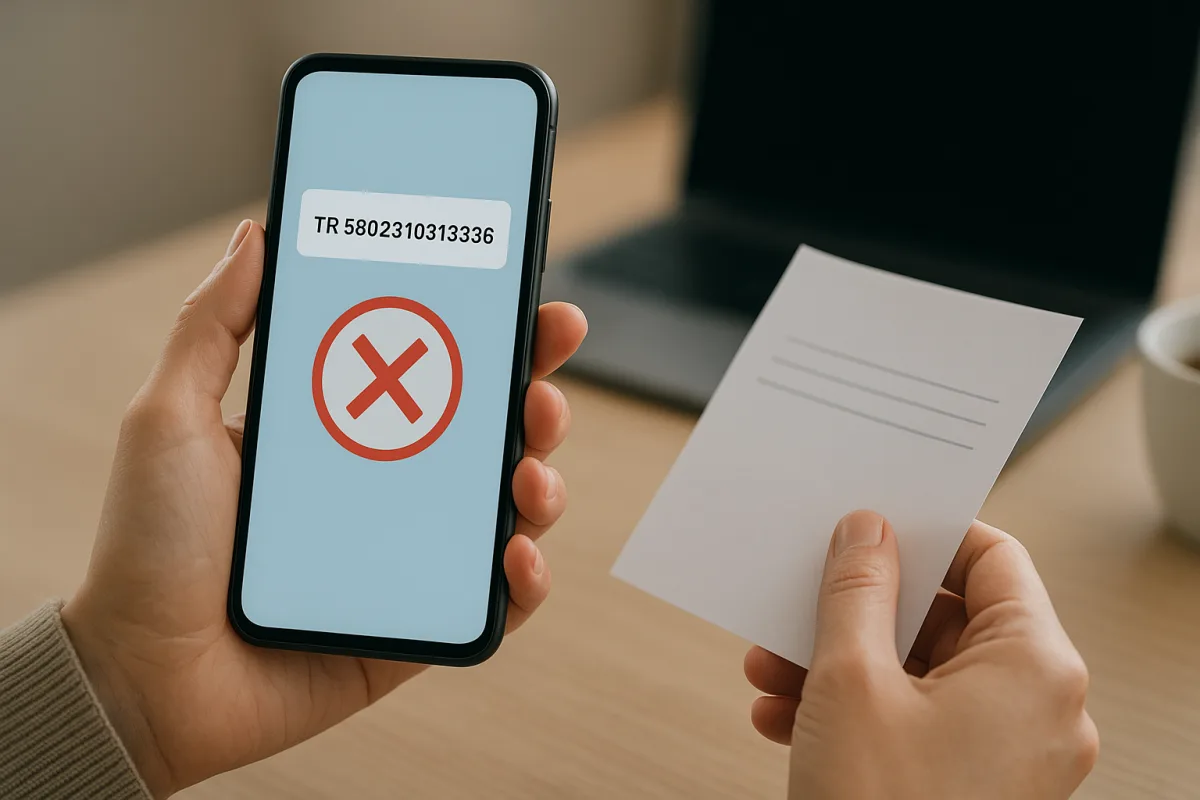
Why might the recipient name not match the IBAN?
IBAN name mismatch refers to a situation where the recipient name entered by the sender does not match the registered name on the destination account. This difference is often caused by a spelling mistake, a missing surname, entering a personal name for a business account, or a different name appearing on joint accounts. However, the outcome of the transfer depends on which detail the bank system gives priority to.
In some money transfers, the main routing detail is the IBAN, while in others a name check may be used as an extra security step. For that reason, the same mistake may trigger a warning at one bank, while at another it may cause the transaction to be put on hold or rejected.
What can happen when the name does not match?
There is no single outcome when the recipient name and account details do not match. In what is seen as a bank transfer error, if the issue is caught before the transfer is completed, the system may issue a warning; if it has already gone through, a different procedure may begin.
- The transaction may be stopped automatically and sent for additional review.
- The transfer may be rejected and the money returned to the sender’s account.
- If the system relies mainly on the IBAN, the funds may reach the target account and a recall process may then be needed.
Especially in suspected wrong money transfer cases, it is important to check the IBAN, name-surname and reference fields together on the receipt. Since the verification steps applied in FAST, EFT or bank transfer channels can vary from one institution to another, the final outcome is determined by the bank’s transaction records.
What should be done if money is sent to the wrong account?
As soon as the sender notices the mistake, they should report it through the bank’s mobile app, call center or branch. Early reporting is critical for the bank refund process; if the transfer is still pending, the chance of stopping it may increase, and if it has already been completed, a recall request may be started more quickly.
What to keep in mind during the bank refund process
- Keep the receipt, transaction time and the recipient information you entered.
- When reporting the wrong transfer to the bank, clearly explain where the mistake was made.
- For transfers that have reached the other account, remember that any refund may depend on the response of the receiving bank and the account holder.
Once a transfer has been completed, it may not always be possible to reverse the money immediately and unilaterally. How the process unfolds depends on the status of the transaction, the condition of the recipient account and the procedures followed by the banks; for that reason, the safest approach is to use official information channels and file the request without delay.
How can similar mistakes be prevented?
Checking the IBAN again before confirming the transfer, keeping recipient details up to date when creating saved beneficiaries, and not ignoring name alerts can reduce the risk. When paying business accounts, the company name should be entered correctly; for personal accounts, the full name should be accurate. This can prevent small mistakes from turning into a longer refund process.






Comments (0)
No comments yet. Be the first to comment.
Write a Comment