
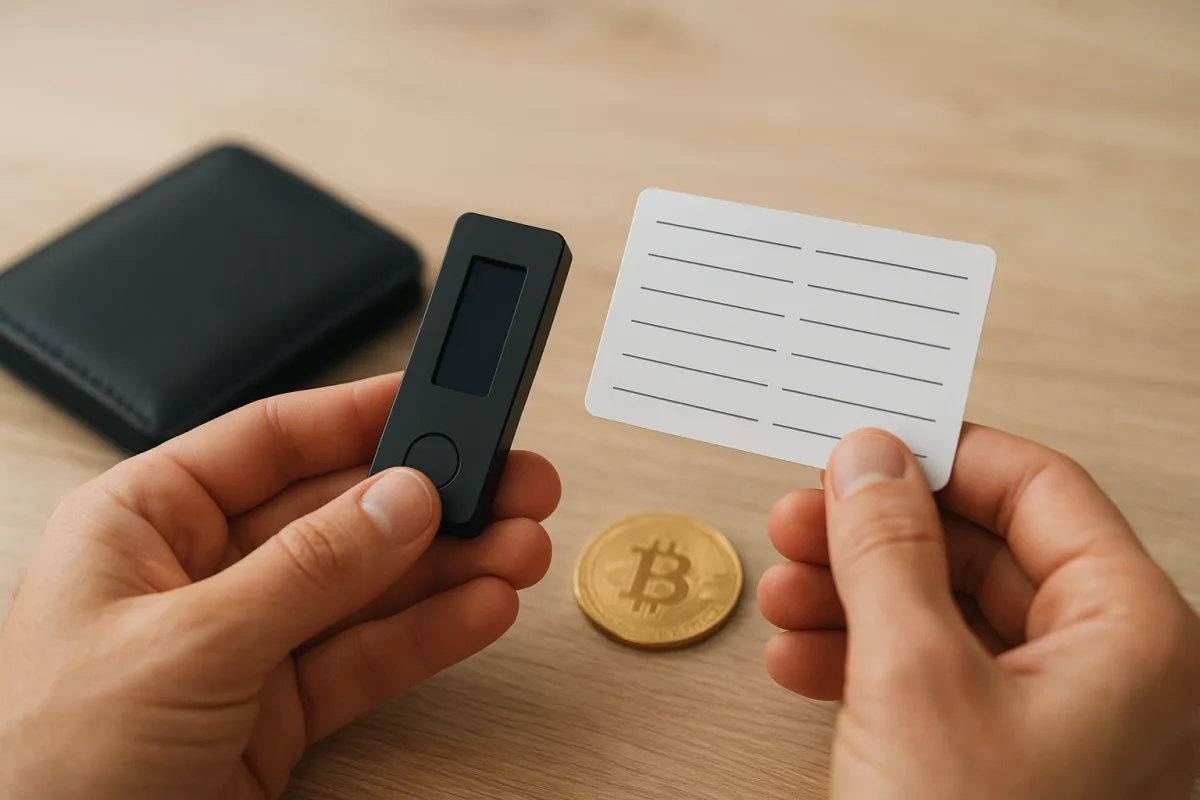
How are crypto wallet types different?
Crypto wallet types are mainly evaluated based on two questions: Who holds the key, and how much is the wallet exposed to the internet? This distinction determines the trade-off between convenience and security. Rather than choosing a brand, it is healthier to decide based on need, technical knowledge and storage habits.
What is the difference between custodial and non-custodial wallets?
In custodial wallets, private keys are held by the service provider. This model can make login and access easier, but the final say over access to assets lies with the service’s infrastructure, not the user. In non-custodial wallets, control stays with the user; for that reason, the recovery phrase and key security become the individual’s direct responsibility.
- If ease of use is the priority, custodial solutions may offer a more familiar experience.
- If independent storage and full control are the goal, non-custodial setups stand out.
What is the difference between a hot wallet and a cold wallet?
The short answer to what is a cold wallet is that the key is stored in an environment that is not continuously connected to the internet. Hot wallets are practical for daily transactions; cold wallets are preferred for stronger protection. In setups that use a hardware wallet, the private key never leaves the device and transaction signing is created inside the device.
What is a seed phrase and why is it not a password?
What does the BIP-39 standard mean?
The technical answer to what is a seed phrase is a recovery phrase used to derive a wallet’s private keys. In widely used systems, this phrase is based on the BIP-39 standard; the standard was proposed in 2013. The English word list contains 2,048 words, the words are 3 to 8 letters long, and they are designed so their first four letters are unique.
Wallets typically use 12- or 24-word phrases. These sequences are not just randomly written words; because the final part includes a checksum, an incorrect or arbitrary order is not considered valid. Since private keys are generated from the same recovery phrase through BIP-32 and BIP-44 derivation paths, the same accounts can be restored in compatible wallets.
Does adding a passphrase provide extra protection?
Some compatible wallets offer a second layer with a passphrase in addition to the recovery phrase. This layer can improve security; however, if it is forgotten, the user may not be able to access the wallet view they expect even if they have the correct seed phrase. For that reason, if a passphrase is used, it must be stored with the same level of care.
Crypto wallet recovery and common security mistakes
Is losing the wallet the same as losing the key?
In crypto wallet recovery, the key issue is not recovering the app or device, but restoring the access information. A broken phone or a deleted app does not by itself mean the assets are lost; access can be restored through a compatible wallet using the correct recovery phrase and, if applicable, the passphrase. On the other hand, if the recovery phrase is lost and no other backup exists, access in a non-custodial setup may be permanently at risk.
What mistakes are made when storing recovery words?
- Taking a photo of the words, uploading them to the cloud or sending them by message.
- Entering the recovery phrase on any website or sharing it with a fake support account.
- Downloading a wallet app from unofficial stores.
- Mixing up the word order or keeping an incomplete backup.
The basic rule is clear: Anyone who knows the recovery phrase can access the assets. That is why no legitimate wallet provider or support team will ever ask for your seed phrase. When recovery is needed, the safe approach is to verify the official app, use the “import existing wallet” option and enter the words in the correct order only on a trusted device.
"""





Comments (0)
No comments yet. Be the first to comment.
Write a Comment
Yorum yazmak için giriş yapın. Üyelik ücretsiz; yorumunuz editör onayından sonra yayımlanır.