
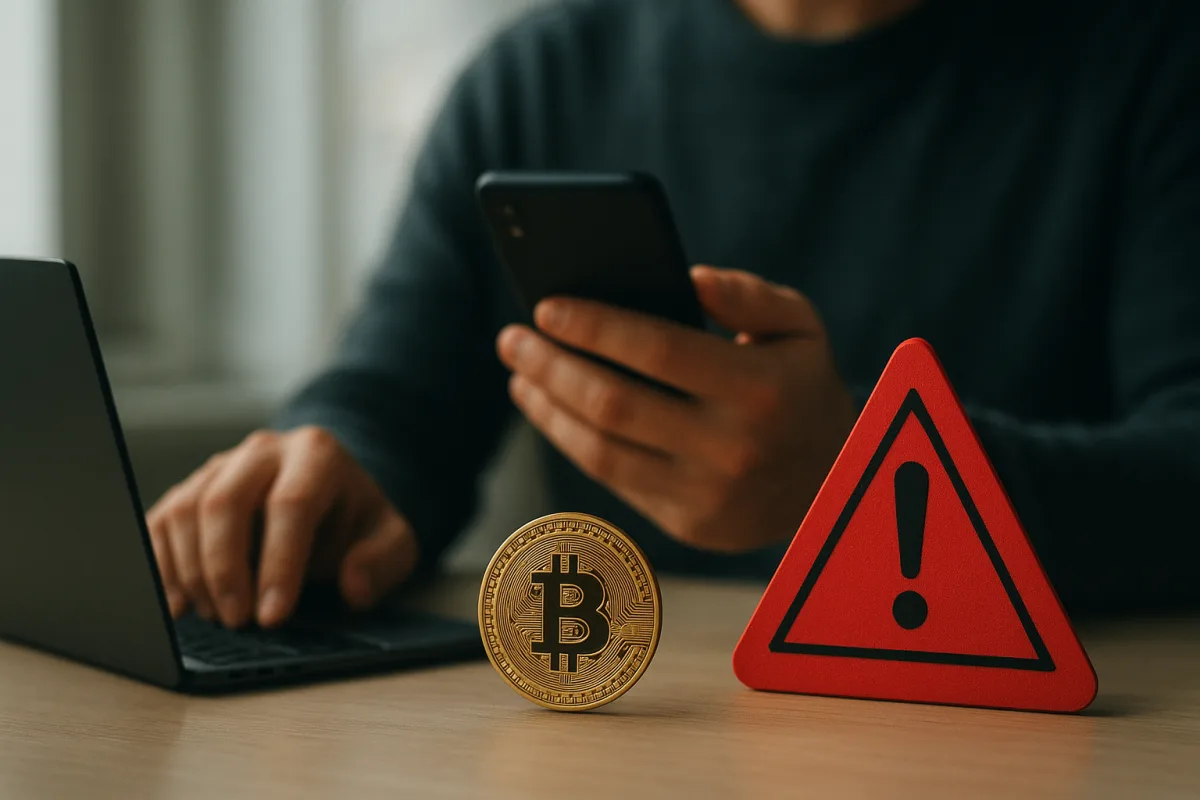
Why crypto scams deserve close attention
Crypto scams are becoming increasingly convincing across social media, messaging apps and fake investment dashboards. According to FBI IC3 data, losses from crypto-related scams in the U.S. rose to $9.3 billion in 2024 and climbed above $11.3 billion in 2025; the number of complaints filed in 2025 also exceeded 181,000.
Losses from crypto investment scams alone were reported at $3.96 billion in 2023, $5.8 billion in 2024 and about $7.2 billion in 2025. In Operation Level Up, launched in January 2024, about 77% of the victims warned were said not to have realized they had been scammed at that point.
How the 8 most common schemes work
Trust-building and fake platform traps
- In romance or trust schemes built around a fake crypto platform, scammers first develop an emotional or friendly relationship before steering the victim toward an investment app. Rapid intimacy, screenshots showing high profits and pressure to send money to different accounts are among the early warning signs.
- At the withdrawal stage, asking for extra 'tax' or 'commission' payments to unlock the balance is a major red flag. If new payments are requested to recover existing funds, it is important to stop the transaction, save the messages and seek independent verification.
- The promise of guaranteed returns and pyramid-style structures rely on the message of risk-free, steady profits. Referral chains, pressure to decide quickly and dismissing the possibility of losses are key warning signs.
Traps built around tokens, airdrops and ads
- The short answer to what rug pull means is that liquidity is pulled after investors are brought in and the project effectively disappears. A lack of transparency around the team, no audit report and promotion based only on social media hype should be examined carefully.
- In airdrop scams and wallet-connection traps, users are asked to grant permissions, connect a wallet or share a recovery phrase in exchange for free tokens. Links outside official announcements, pressure to act within a limited time and unexpected signing requests are important warning signs.
- Fake celebrity or institutional ads are used to create a sense of trust. If there are unverified social media accounts, edited images and coordinated comments pushing the same message, the ad itself should not be taken as proof of legitimacy.
Attacks aimed at identity and access
- Crypto phishing sites and fake support accounts aim to steal login details through lookalike domain names or direct messages. Spelling errors, urgent requests and support offers sent through private messages are typical risk indicators.
- In a SIM swap attack, criminals take over a phone line and may intercept SMS verification codes. If there is an unexpected loss of mobile service, carrier alerts or forced logouts from accounts, app-based two-factor authentication and extra security measures on the carrier account should be considered.
How can complaints and reports be filed in Turkey?
In Turkey, crypto asset service providers are subject to oversight by the CMB under Law No. 7518, while MASAK, the Financial Crimes Investigation Board, is responsible for compliance supervision in this area. For platforms believed to be unauthorized, the CMB's public announcements can be followed.
If there is a suspicion of victimization, it is important to preserve evidence without deleting it. The main reporting channels are:
- Filing a criminal complaint with the Chief Public Prosecutor's Office,
- Submitting a complaint through CİMER, the Turkish presidency's public applications portal, via e-Government,
- Reviewing the CMB's application and announcement channels.
Transaction history, wallet addresses, screenshots and messages can help clarify the case. Avoid clicking suspicious links again and do not make additional payments to the same people; these are among the first steps that can prevent further losses.
"""





Comments (0)
No comments yet. Be the first to comment.
Write a Comment