
Who was Yılmaz Güney and how did he get started in cinema?
Yılmaz Güney, born Yılmaz Pütün, was born on April 1, 1937, in Adana. A lasting figure in Turkish cinema as an actor, screenwriter and director, Güney began his career by writing screenplays and working as an assistant to Atıf Yılmaz.
That early period gave him firsthand experience of set routines, storytelling methods and the fast-paced production culture of Turkish commercial cinema, known as Yeşilçam. What began with writing soon grew into a versatile career that combined work in front of the camera with creative decision-making behind it.
Why was the “Ugly King” era so important?
During his acting years, Güney appeared in up to 20 films a year and became widely known by the nickname Çirkin Kral (“the Ugly King”). This period made him stand out not only as a popular star, but also as a film figure with a striking screen identity.
As his visibility in Yeşilçam grew, signs of a search for a different kind of storytelling also became more apparent. For that reason, the Çirkin Kral period is seen as a crucial turning point that prepared the ground for Yılmaz Güney’s later directing and screenwriting work.
How did the film Umut change his directing style?
Umut became a special milestone in Güney’s career in 1970, the film for which he both wrote the screenplay and directed. The film is regarded as one of the turning points of realist storytelling in Turkish cinema.
With this film, a more direct, stripped-down and hard-edged cinematic language came to the fore, one that looked more openly at social issues. The shift also laid the foundation for the atmosphere seen in the projects he later wrote and shaped.
How did prison-written screenplays reach Cannes?
Güney wrote the screenplay for Sürü while in prison, handing the director’s chair to Zeki Ökten for the film. His screenplay for Yol later drew major international acclaim under the direction of Şerif Gören.
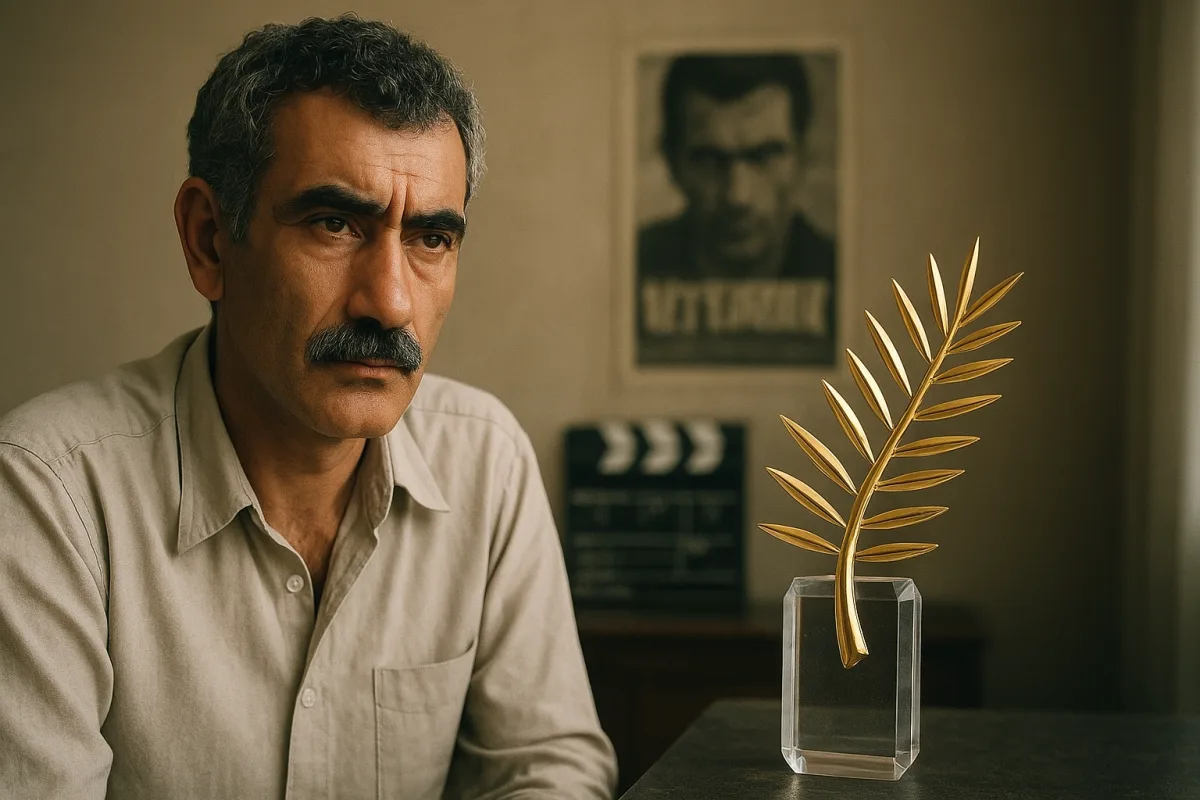
At the 1982 Cannes Film Festival, Yol shared the Palme d’Or with Costa-Gavras’s Missing. That success went down in film history as the first Palme d’Or to come to Turkey.
- His original name was Yılmaz Pütün.
- He was born in Adana on April 1, 1937.
- He died in Paris on September 9, 1984, at the age of 47.
- He was buried in Père Lachaise Cemetery.
Turkey’s second Palme d’Or came in 2014 with Nuri Bilge Ceylan’s Winter Sleep. Today, Yılmaz Güney is remembered as one of the most debated and influential careers in Turkish film history, with a body of work spanning acting, screenwriting and directing.
"""





Comments (0)
No comments yet. Be the first to comment.
Write a Comment
Yorum yazmak için giriş yapın. Üyelik ücretsiz; yorumunuz editör onayından sonra yayımlanır.