
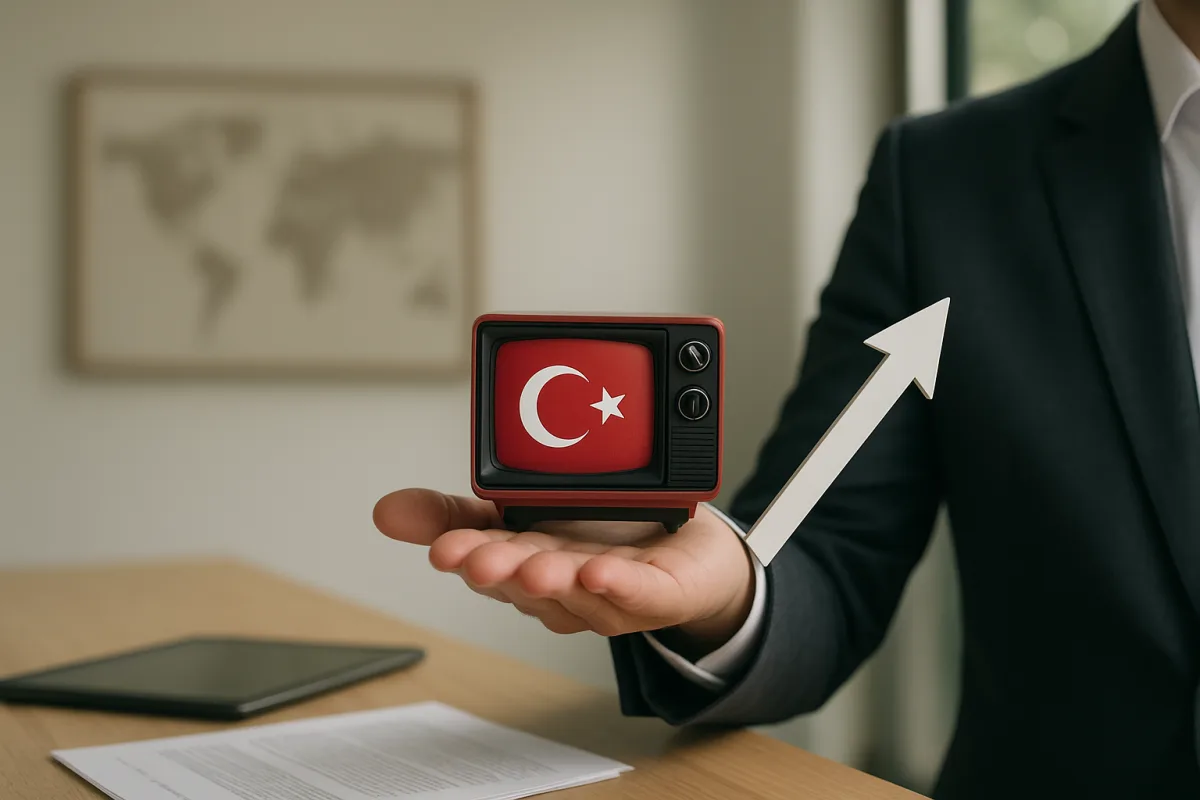
Why has Turkish drama export become a strategic industry?
Turkish drama exports have emerged in recent years not only as a ratings success, but also as one of the key pillars of the content economy. Industry representatives describe Turkey as the world’s second-largest exporter of television series after the United States. According to Anadolu Agency, export revenue from TV dramas exceeded $500 million in 2024, more than 300 productions were sold abroad, and the sector is now speaking openly about a $1 billion target.
That picture shows that dramas are not limited to broadcast income alone. International sales, advertising visibility, brand partnerships, digital platform deals and tourism effects all place the drama economy in a much broader context. The fact that Turkish productions are broadcast in more than 150 countries also highlights the scale of this reach.
Who does what in the sales chain?
The international sales process usually moves through a structure built around the production company, the domestic broadcaster or platform, and the distributor. The producer creates the content rights, the channel or platform serves as the domestic showcase, and the distributor presents the package to foreign buyers while handling negotiations, licensing and delivery.
- The production company defines the series’ rights structure and international usage terms.
- The broadcaster can increase awareness of the production and influence its value in foreign markets.
- The distributor works on pricing by territory, license duration and the delivery model.
What is the difference between finished-series sales and format sales?
How does the finished tape model work?
One of the most common methods is licensing a completed series, known as a “finished tape” sale. In this model, a foreign channel or platform buys the finished episodes. Turkish dramas, which are often long in their original broadcast form, are frequently re-edited into 45- to 50-minute segments for overseas markets; subtitle, dubbing and technical delivery steps then follow.
Why is format sales a different track?
Format sales refer to licensing the story, character structure and narrative framework. In that case, another country can remake the same idea with its own cast and a local cultural adaptation. While finished-series sales create direct content circulation, format licensing offers a separate revenue model in terms of long-term brand value and royalty flow.
Dubbing and subtitles are critical here. In markets with high language barriers, voice localization can directly affect viewing performance. In the rise of Turkish dramas in the Arab world, Gümüş is considered one of the turning points after it was dubbed into Syrian Arabic and aired under the name “Noor” on Saudi-based MBC; the final episode on Aug. 30, 2008 was reportedly watched by about 85 million viewers.
How do regional preferences and trade fairs affect sales?
Which markets respond to which genres?
Content fairs such as MIPCOM are among the main showcases where buyers and sellers meet. At such events, deals are shaped through catalog presentations, previews, one-on-one meetings and co-production talks. Sales strategy also changes according to viewing habits in each region.
- In the Middle East, family stories, romance, melodrama and emotionally driven plots can stand out.
- In Latin America, strong drama structures and character conflicts may draw interest.
- In the Balkans, cultural familiarity and historical ties can play a role.
- In Asia, genre diversity, editing pace and local platform strategies can become more important.
Successful examples do more than generate licensing income. Cases such as Magnificent Century, which aired in more than 50 countries, also help boost interest in filming locations, adding cultural visibility and tourism momentum. That is why selling Turkish dramas abroad is not only about screen time; it is also about how Turkey’s creative industries position their brand power in global markets.
"""




Comments (0)
No comments yet. Be the first to comment.
Write a Comment
Yorum yazmak için giriş yapın. Üyelik ücretsiz; yorumunuz editör onayından sonra yayımlanır.