
Cash after the court ruling lifted profits
Tariff refunds became an important factor supporting profits and margins in the second-quarter results of major U.S. retailers. But the different ways companies recorded the refunds on their income statements, and whether they used the money to support prices or boost profitability, made it harder for Wall Street to compare performance.
The U.S. Supreme Court ruled in February that the International Emergency Economic Powers Act did not give President Donald Trump the authority to impose those tariffs. After that, refund claims began to be resolved and the money started reaching company accounts in the second quarter. Retailers used the funds to partly offset rising costs, especially pressure from higher fuel prices.
Why did reporting become so complicated?
According to Bryan Eshelman of consulting firm AlixPartners, two main factors make the picture harder to read: a company’s pricing position in the market and who is listed as the importer of record for the product. In many cases, the retailer is not the direct importer, while some refunds go to U.S. manufacturers that imported the raw materials. In addition, internal record-keeping systems do not always make it possible to tie a refund to a specific product already sold.
Eshelman: “This is not a simple business.”
Companies used the same money with different balance-sheet strategies
The balance-sheet impact varied sharply from company to company. Chains that emphasize a low-price image chose to book the refunds against cost items to support consumer prices, while others used the same funds directly to strengthen profitability.
- Home Depot said it received $730 million in tariff refunds in its fiscal second quarter, and used about $685 million of that to reduce cost of goods sold. The company’s gross margin rose 0.3 percentage points from the same period last year.
- Walmart said it was eligible to receive about $2.9 billion in refunds and has collected all but a little under $100 million of the total. Walmart U.S. gross profit rose 1.6% with the support, and the company said the effect will be passed on to prices in the current fiscal third quarter.
- TJX Cos. booked the $331 million in refunds it received into second-quarter cost of sales.
Price cuts and shareholder returns diverged
Lowe's said the refunds added $0.11 per share to second-quarter earnings. The company said it does not plan to use the roughly $80 million it collected for price cuts, unlike rivals, and that its priority is strong profitability for shareholders.
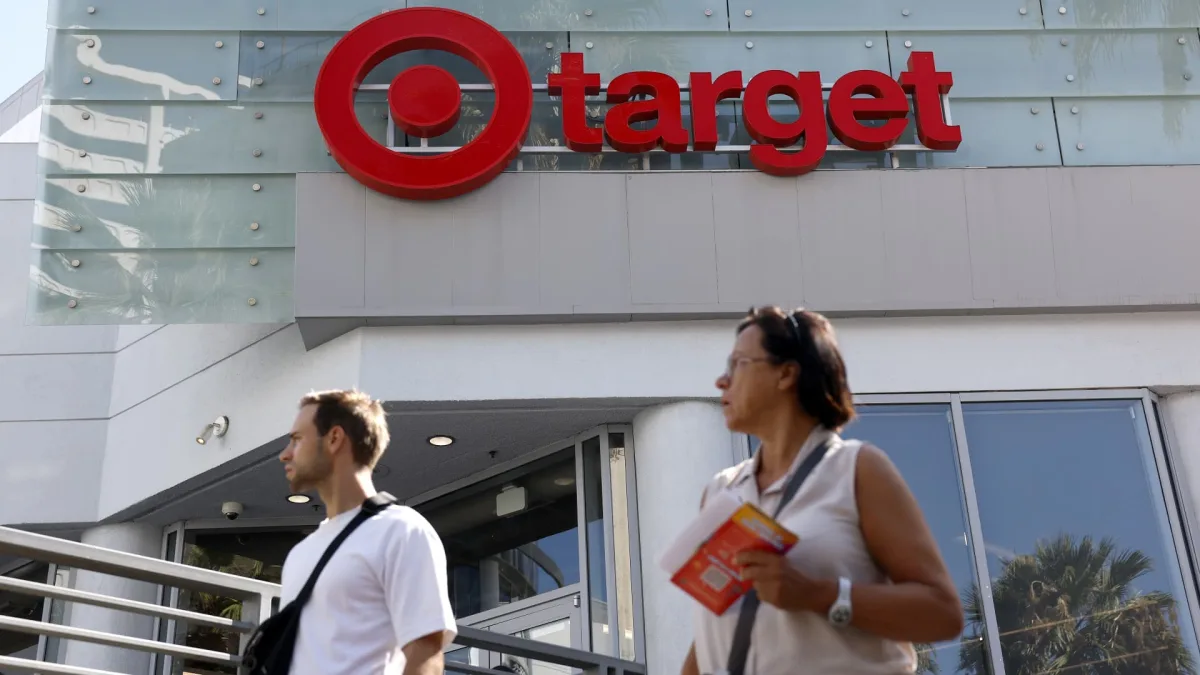
Target did not clearly say whether it directed the refunds straight into price cuts. Still, the company said it lowered prices on more than 10,000 items in the second quarter and that tariff refunds contributed $752 million to net income, or $1.65 per share; the impact on pre-tax gross margin and operating income reached $994 million.
Kohl's booked $100 million of the refunds it received to second-quarter gross margin. The company plans to use the remaining amount for deeper inventory investments.
One-time boosts could also affect future comparisons
These one-time gains are making it harder for investors to read forecasts for the next quarter. With tariff rates running higher than expected and trade policy changing frequently, this season’s stronger profit figures will create an easier year-over-year comparison base, while setting up a tougher backdrop for next year.
The impact on consumers also does not appear easy to measure. While inflationary pressures, especially fuel costs, are affecting sticker prices at the same time, one positive development for the industry has been the push to build more diverse and agile supply chains. Analysts say companies’ choices ultimately depend on what kind of price perception they want to create for their core customers.
"""




Comments (0)
No comments yet. Be the first to comment.
Write a Comment