
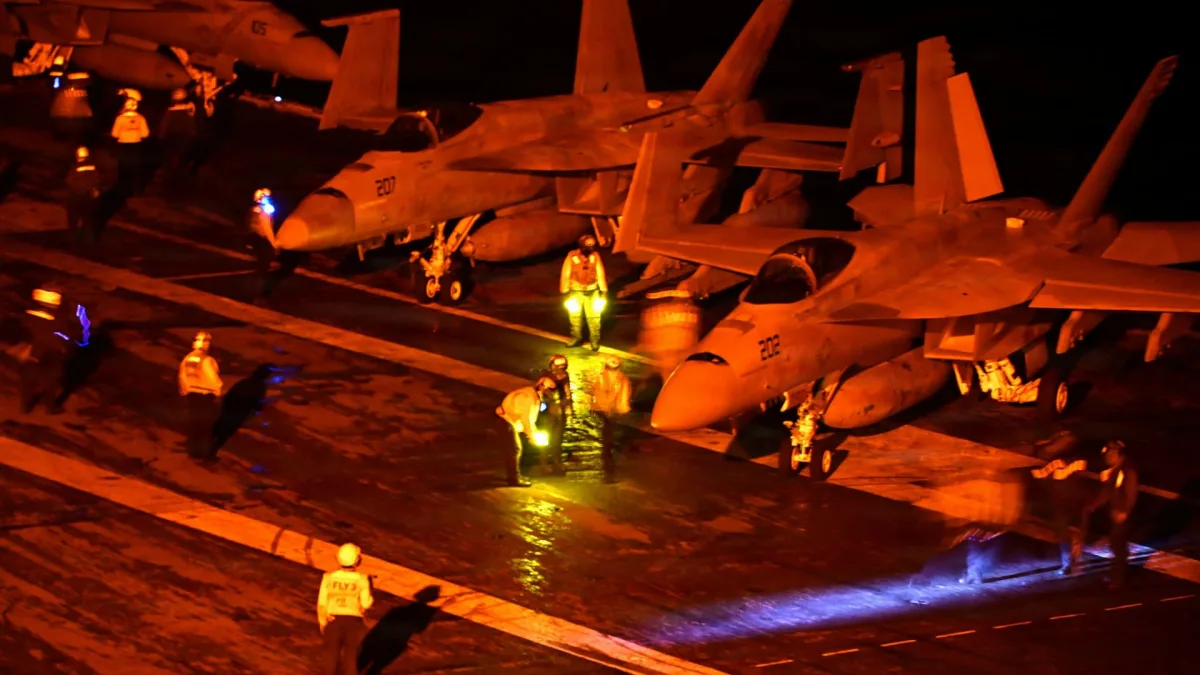
New attacks between the U.S. and Iran over the weekend
Military activity around the Strait of Hormuz hardened again over the weekend. The U.S. Central Command (CENTCOM) confirmed on Sunday that two Iranian rocket launchers on Larak Island had been struck; Washington said the systems were preparing to launch rockets carrying naval mines into the strait.
According to CENTCOM, mine-clearing operations on international shipping routes in the strait were completed last week. The command said the area is being closely monitored to keep commercial traffic moving without interruption. Citing Associated Press, it said the strike was the first publicly confirmed U.S. operation since the end of July.
The six-month war has sharply disrupted vessel traffic in the strait, one of the world’s most critical energy shipping corridors. For that reason, every new military move in the area is being watched closely for its impact on energy and maritime trade.
Iran's response targeted U.S. bases in Jordan
Why does Larak Island stand out?
Larak Island stands out as one of Iran’s key military and shipment-control points for monitoring vessel movements in the Strait of Hormuz. The small island is seen as one of the main areas Tehran uses to increase pressure on the strait.
The Islamic Revolutionary Guard Corps said some Iranian soldiers were killed and wounded in the U.S. strike. According to Iranian media, Tehran responded by targeting the King Hussein and Al Azraq bases in Jordan with missiles and drones. The same sources claimed the attacks caused heavy damage to technical and repair infrastructure and to aircraft deployment areas.
It was reported that the U.S. Navy is maintaining a blockade on Iranian ports, aiming to increase pressure on Tehran. According to the source text, Iran continues to target ships that do not use the northern sea corridor near its coast.
Risk remains for tanker traffic and energy shipments
UK Maritime Trade Operations said on Saturday that a tanker entering the strait via the southern route near the Omani coast was hit by an unidentified object. There were no casualties, but the agency warned vessels to remain cautious when transiting the strait.
- The Strait of Hormuz is one of the main sea lanes for global energy shipping.
- Six months of conflict have caused major disruption to international vessel traffic.
- The threat of mines and tanker attacks is increasing pressure on the free flow of trade.
The continuation of reciprocal attacks in the region suggests that risks will remain high not only on the military front but also for global energy transport and maritime security.




Comments (0)
No comments yet. Be the first to comment.
Write a Comment
Yorum yazmak için giriş yapın. Üyelik ücretsiz; yorumunuz editör onayından sonra yayımlanır.