

Today’s main headlines in the crypto market
The most notable development in the crypto market was Solana validators approving a schedule change that will slow the growth of new SOL supply more quickly. On the same day, a bill in California restricting memecoin links involving public officials moved through the legislative process, while claims also emerged of Abu Dhabi-linked capital support for World Liberty Financial’s planned U.S. trust bank.
What changed in Solana’s supply schedule?
The SGP-0002 proposal approved on the Solana network raised the annual disinflation rate from 15% to 30%. That means the amount of new SOL entering circulation will decline faster, while the long-term inflation target remains 1.5%.
- The proposal received 67% support in the vote, with 25.16% against and 7.84% abstaining.
- About 61% of eligible stake took part in the vote.
- Under the new schedule, the 1.5% inflation level is expected to be reached in about 2.8 years instead of 5.7 years.
- Over the next six years, roughly 18.9 million SOL less could be issued.
For current token holders, this could reduce dilution; for validators and delegators, staking yields are expected to fall. Large validators were split: Figment opposed the change, while Helius and Jupiter backed it, and Kraken ultimately used more than 90% of its voting power in favor.
The vote came at a time of rising interest in Solana ETFs traded in the U.S. Bitwise said its Solana ETF recently crossed $1 billion in assets, signaling stronger institutional demand.
What restriction does California’s memecoin bill introduce?
The California Senate passed Assembly Bill 2409 on Wednesday by a vote of 40-0. The state Assembly then agreed to the Senate amendments by 78-0, and the bill is now in enrollment and awaiting the governor’s signature.
Under the bill, digital asset service providers would be barred from offering Californians memecoins issued on or after January 1, 2027, or memecoins offered by or in partnership with federal, state or local public officials. The text defines a memecoin as a digital asset whose value comes mainly from public attention, speculation or community engagement.
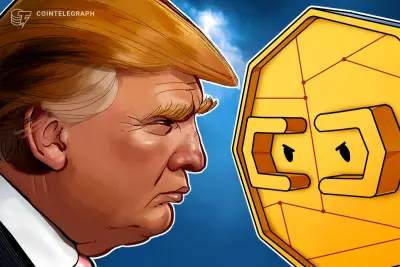
The issue also brought renewed attention to investor losses in politically linked tokens. According to a report from the nonprofit consumer advocacy group Public Citizen, investors in the TRUMP memecoin associated with the U.S. president are estimated to be down a total of $3.2 billion, with most of that loss still unrealized. The token is the fifth-largest memecoin by market value at $688 million, up 53% over the past week but still weighed down by a 67% drop over the past year.
Capital structure of World Liberty’s planned bank draws scrutiny
What would a banking plan for USD1 mean?
According to a Wall Street Journal report citing people familiar with the matter, a group tied to Abu Dhabi’s royal family, led by Sheikh Tahnoon bin Zayed Al Nahyan, is indirectly backing the largest stake in WLTC Holdings, the company behind World Liberty Financial’s planned U.S. trust bank. The report said StringZ Holding RSC owns 49% of WLTC Holdings, while an entity linked to the Trump family holds 38%.
If it wins final approval, the planned bank would bring issuance, redemption and custody of World Liberty’s USD1 stablecoin under a federally supervised structure. That would mark an important step for the stablecoin sector in terms of regulatory oversight and operational framework.
The Office of the Comptroller of the Currency (OCC) granted World Liberty Trust Company preliminary conditional approval on August 14. In the published decision, the regulator confirmed that StringZ was an investor and had pledged not to influence the bank, while Tahnoon’s name and ownership stake were not disclosed. The agency also said the bank cannot begin operations until all pre-opening conditions are met and final approval is granted.
Tahnoon had previously supported a $500 million purchase for World Liberty Financial’s 49% stake. After that transaction, some Democratic senators called for hearings to examine whether the deal could affect U.S. policy toward the UAE, while the Trump Organization did not respond before publication.
"""


Comments (0)
No comments yet. Be the first to comment.
Write a Comment
Yorum yazmak için giriş yapın. Üyelik ücretsiz; yorumunuz editör onayından sonra yayımlanır.