
What stages does an offside decision go through in football?
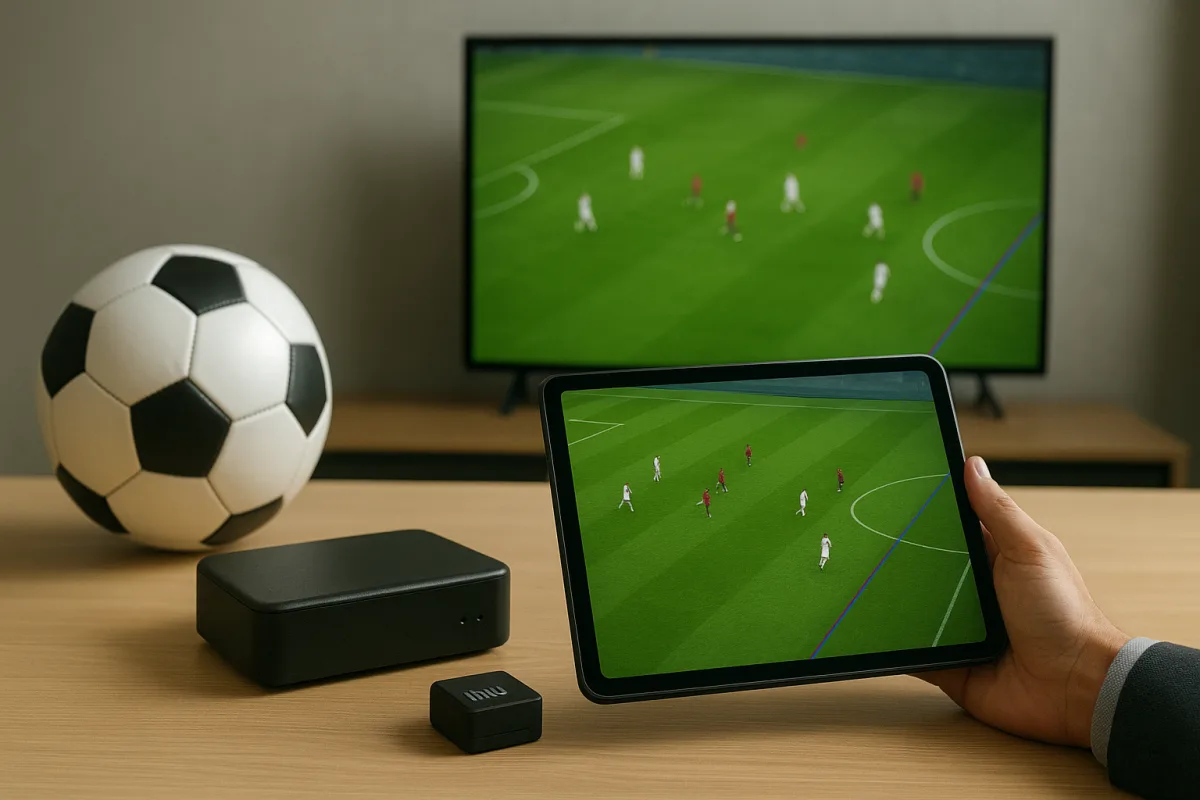
Semi-automated offside technology combines camera data, a ball sensor and VAR checks in the same process to speed up offside reviews in football. Rather than issuing a ruling on its own, the system flags a possible infringement and gives the referee team a clear basis for assessment.
What is the key criterion in the offside law?
The offside law is judged by whether a player is in the opponent's half and ahead of the second-last opponent when the ball is played to them. But the decision is not based only on the player's position; involvement in active play, interference with an opponent or gaining an advantage from the position are also assessed together.
What does the SAOT system track on the pitch?
How do the cameras follow player movement?
12 special tracking cameras mounted under the stadium roof monitor the movement of players on the pitch simultaneously. The system scans the 29 separate data points required for each player in an offside assessment 50 times per second to calculate the position of the relevant parts of the body.
Why does the ball sensor determine the moment of contact?
The most critical moment in the offside line is when the passing player touches the ball. The IMU sensor inside the ball identifies that instant and matches it with camera data, so the pass time and the players' positions are assessed using the same timestamp.
How does the VAR room use this data?
In a possible offside situation, the system sends an automatic alert to VAR officials. The position is then verified by the human eye; after referees check the exact moment of contact with the ball and the players' positions, the information is passed to the on-field referee.
Why is it called 'semi-automated'?
The technology gets its name from the fact that the decision is not left entirely to software. While the software handles the calculation and alerting, human oversight remains in place because the final verification is carried out by the referee team.
This setup is intended to cut the time needed compared with reviews based on manually drawn lines. Offside checks that can take up to 70 seconds in manual VAR reviews are aimed to be reduced to the 20-25 second range with the system.
How is the decision shown to spectators?
Once verification is complete, a 3D animation of the position can be shown to the broadcaster and stadium screens. This visualization makes it easier to understand which player limbs and which moment of the pass were used in the decision.
FIFA first used the technology at the 2022 World Cup in Qatar. UEFA also introduced the system in European competitions during the 2022-23 season.
In Turkey, the TFF (Turkish Football Federation) announced the system on January 12, 2024, and began using it from the matches in Week 20, when the second half of the 2023-24 Super Lig season got underway. The VAR system has been used in every Super Lig match since the 2018-19 season.
"""




Comments (0)
No comments yet. Be the first to comment.
Write a Comment
Yorum yazmak için giriş yapın. Üyelik ücretsiz; yorumunuz editör onayından sonra yayımlanır.