
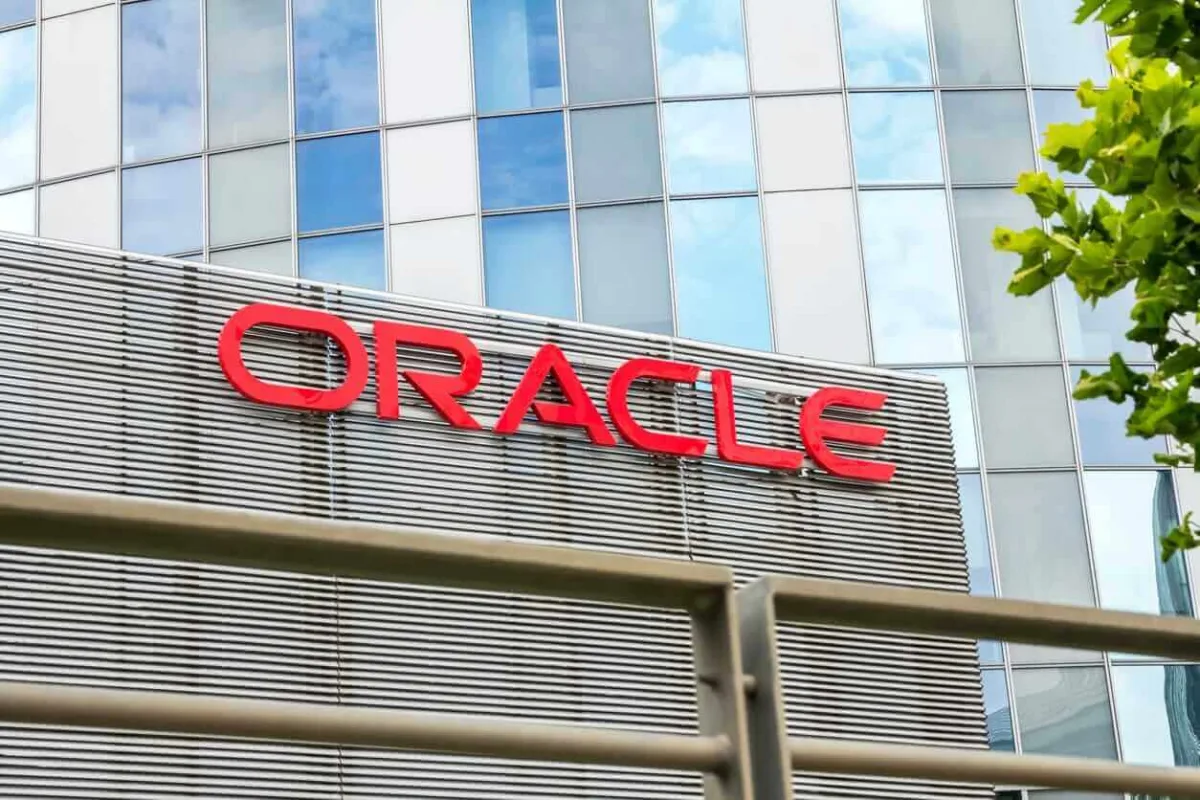
Why is Citi turning back to Oracle?
Oracle shares have returned to analysts’ focus after a steep drop earlier this year. Citi, the US bank, added the company to its 90-day upside catalyst watchlist and kept its Buy rating and $330 price target.
Citi argued that the recent slide may have created a more attractive entry point for investors. According to the bank, strong demand for artificial intelligence infrastructure in Oracle’s cloud business could push growth, pricing and profitability above expectations. It also said the company’s earnings release in late October and its analyst day are two calendar events that could help support market confidence.
Oracle added about $85 billion to remaining performance obligations in the May quarter. That points to faster growth in the company’s cloud and AI-related order backlog, while Wall Street is watching closely to see whether interest in the stock returns.
What do the financial results show at the center of growth?
Oracle reported $19.2 billion in revenue in the fourth quarter of fiscal 2026, announced on June 10. The figure marked a 21% increase from a year earlier, while adjusted earnings per share rose 24% to $2.11.
The company’s main growth engine was cloud. Total cloud revenue rose 47% to $9.9 billion, while Oracle Cloud Infrastructure (OCI) revenue jumped 93% to $5.8 billion. By contrast, software revenue fell 2% as customers shifted from legacy products to cloud-based solutions.
Remaining performance obligations also posted a striking increase. The metric grew 363% year over year to $638 billion, emerging as a key indicator of the company’s improving future revenue outlook.
What is the latest on market performance and valuation?
Although the stock recovered in August, it is still trading well below its previous highs. Oracle remains 56% below its 52-week peak of $345.72, down about 37% over the past 52 weeks and 23% year to date.
- The stock fell as low as $114.50 on July 28.
- It has gained about 26% over the past month.
- After Citi’s move, it rose 2.8% on Aug. 26 and another 2% on Aug. 27.
Oracle also trades at roughly 23.4 times forward earnings. That is seen as a discount to both peers and the stock’s historical average.
The main risk for investors is still heavy spending
Despite the stronger growth outlook, the biggest question remains capital spending. Oracle spent about $55.7 billion in capital expenditures in fiscal 2026 to expand data center capacity, above management’s initial $50 billion target.
The company expects revenue to rise 27% to 29% in the first quarter of fiscal 2027, while cloud revenue is projected to grow 57% to 63%. Management kept its $90 billion fiscal 2027 revenue target and raised its adjusted earnings per share forecast to $8.05.
Even so, capital expenditures in fiscal 2027 could reach $95 billion. Roughly $70 billion would be funded by the company, $20 billion to $25 billion would be repaid by customers, and a financing plan of about $40 billion in debt and equity is also being considered to support expansion, all of which remain key risks for investors.
"""





Comments (0)
No comments yet. Be the first to comment.
Write a Comment
Yorum yazmak için giriş yapın. Üyelik ücretsiz; yorumunuz editör onayından sonra yayımlanır.