
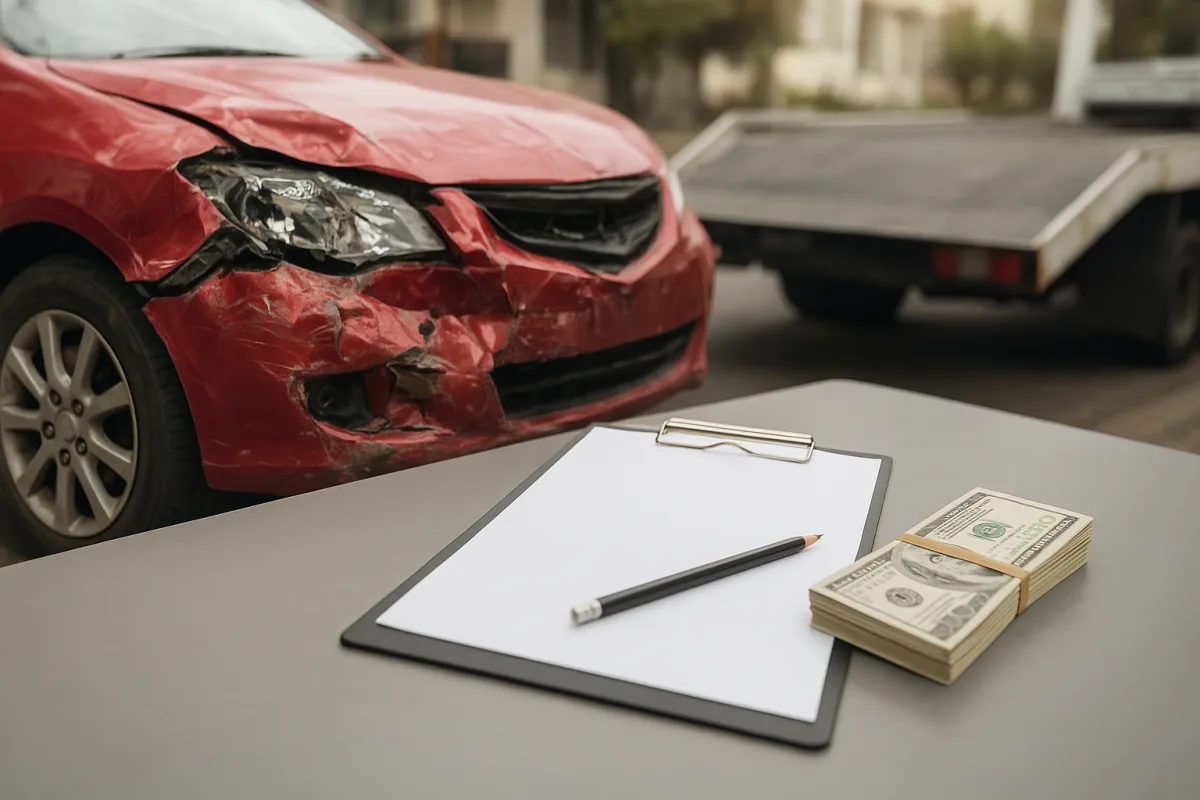
What does a salvage record mean?
A salvage record refers to cases where, after major damage, a vehicle is deemed by insurers to have exceeded the economical repair threshold or is otherwise processed as such. In the used-car market, this is not just a note about a vehicle’s past; it is also an important indicator of trust, usage risk, and future resale potential.
Not every damaged vehicle is assessed the same way in practice. But for a car with a history of severe damage, buyers will question not only the quality of bodywork and mechanical repairs, but also the condition of the chassis, airbags, electronic systems, and safety equipment.
Is a salvage record the same as severe damage?
Although these two terms are often used interchangeably in everyday language, they do not always mean the same thing. Severe damage means the vehicle has been significantly damaged, while a salvage record shows how that damage was handled in insurance and valuation processes. For that reason, when inspecting a used car, buyers should look at the full repair history, not just one label.
How does it affect resale value?
Vehicle resale value is often more sensitive for cars with a salvage record than for similar vehicles without one. That is because buyers want to factor in possible hidden costs and the likelihood of difficulty when selling the car later. This can increase room for negotiation.
On the other hand, the record alone does not always determine the final price. The vehicle’s age, mileage, make and model, maintenance history, repair quality, and driving performance all directly affect how it is valued. A car that has been regularly maintained and repaired with documentation is not judged the same as one with an unclear history.
Why are buyers more cautious?
- A insurance record makes the vehicle’s past damage visible and prompts buyers to seek extra checks.
- Whether safety equipment was repaired properly is a major question mark.
- Concerns may resurface later when the car is resold.
- Additional assessment may be requested in financing, comprehensive insurance, or inspection processes.
What should buyers check when purchasing a used car?
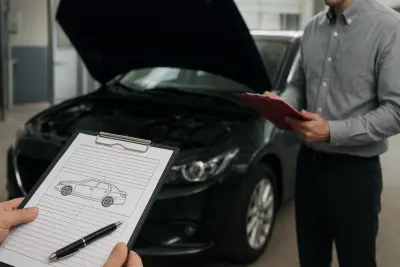
When buying a used car, a vehicle with a salvage record does not necessarily have to be ruled out entirely; however, the decision should always be based on a detailed inspection. The inspection report, service records, and parts replacement history should be reviewed together.
Key points during inspection
Basic inspection steps
- Check whether there has been work on load-bearing areas such as the chassis, pillars, and roof.
- Verify that the airbags, seat belts, and electronic safety systems are functioning properly.
- Ask for repair invoices, service history, and part replacement documents.
- Arrange a test drive and mechanical inspection with support from an independent inspection service.
In short, a salvage record is an important factor that affects price, but it is not a label that alone decides the outcome. If the repairs are solid, the paperwork is transparent, and the inspection process is thorough, the risk becomes clearer; if there is uncertainty, a cautious approach is the smarter choice for buyers.
"""


Comments (0)
No comments yet. Be the first to comment.
Write a Comment