
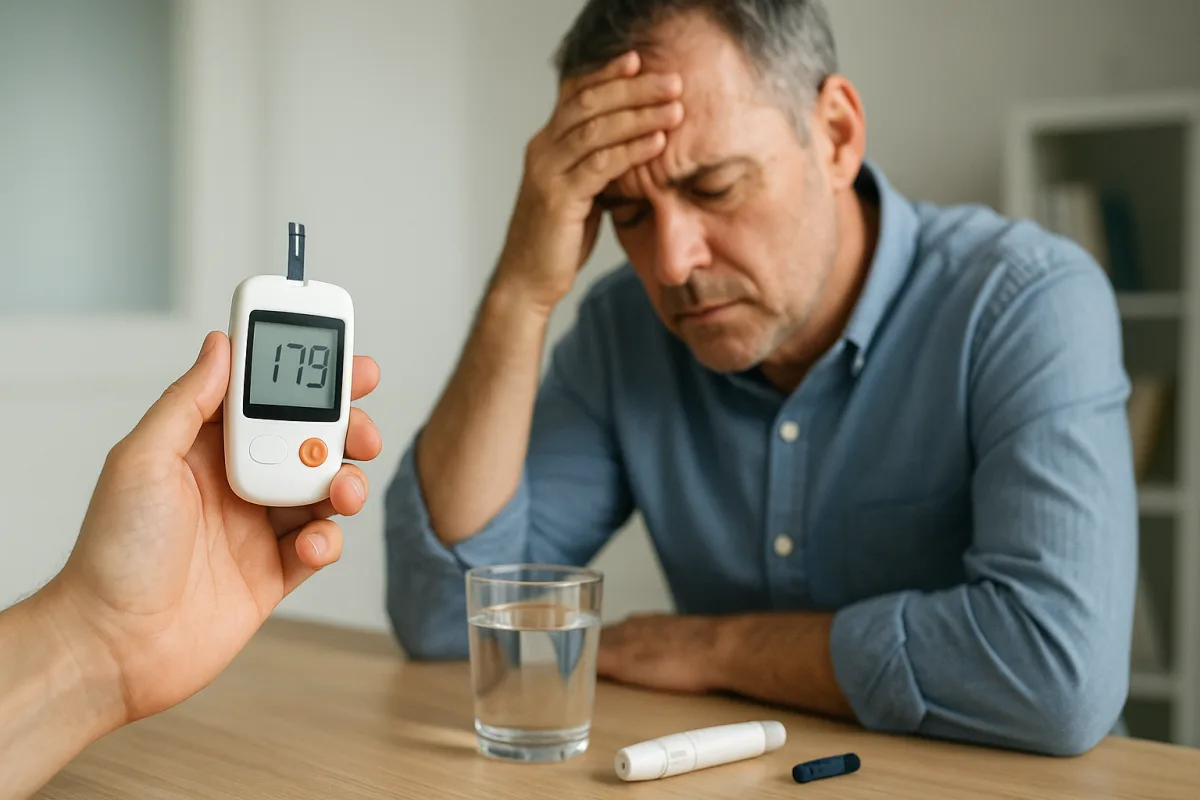
Comment le diabète de type 2 se développe-t-il dans l’organisme ?
Les symptômes du diabète de type 2 apparaissent souvent lentement et, au début, peuvent être confondus avec une fatigue du quotidien, une sensation de soif ou un rythme de vie intense. Le problème principal est que l’insuline produite par le pancréas est moins bien utilisée par l’organisme, ce qui perturbe l’équilibre de la glycémie.
L’insuline aide le glucose présent dans le sang à entrer dans les cellules pour être transformé en énergie. Lorsque les muscles, le foie et le tissu adipeux ne répondent pas correctement à l’insuline, le glucose reste plus longtemps dans le sang. Le pancréas tente un temps de compenser cette situation, mais l’équilibre peut finir par se rompre et les symptômes devenir plus visibles.
Ce processus ne se met pas en place d’un coup. Ainsi, même lorsqu’une personne se sent globalement bien pendant longtemps, des changements sous-jacents peuvent continuer à évoluer. Comme l’évolution peut rester silencieuse, un suivi médical régulier et, si nécessaire, des tests de dépistage sont importants.
Quels signes peuvent révéler les premiers symptômes ?
Des signes perceptibles dans la vie quotidienne
Parmi les plaintes les plus fréquentes du diabète de type 2 figurent une soif accrue, des envies fréquentes d’uriner, une fatigue difficile à expliquer et une sensation de faiblesse. Chez certaines personnes, l’appétit peut augmenter ; chez d’autres, des variations d’énergie peuvent survenir au cours de la journée.
- Boire beaucoup d’eau et avoir la bouche sèche
- Uriner fréquemment, surtout se lever la nuit pour aller aux toilettes
- Une fatigue persistante malgré le repos
- Une sensation de vision floue
- Des plaies qui cicatrisent lentement
- Des démangeaisons cutanées ou des irritations répétées
Ces signes s’expliquent par l’augmentation du taux de glucose dans le sang, qui pousse l’organisme à éliminer l’excès de sucre par les urines. Cela peut entraîner une perte de liquide, d’où une soif accrue. Lorsque les cellules n’utilisent pas efficacement le glucose, la personne peut aussi se sentir épuisée.
Un seul symptôme signifie-t-il forcément un diabète ?
Non. La soif, les envies fréquentes d’uriner ou la fatigue peuvent avoir d’autres causes. Mais si ces troubles persistent, gênent la vie quotidienne ou apparaissent ensemble, une évaluation médicale devient importante.
En particulier, les plaies qui cicatrisent lentement, les troubles de la vision et une fatigue inexpliquée ne doivent pas être négligés. La situation peut varier d’une personne à l’autre : chez certains, les signes sont nets ; chez d’autres, ils restent très discrets.
Qui présente un risque plus élevé de diabète ?
Le risque de diabète ne dépend pas d’une seule cause. La prédisposition génétique et les facteurs liés au mode de vie jouent souvent ensemble, avec des effets variables selon les personnes.
- Antécédents familiaux de diabète
- Surpoids ou accumulation de graisse, surtout autour de l’abdomen
- Sédentarité
- Changements métaboliques liés à l’âge
- Antécédents de déséquilibre de la glycémie
- Facteurs de mode de vie comme un sommeil perturbé et un stress prolongé
Présenter un facteur de risque ne signifie pas qu’un diabète de type 2 se développera forcément. En revanche, ces éléments sont importants pour décider d’un dépistage et d’un suivi. Quand les antécédents familiaux s’ajoutent au surpoids et à l’inactivité, une évaluation régulière devient encore plus utile.
Pourquoi l’âge et le poids comptent-ils ?
Avec l’âge, la masse musculaire, le niveau d’activité et la flexibilité métabolique peuvent évoluer. Une prise de poids peut, elle aussi, diminuer la réponse des cellules à l’insuline. C’est pourquoi maintenir un poids sain et bouger régulièrement est important non seulement pour le contrôle du poids, mais aussi pour l’équilibre métabolique.
Comment poser le diagnostic et pourquoi le dépistage est-il nécessaire ?
Le diagnostic du diabète de type 2 ne repose pas uniquement sur les symptômes. Des tests de glycémie sont utilisés dans l’évaluation, et c’est le médecin qui décide de l’examen le plus approprié. En pratique, une glycémie à jeun, l’HbA1c, qui reflète le contrôle glycémique sur le long terme, et, dans certains cas, un test d’hyperglycémie provoquée peuvent être prescrits.
Ces examens donnent une image plus précise de la manière dont l’organisme gère le glucose. Même en l’absence de symptômes, un dépistage peut être recommandé s’il existe des facteurs de risque. La raison est simple : le diabète de type 2 peut évoluer longtemps sans signes évidents et passer facilement inaperçu au quotidien.
Pour qui le dépistage est-il particulièrement important ?
Les personnes ayant des antécédents familiaux, un problème de poids, un manque d’activité régulière ou ayant déjà reçu des alertes sur leur glycémie peuvent discuter avec leur médecin de la nécessité d’un dépistage. Un suivi personnalisé peut aussi être proposé aux personnes ayant connu un trouble de la glycémie pendant la grossesse ou présentant des risques métaboliques.
L’essentiel est de consulter au bon moment plutôt que d’essayer de s’autodiagnostiquer. L’interprétation des résultats doit également tenir compte de l’état de santé général, des médicaments utilisés et des maladies associées.
Que peut-on faire au quotidien pour réduire le risque ?
Les mesures visant à réduire le risque de diabète de type 2 concernent le plus souvent les habitudes de vie. L’objectif n’est pas d’appliquer des règles strictes à court terme, mais de construire des habitudes durables comme une alimentation équilibrée, une activité régulière et un sommeil structuré.
Points à surveiller dans l’alimentation
La qualité des sources de glucides est importante. En privilégiant des aliments plus riches en fibres plutôt que des produits raffinés et rapidement absorbés, les variations brutales de la glycémie peuvent être limitées.
Exemples d’approche pratique
- Équilibrer une grande partie de l’assiette avec des aliments riches en fibres comme les légumes et les salades
- Privilégier les céréales complètes, les légumineuses sèches et des aliments moins transformés plutôt que les produits à base de farine blanche
- Faire de l’eau la boisson de référence à la place des boissons sucrées
- Adapter l’organisation des repas aux besoins personnels et éviter de rester trop longtemps à jeun
Pourquoi l’activité physique et le sommeil sont-ils importants ?
Une activité physique régulière peut soutenir la capacité des muscles à utiliser le glucose et améliorer la sensibilité à l’insuline. Réduire le temps passé assis est également important. Par ailleurs, un sommeil insuffisant et un rythme de vie irrégulier peuvent avoir un impact négatif sur l’appétit et l’équilibre métabolique.
Ces conseils ne remplacent ni le diagnostic ni le traitement. Les personnes qui présentent des symptômes, des facteurs de risque ou des questions sur leurs analyses doivent consulter un médecin.
Quelles sont les idées reçues les plus répandues ?
En matière de diabète de type 2, certaines idées fausses souvent répétées dans la société peuvent retarder une détection précoce. L’une des erreurs les plus courantes consiste à penser que seules les personnes qui consomment beaucoup de sucre développeront un diabète. En réalité, la prédisposition génétique, le poids, le niveau d’activité et le profil alimentaire global doivent être pris en compte ensemble.
Une autre croyance erronée consiste à considérer qu’en l’absence de symptômes, il n’y a pas de problème. Comme le diabète de type 2 peut évoluer longtemps sans signes, le dépistage reste important chez les personnes à risque, même sans plainte particulière. L’idée qu’il ne concerne que les personnes en surpoids est également fausse : il peut apparaître chez des personnes de morphologies différentes.
En résumé, s’il existe une soif persistante, des envies fréquentes d’uriner, de la fatigue, une modification de la vision ou des plaies qui cicatrisent lentement, il ne faut pas banaliser ces signes. Si ces troubles persistent ou s’aggravent, le bon réflexe est de consulter un médecin pour une évaluation adaptée et, si nécessaire, des tests de glycémie.
"""





Commentaires (0)
Aucun commentaire. Soyez le premier.
Écrire un commentaire
Yorum yazmak için giriş yapın. Üyelik ücretsiz; yorumunuz editör onayından sonra yayımlanır.