
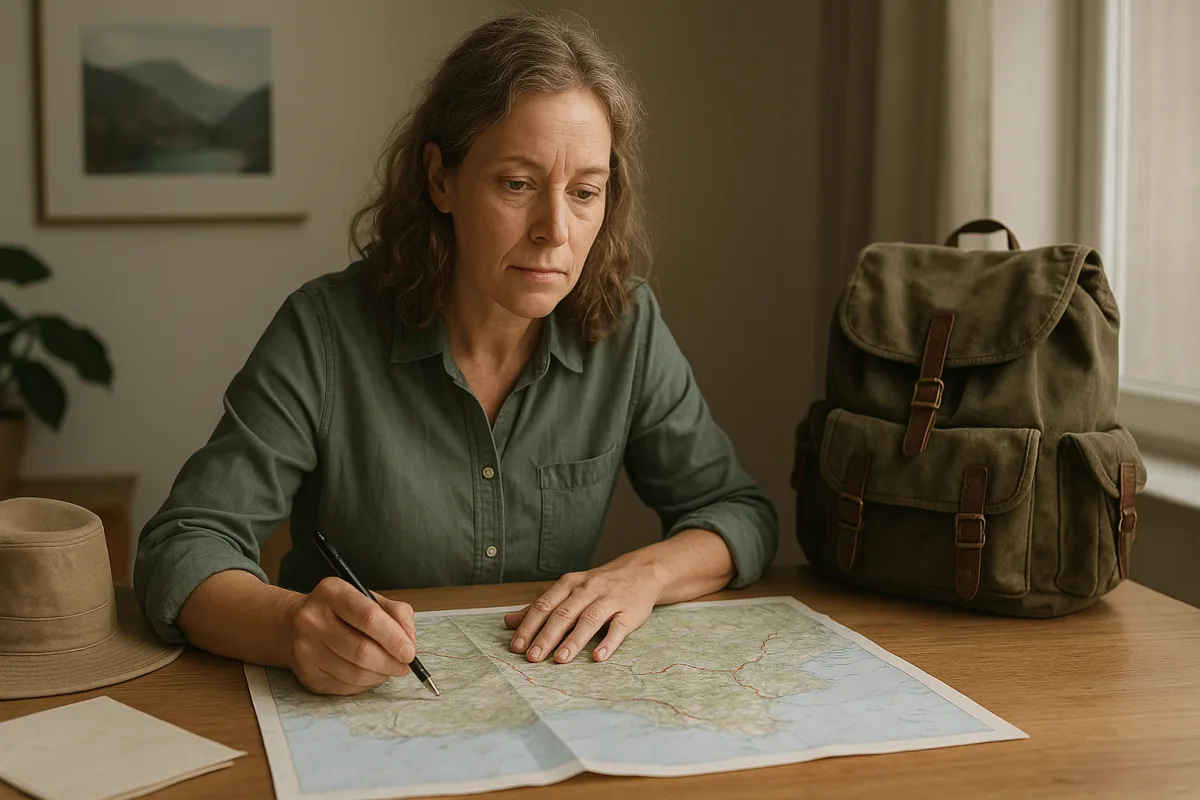
Who is Kate Clow and how did she come to Turkey?
One of the first names that comes to mind when people talk about the Lycian Way is Kate Clow, a British researcher who has lived in Turkey since 1989. Her story is less about creating today’s hiking route along the Mediterranean coast and more about reading the use networks of the past. Tracing old paths, local passageways and historic connections later became one of the cornerstones of the cultural routes approach in Turkey.
Clow’s idea was not simply to draw a route for walking in nature. The aim was to make the ancient roads used by the Lycians for trade, military movement and people-and-animal passage visible again through a modern route concept. This approach turned hiking into an experience that brings natural scenery and cultural heritage together on the same trail.
How did the Lycian Way emerge and why does it matter?
Opened to hikers in 1999, the Lycian Way is known as Turkey’s first long-distance hiking trail. At the time it was launched, the route was about 500 kilometres long, starting in the Ovacık-Hisarönü area near Fethiye and stretching to Geyikbayırı, linked to Konyaaltı and about 20 kilometres from Antalya. Expanded over the years with new links and variants, the trail remains one of the most frequently mentioned routes among Turkey trekking routes.
What makes the route important is that it was designed as a stage-based trail rather than a single continuous track. That allows hikers to choose different sections depending on their time and experience, and to move between coastal scenery, ancient cities, village roads and mountain passes. Also known as the Fethiye-Antalya hiking route, it is widely seen as a decisive turning point in establishing the idea of long-distance walking in Turkey.
Its impact on the cultural routes movement and notes for hikers
Kate Clow, who chairs the Cultural Routes Association, is not only a route creator; she is also a leading figure in marking and promoting new hiking routes in Turkey and supporting route makers. The association’s ties with organisations such as the European Institute of Cultural Routes and the World Trails Network are among the factors that have raised the international profile of Turkey’s cultural routes. This framework has also helped rural tourism bring economic activity to villages through local production, accommodation and guiding services.
What should those planning to hike the Lycian Way keep in mind?
For anyone considering the Lycian Way, the key points are choosing the right season, preparing the right gear and reading the trail markings correctly. During the hot summer months, stage planning needs to be more careful, while cooler seasons can offer more balanced conditions for many hikers. Those without long-distance hiking experience may prefer to start with shorter stages and learn how the trail markings work in the field.
- Basic gear such as water, sun protection and suitable footwear should not be neglected.
- Stage length, accommodation options and weather conditions should all be assessed before setting out.
- Trail markings and up-to-date route information should be checked from reliable sources before departure.
Today, the reason the cultural routes concept has a special place for the Lycian Way is exactly this. While the route carries the roads of the past into the present, it also offers a lasting model in Turkey that brings nature walking and cultural heritage together on the same map.





Comments (0)
No comments yet. Be the first to comment.
Write a Comment